Reader Story: How I Ruined My Credit Score, and How It Didn’t Ruin My Life
Published on - March 14th, 2010 (by J.D. Roth) This guest post from the redoubtable Tyler K is part of the new “reader stories” feature here at Get Rich Slowly. Some reader stories contain general “how I did X” advice, and others will be examples of how a GRS reader achieved financial success — or failure. Tyler is an active commenter at GRS, and never afraid to share his opinion!
Like J.D., I once had a big problem with debt. Unlike J.D., I didn’t dig myself out from under that problem gracefully.
About eight years ago, I was a college student, living in an apartment near campus, and working full time while going to school. I felt like I was on top of the world. Here I was, seeing all my friends making $6 or $8 an hour, while I was making about $17. That seemed like a lot of money. It was about $35,000 a year — not just a college student’s salary, but a real salary. I felt like I deserved to be living it up a bit, especially considering all the work I was doing with a full-time job and a full time class load.
I went overboard. I spent well beyond the $35,000/year I was making (it wasn’t as much money as it felt like). I bought a Mustang, and modified it into an amateur race car.

I had the latest laptop and a desktop computer with a flat screen display (in 2001). My $35k/year salary was enough to live on, but it wasn’t enough to support spending $1500 on a laptop computer and on a desktop computer and on high-performance cylinder heads, but that’s what I did.
I bought all of them, and more.
This kept up for a year or two. I kept justifying these purchases to myself, and my credit card balances slowly rose along with my required minimum payments. A bout of bad luck exacerbated the problem. I was mugged outside my apartment, and having no medical insurance, ran up an emergency room bill. My race car was stolen, and being 21 and owning a race car, I couldn’t afford comprehensive car insurance, I had liability only. I bought another car to replace it, again with borrowed money.
Things fall apart
Eventually, I realized I was in over my head. I was gasping for air. I couldn’t make my credit card payments and also pay my rent and buy groceries. I was driven to the edge, and I gave up. I stopped paying all my credit card bills, and they went into collections. I voluntarily surrendered my car to be repossessed. I figured if I was going to ruin my credit score, I might as well go all out — I even hired a bankruptcy attorney. She managed to stop the incessant flood of phone calls from creditors, but I found I couldn’t afford even to pay for the bankruptcy proceedings, and so that process stopped shortly thereafter.
At this point, I owed approximately $30,000 on about four different credit cards, the medical bill, and the car loan, all of these in collections. My credit had been destroyed, but my creditors had been silenced by the bankruptcy attorney. I decided to get my life in order and worry about paying back the debts I owed later. It was easy to justify — I could barely put food on the table and the credit card company was still bringing in billions every year. They didn’t need an extra few thousand dollars as desperately as I did. So I let my debts ride, and worked on running my life in a sustainable way.
Turning things around
The first thing I did was give up credit cards entirely.
I decided to only spend money I actually had, and so my purchases of toys slowed dramatically. My extravagances in life dropped to going out to eat with my roommate a couple times a week, and not at particularly fancy places. I got into bicycling as a hobby, on a used, mid-range road bike — not a brand new, high-end model like I would have bought before. And there I sat, content with the computer I already had, my modest bicycle, and the occasional trip out for dinner. I was living quite comfortably on my salary with my new outlook on life. For the first time in years, I felt comfortable with myself. I actually managed to save a few dollars from paycheck to paycheck instead of spending them!
I did decide that I needed a car, though. I hadn’t enough money to pay cash for one, and I doubted anyone would give me a loan, so still being young and in school, I asked my parents to help. This time though, I was much more conservative.
I borrowed about $5,000 from my parents and created a definite plan for paying them back. I bought a nine-year-old but well-maintained Honda Accord, and I stuck to the payments religiously. This time if I were to fall behind, not only would I give up my newfound peace I’d made with myself financially, but I’d be letting my parents down instead of faceless mega-corporations.
No credit needed
Shortly thereafter, I finished school, and took a software engineering job in San Francisco. Rents were higher in the city, but my salary doubled. My brother needed a car, and I worked out a deal with my parents to give him mine, along with the rest of the payments on the loan. I wanted to get a brand new one.
I went down to the car dealership with my pay stubs from my new job, and my ruined credit score, and a pre-approval I’d gotten online for a loan of up to $26,000. I was determined to make something work. As it turned out, this was easier than I’d anticipated. Car dealerships will do anything to sell cars, and that includes selling cars to people with horrible credit and a repossessed car on their credit report. I bought this car with no money down, which in retrospect, is the stupidest financial decision I’ve made since I began my financial recovery.
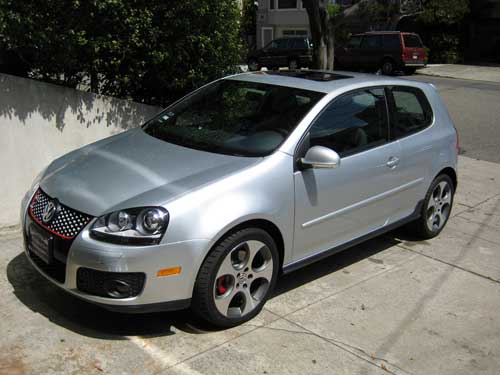
Still, it wasn’t a horrible decision — I now made a salary that could justify a car like this. Sure, I got a crappy 12% interest rate on the loan, but I eventually refinanced the loan to 10%, and a shorter term, and then I paid the loan off early, about two-and-a-half years after I first bought the car. When I called the bank to pay off the first loan (when I refinanced), they were practically begging me to take a credit card from them, seeing as I’d overpaid my car loan every single month, on time, for the life of the loan. But still, I wouldn’t break my ‘no credit cards’ rule, and I refused.
Renting an apartment was another thing I was scared to do with bad credit, but it turned out easier than I thought, as well. I got my first new apartment with my ruined credit when I moved to San Francisco. I decided to share a place with a friend of a friend. We found a two-bedroom place listed on Craigslist, and went to see it. It was a four unit building, quite common in San Francisco, owned by a little old Chinese lady. She didn’t care to even run a credit check. Two well-dressed young men showed up, with pay stubs indicating an above-average combined annual salary, and job titles of ‘Software Engineer’ and ‘Accountant’. She was more than happy to rent the place to us for $1800/month.
I continued my life living the way I had since I’d given up on my debt a few years ago, but now on a much larger post-college salary. I bought few toys, aside from the car and some furniture. I’d go out to eat with friends sometimes, or I’d go out for drinks occasionally with my new coworkers. I actually found money piling up in my checking account because I was making it faster than I even wanted to spend it. I had nothing I needed to buy.
After a year, my roommate took a promotion that had him moving from San Francisco to Denver. I decided that I wanted to get my own place, but $1800/month was too much for me to spend by myself. The little old lady who’d been our landlord actually asked if we’d reconsider staying, and if I could find another roommate, as we’d been such good tenants, but I told her I had to leave.
I was questioning my ability to get lucky with finding an apartment a second time, but figured I’d done it before, and I could do it again. I looked at one place I like, and decided to take it, but was turned down by the rental agency due to my bad credit. I found another place a few blocks away that actually ended up being nicer — It was an old Victorian house divided into two units, one upstairs and one downstairs. The family that owned the place lived upstairs and rented out the downstairs.
Wary because of my bad credit and previous rejection, I wrote down my story, and gave the owners my bank statement showing the money I’d accumulated in the last year I’d spent living below my means, and the phone number of the landlord that’d asked me to stay in San Francisco. In light of this information, they rented to me regardless of my credit score, and they too ended up extremely happy with me as a renter.
The road to recovery
Several years after I’d given up on my credit card bills, I was finally contacted again by one of my creditors (or really, the collection agency to which they’d sold my debt). They demanded, in a rude and threatening manner, payment in full of an outstanding debt over $10,000.
My girlfriend (now my wife), who worked at a law firm, asked a co-worker of hers to help me out. He was an attorney who had previously worked in this specific area, representing clients being sued by creditors, and had no sympathy for a threatening collection agency. With a single phone call on my behalf, he had the collection agency offering a settlement of about half their initial demand. I paid it in full from the surplus I’d been accumulating.
Slowly, over the course of several years, my other creditors would contact me, and we’d agree on a settlement like this. Eventually, the statute of limitations for them to collect on the debt through legal channels expired. After that, all I needed to mention to creditors was that I knew it was too late for anyone to sue me, and I’d have a reduced settlement offer.
Now, at the beginning of 2010, it’s been nearly seven years since this whole mess started, and these old marks are due to start dropping from my credit report soon. Surprisingly, I’ve found in the intervening time that I haven’t been impacted much at all by my poor credit — certainly not as much as you would have thought, given the emphasis the financial media puts on credit scores.
- I paid maybe 5% more than market value for the car I financed, not a huge deal.
- I was turned down for one apartment rental.
I’ve since rented one other place, where I live now, in a manner similar to the second — it’s a privately-owned little house with landlords that live next door.
I told them my story, showed them my bank statements and pay stubs, and they were happy to rent to me, and I love it here. Aside from the lousy car interest rate and a single apartment rejection, I haven’t even noticed my poor credit score. Employers haven’t cared. Cell phone companies haven’t cared. The electric company hasn’t cared. For the most part, nobody but myself has even looked at my credit score for the past six years.
While all this has been happening, my life otherwise has been going fantastically. My career has progressed well, I make roughly four times what I did when the story started. I got married. I moved back to my hometown, which I love. I’ve been traveling a bit, to five other countries and various places in the US. My life is going as well as I could hope.
Strangely enough, I’m not sure that any of this would have happened if I hadn’t given up on those debts years ago. That began a change in lifestyle — a focus on experiences instead of things, on making do with what you have instead of needing the latest and greatest. Those lessons have shaped my life since then, and I don’t know if I would have learned them as well without going through that experience.
Final words
I was originally hesitant about sharing this story. I was afraid of being judged for the method I used to pay off my debts. I’m not proud about having done this, but at the same time, I don’t feel bad about it.
These credit card companies were willing to do everything in their power to make a profit off me. They had teams of actuaries calculating the exact interest rates and credit limits that would maximize profits from their customers, and they had the legal system at their disposal if they thought it would have been beneficial. I used the same tactics. I was never sued and in the end, I came to mutual agreements with my creditors that satisfied both parties.
Was it an ideal solution for either party? No, but once I was in in over my head, there wasn’t a realistic ‘ideal solution’. The situation was eventually salvaged, and now, years down the line, it’s water under the bridge.
Reminder: This is a story from one of your fellow readers. Please be nice. After nearly a decade of blogging, I have a thick skin, but it can be scary to put your story out in public for the first time. Remember that this guest author isn’t a professional writer, and is just learning about money like you are.
This article is about Debt, Reader Stories
SEARCH FOR RECENT ARTICLES


Quite literally, Tyler agreed to make his payments OR have his account sold off to a collection agency. *That* is the agreement he made. And the collection agency has the authority to settle that debt for less than the principal balance (and the difference becomes taxable income, too.)
I’ve been in Tyler’s shoes, I’ve had bad debt, I’ve had it sold off, and I’ve settled accounts with junk debt buyers. I won’t apologize for working within the system, and neither should Tyler. Banks get bailouts, individuals get screwed. That’s the way it is — we can accept it and deal with it, or we can flame people on blog comment areas.
As for me, my credit report is finally clean (after seven years of on-time payments). Clean credit helped me go to grad school at an affordable rate. With it, I was able to attend full time and borrow money through the Stafford Loan program. Most schools give tuition breaks to full time students; part time students pay by the credit, making it more expensive. If I had to attend part time, I would have to pay the opportunity cost for not having the job I have now (which would be substantial) AND I would have paid more for tuition.
loading....
I have to agree with the commenters who are not a fan of Tyler’s method for getting out of debt. He could have easily paid off his debt with his new higher income and chose not too and somehow got away with it. Maybe part of this is jealousy. I also racked up significant credit card debt in college and grad school and am now on a strict budget to pay it all off.
I don’t even understand how this happens. You just stop paying your bills? And then you get a bankruptcy lawyer to stop collections without actually filing for bankruptcy and within a few years you can settle for half the cost? This seems way too good to be true.
loading....
I don’t agree with most of the negative posts. Yes perhaps it was not the right thing to give up on paying the debt. I think it is wrong the way credit card companies target college students for credit cards without requiring any proof of income. Hopefully that changes with the credit reform bill. The bottom line is that you settled your debts (even if it was late, better late than never) and managed to live a productive life. Make no mistake-the banks are making thier profit, or else there would be no such thing as the outrageous executive bonuses. I won’t personally ever default on a loan as long as I can work, but the thought had occurred to me more than once. You have to do what is right for you. Again, the key thing is he eventually settled the debts and he has not repeated past mistakes.
loading....
Ah, great article.
I remember that picture of the house in an older article about JD and smaller houses and downsizing, I’m glad to hear the story behind it.
I’m helping my girl right now with a similar situation, we didn’t let her payments slip too far and she has student loans which I hear are hard to avoid.
Did you have any student loans or all credit cards and car debt?
loading....
JD – this series is really insightful. Thank you!
Tyler, thank you for sharing your story. My husband and I are likewise digging ourselves out of debt that was graciously dropped into our naive, college-aged laps. We often argue whether to make financial decisions to “preserve our credit score” or to take care of what is best for our family RIGHT NOW. Thanks for sharing your story of making your best choices, given your options/opportunities. I’ve been thinking my husband is right to not prioritize our credit score. Thanks!!
loading....
Thanks for taking the time to tell your story Tyler. We clearly think differently in many ways; however, I always find it intriguing to get a glimpse into how others perceive credit and its value in their life.
I recently bought my first home, and I have never in my life been so thankful for a good credit score. It sounds like your credit may be headed in the right direction now, and I suspect you’ll have a similar feeling if you and your wife ever decide you’re sick of renting and ready to own.
loading....
I’m going to add one final anecdote to the comments on this thread, and then I’ll probably leave it alone after that. I can understand some of the angry people (although not so much the presumptuous people — because my wife once worked at a law firm doesn’t mean she makes $120k/year, and she’s not a lawyer). I remember once when I was really angry. I mentioned that my car was stolen in the article. I was scathing. EssentialIy that car was my entire net worth. I didn’t know who did it, but I hoped he got hit by a truck. He was never caught (not for stealing my car, anyway).
If I met that guy today, and he said, “sorry I put you through that, I did some stupid things when I was younger,” and he legitimately seemed like he had his life mostly in order and wasn’t stealing any more cars — I could sincerely tell him, “you know, it’s water under the bridge. I’m glad you’ve worked out your problems, I hope you do well from here on out.” I wouldn’t sue him to recover the value of the car, nor would I insist he needs to serve time in jail.
I got over the loss of that car long ago. Even that theft was a learning experience that helped make me the person I am today, and I don’t feel the world owes me anything because of it. My creditors implied they felt the same way when they agreed to settle those debts years ago. When they said “thank you for your payment, have a nice day” and then marked those debts as ‘paid’ on my credit report, they were essentially saying, “alright, good enough, you’re free.” And the funny thing is, these people were *never* mad about it in the first place. This was just another day at work for them. They crossed me off their todo lists and moved on to the next guy. They didn’t stay up late thinking about how much I had hurt them, because I hadn’t. Still they’d done the closet thing to forgiving me that they could do in their corporate actuarial way. My debts were legally forgiven long ago, as was the theft of my car (the statute of limitations for grand theft auto is actually shorter than for unpaid credit card debt in California). The world, and the lives of all involved, has moved on.
And because some people asked, no, I never had student loans. I went to a state school that was fairly inexpensive (about $4000/year tuition), and paid it out of pocket (my [middle class, not wealthy] parents helped).
loading....
Wow, way to go turning things around. Your story gives everyone hope that even when things do not go as plan that there is always a way to make good things happen, thanks.
loading....
Deadbeats are all the rage; don’t worry about child support; and don’t forget to underinsure yourself, that’s what taxpayers are for. Oh, and laugh at your roomies when you just can’t pay your half of the cable bill, etc.
The latter is what happened to me with 2 roommates; they left me w/3 months of phone bills, cable bills, and rent payments, but ‘hey’ that’s all ‘water under the bridge’.
loading....
I think you got lucky on the credit score not derailing you from receiving job offers. Story in WSJ today about how more and more companies are running background checks/checking credit scores. Especially if you work in a sensitive industry such as security or finance. http://online.wsj.com/article/SB10001424052748703909804575123611107626180.html?mod=WSJ_hpp_RIGHTTopCarousel
loading....
Hm, I definitely have strong opinions, but I doubt I’ll effect anyone’s opinion one way or the other, so I’ll try to just say things that haven’t yet been said. Though I think the point of ‘bad credit hasn’t ruined my life’ has been lost in the discussion. There are two issues here: living with bad credit, and Tyler’s specific story.
Regarding Tyler’s story, what struck me the most was how he was playing hide and seek with his creditors. If they were tenacious enough to find him he’d settle, if not he was happy to let the statute of limitations run out. It doesn’t appear that he felt any sort of obligation to pay, but he dealt with the hassle when it popped up. That’s an attitude I can’t sympathize with.
Regarding the ‘credit cards are huge, so one little debtor doesn’t matter’, I’m not sure what the point is of saying creditors plan on some defaulters. If Tyler hadn’t defaulted someone else would have won the lottery and been allowed to default to fill the statistic? The sum of defaulters are supported by the sum of payers. Yeah, credit card companies make money, but they are competing and seeking a margin of profit. If expenses were lower due to fewer defaulters competition would drive the expense to consumer down.
And for those saying ‘the creditors can afford it’, I don’t get that either. Five years ago I loaned a friend $500 because her furnace went out in the middle of winter. She was a secretary and she and her husband were bringing in ~$40k with two kids while my husband and I had no kids and were making ~$120k. She re-paid me $200 then defaulted. Is that okay because $300 is small money to me? Is it okay because it’s a lot of money to her? How about if I made a million dollars? What if I loaned her $5000? Why should the numbers ever matter?
As Tyler said it’s far enough in the past, and I prefer settling debt to full out bankruptcy. If any of the people who owe me money would offer to pay me half of what they owe I would be stoked. But I get a chill at the blase attitude people have toward debt. As another poster pointed out, it’s a slippery slope. If you don’t honor a debt to a corporation will you honor a debt to a small business? A sole proprietor? A stranger? A neighbor? A friend? Family? Where is the line drawn on who it is ‘okay’ to not pay what you have agreed and who should be paid?
I believe we all want to do the right thing, and we have an endless ability to justify exactly what that is, and miraculously it’s usually what is is their best interest! I have told the story before but I had a tenant during eviction get really mad and indignant and tell me she wasn’t going to pay the water bill because she was so embarrassed by having the sheriff escort her out. This was very strange to me as they hadn’t paid rent in five months so the water bill was small potatoes. According to her it was her HUSBAND that owed us money, even though she was living in the house (and he wasn’t at the time). She had wound her brain around and around so she wouldn’t have to feel bad about anything. The mental gymnastics were preferable to facing the reality of herself as a deadbeat who didn’t pay her bills.
I see the same mentality in lame justifications like “They know people will default”, “They prey on college students”, “they make a lot of money, they don’t need mine”, and my personal favorite due to the circular logic “They should have known better than to loan money to me”.
loading....
one issue that hasn’t been touched is that while i firmly believe that one should pay back their debts, credit card companies and other corporate entities have tax law on their side, meaning they can write off bad debts as well as any expenses leading up to the debt going bad. individual tax payers can only write off the interest on their mortgages and student loans. why not the interest on credit cards? why not the expenses incurred in every day life? the tax law gives specific advantages to corporations that individuals cannot utilize.
loading....
Thanks J.D. This is the post I have been waiting for for a year on GRS. My debt is about half yours was and yet I am in the same boat: Old broken down car, no health insurance, no emergency fund, but PERFECT credit and about 18k in debt that I service every month like a slave while my youth evaporates and my life goes nowhere. How many of the gray hairs on my head are a result of living like a rat in a cage?
loading....
In response to feminismisfun #112
Yes they can write off bad debts but this has a trickle effect. Money written off means less in the coffers of society which means if done oft enough higher taxes and less services …..it is a vicious cycle.
I’m guessing that you are too young to remember when interest on credit cards, cars etc was a writeoff. That changed about 1986.
Individuals can utilize the same tax advantages of corporations but you must be in business and thus have business expenses. Business expenses are those expenses that are necessary to keep a business in business and thus keep folks employed. It is an incentive to grow and be a productive function of society. People employed means taxes are paid, personal, real estate, sales, etc. People shop and travel, buy new trinkets. That’s why businesses have the advantage of writeoffs that we individuals don’t; they bring something to the table we indiviudals can’t…..we are an economic drain when the numbers are studied. Without a job or income the ball gets a flat spot or two and doesn’t roll very nicely.
loading....
Just feel I need to point out there are several laws in CA that protect consumers from being gouged due to poor credit. So this story may have gone differently if it was in a less consumer-friendly state.
I’m glad it all worked out. Just thought that should be mentioned.
loading....
Thanks for sharing your story, Tyler. I know it’s not an easy thing to do!
I think it’s important to distinguish between what Tyler did in the past versus what he does now. He’s not advocating that people drive up their debt and walk away, he is simply sharing his past situation and how he managed it. Credit card companies understand the risk they take in lending money, just as Tyler knew about loans and interest. The matter was settled between the two parties, and as he said, what’s done is done. One could chastise, but he can’t change what happened, so there isn’t much of a point.
The important takeaways:
-Don’t spend money you don’t have.
-If you’re deeply in debt, get help.
-Don’t drastically upgrade your lifestyle simply because your salary increases.
-If you have a bad credit score, there might be ways around penalties, such as pay stubs and/or referrals.
-Keep habits that work for you (in Tyler’s case, no credit cards).
-Focus on experiences over Stuff, and practice the art of “making-do.”
loading....
Completely agree with #111, especially the part about lame justifications. I really do not believe that any college student is unaware of what they’re getting into when they get a credit card. Does anybody really think they are getting free money? If so, how did you make it as far as college.
loading....
Great feature. Thanks for sharing. Chalk it up to lesson learned.
I know folks who bought houses, walked away from them, and are STILL trying to buy through any means necessary (family favors etc). Some people NEVER learn.
Glad you’ve ended up on a positive note, learned your lessons and moved on. Congrats.
loading....
@ KB,
I don’t think anybody thinks they’re getting free money, but they do assume that their future self will be paying the bills. Obviously, this is a dangerous game to play.
loading....
I completely agree with Shara (#111). He should have settled these debts when he was able…not just waited to be tracked down.
Personal responsibility is important. He made sure to pay back his parents, so why didn’t he pay back the debts in full that he owed for expensive car stuff and a laptop? Just because they are businesses that charge interest rates shouldn’t negate the fact he owed them money, right? Even a college kid can do math…spending more than you earn leads to debt.
I’m not trying to attack. I just don’t agree with this mentality.
loading....
Stealing is wrong, and taking something without paying for it is stealing, simple as that. It’s really sad to me that we live in such a world now that a person’s honor means nothing, and his/her code of conduct is defined by nothing more than what he/she can get away with. I sense this more from people in these replies than the author of this article — it really seems to be a prevailing notion among the responses here. What it comes down to for me is not who I would be wronging (other consumers, big corporations, etc.), but what kind of person I want to be.
loading....
What I learned from this story is that you can still live a pretty good life with a bad credit score. It just takes a little effort and work. I will possibly be hit with a foreclosure on my credit score within the next year because of a misunderstanding when buying a timeshare(a mortgage for a timeshare, who would have thought). I have no other negative marks on my credit and have a score above 700. I was trying to decide if I needed to fight this or just let it ride and hope my score with improve over the years. I own my car(which I paid off early) and will be closing on my first house soon. I am pretty sure I won’t “need” credit anytime soon. I decided that if I need to buy property that may require credit I will just have to start saving now for a huge downpayment or to pay for it outright. I already have a couple credit cards that I was planning to pay off and cancel but will probably keep for an absolute emergency. Basiclly I refuse to lose any sleep over my credit score. You can make mistakes and not be a bad person. There are many ways to work around it and for most people if you are able to save you won’t need much credit.
loading....
All those people complaining about the OP stealing and how it affects all of the other credit users, should stop paying their balance in full each month on their credit cards. Basically you are getting a free loan. Because of this the banks are very comfortably about sneaking in increased interest rates and fees to make their money. If you really have the money at that time then use your money. Those perks and cash back aren’t free either. Someone is paying for it.
loading....
JD: You need to call a convention of posters because there may never be such a meeting of perfect people anywhere else. All those saying they would NEVER do such a thing and they would go back and pay everyone should be saying “There, but for the grace of God, go I.”
You don’t know what you would do and I think some of you didn’t do what the OP did because you didn’t think of it or were afraid to get the law involved. Heck, some of you may have been so bad off you couldn’t afford the lawyer or bankruptcy filing fee. That doesn’t make the action — or those who take it — below you.
But get off the high horse. It’s getting a sore back from all of you jumping on.
loading....
The cost to you is you pay more.
I probably don’t have the income many here do but with my excellent credit score I can borrow on an unsecured line at a rate a fraction of (non-promotional) credit card interest rates.
loading....
Enjoyed the post. It appears that a lot of people missed the point – How I ruined my credit score, and how it didn’t ruin my life” –
Some people read a post to pick it apart and others read to see what they can learn from another person’s experience.
Negotiating a debt is the same as neotiating the purchase of a car. You want the best deal you can get without ripping off the other party (win/win). If you get a good deal on the car or anything else, are you going to look them up later and give them some more money.
Earlier today, I negotiated a medical bill that was not covered by insurance. Sorry if some of you will have to pay for my 30% discount.
A lot of the negatives mentioned here are irrelevant. If you can’t relate then find another post and move on.
I am personally glad that Tyler’s experience didn’t ruin his life and that he learned some valuable lessons.
loading....
@Steve Says: March 17th, 2010 at 7:35 pm
*** begin quote ***
Enjoyed the post. It appears that a lot of people missed the point – How I ruined my credit score, and how it didn’t ruin my life” -
*** and ***
Negotiating a debt is the same as neotiating (sic) the purchase of a car.
*** end quote ***
At the risk of reigniting the firestorm, I don’t think it’s the same. A negotiation and agreement was already in place. And, the borrower was changing the deal unilaterally.
Understandably, possibly for good reasons, and perhaps unavoidably.
But still after the fact, reneging on an agreement.
We would NOT permit the “evil” credit card company to do that. But, some how, we sympathize with the other side.
Lest you consider me Ebeneezer with “Are there no workhouses?” or Saint Joan of Arc the Virgin Warrior, I empathize with the plight.
But all the “saints” in this discussion are saying is that you must honor your commitments. Even to the point of going back after a discharged bankruptcy and paying them off.
Not for the benefit of the lender, but for personal honor.
It — a renegotiation — is different.
Sorry to light the fire.
loading....
Everybody here knows the difference between a negotiation and a renegotiation. The debt vs buying a car was, of course, an exaggeration.
I guess that I tend to look at the positive rather than the negative. I have no control over other people and their actions. I pay what I owe but negotiate everything. I do not fault anyone for renegotiating their debt. You have a new agreement.
I would be happy to accept a small percentage of money that is owed to me. I don’t dwell on it and don’t lose any sleep. Maybe I was meant to be their “Guardian Angel” (I don’t really believe this). The point is that I am not bitter.
I am retired and “debt free” including the house. I am not rich but have “financial peace”. One reason for this is that I take care of my house and am less judgmental of others.
I enjoy reading financial posts and continue to learn. Would suggest that we lighten up and keep our eyes on the goal – Get Rich Slowly.
loading....
One final devil’s advocate post.
Having some number of people default is healthy for the economy. Without it, bankers and lenders start to assume easy repayment and lend out way too much money on too easy terms. The sea of money then causes asset bubbles everywhere from housing to commodities to stocks and it all comes crashing down when we run out of fools to lend.
So we need defaulters, we need companies going bankrupt, we need banks going under. We need those who make financial decisions to get their fingers burned on a minor but regular basis or we end up with an economy that only knows bailouts during major disasters. In short, it’s good for everybody to pay a bit extra for credit in an balanced economy to avoid the manic swings of an schizo economy.
Of course, this is just a wild theory of mine as this kind of financial armageddon is so improbable … ahem.
loading....
Thank you, thank you, thank you! Unfortunately, DH and I are at the point where bankruptcy may be our only option. Due to our health, there was little income last year to pay our bills. The result was our credit card was used. But during the time the medical bills grew and grew, and now we have over $50,000 in different debts, more kids, and no way to pay it all. It’s not the actual debt that we cannot pay, it is all the interest that continues to build. We hope to get things squared away so that we can pay the debt without bankruptcy.
loading....
I think this is a very well-written story! Thank you for sharing it!
As for your debt-settlement methods, I think they are honorable. Once in deep doo-doo like that, it would be easy for anyone to give-up on their debts and write them off completely.
Instead, you re-paid the companies with an amount to which they all agreed. They could have jockeyed for more … you could have jockeyed for less. In the end, it was a mutual agreement.
Certainly keep your focus on living beneath your means and accumulating wealth. Money is the means and not the end. However, more than wealth, I wish you peace, love, and happiness.
loading....
Thanks for sharing your story, I can totally relate to your story. I restored a Camaro Z28 and ended up going way over-budget. This started a debt pattern that was really hard to break.
loading....