I recently posted two articles for frugal carnivores: a guide to cheap cuts of beef and another on on how to buy a side of beef. GRS-reader Sally has produced an introduction to eating vegetarian for cheap. Though her tips are for herbivores, many are useful to omnivores, as well.
About a year-and-a-half ago, for health reasons, my husband and I committed ourselves to a mostly vegetarian lifestyle. At home we eat entirely vegetarian; when we eat out we allow ourselves to choose meat. It’s also a priority for us to avoid the pesticides in non-organic produce and the hormones that come with non-organic dairy products. Here’s how we eat a ton of fruits and veggies at a fraction of the price you might expect.
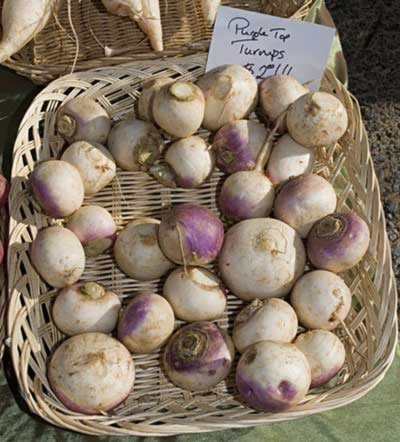
Our top strategy is to eat locally-produced foods as often as possible. (Actually, eating locally is a priority for us based on both our physiological needs and the need for Americans to reduce oil consumption. Produce at the grocery store has traveled, on average, 1500 miles to reach us!) Because we live in an Atlanta apartment with no yard or porch, we are unable to grow anything ourselves except for herbs — so we seek out local farmers. (If you’d care to try an urban garden, this video is a good resource.) Locally-grown foods are sold to us at the peak of their flavor and nutritional value, making them more enjoyable. Buying from local farmers, we are also able to ask whether the foods we are buying have been grown using pesticides. (The organic certification process is expensive for small farmers, so some small farmers may use organic methods but not have government certification for years, if ever.)
Local farmers are able to provide us organic fruits and veggies at a fraction of the grocery store price because the foods have not been sent through any middlemen — ConAgra, anyone? — and because the foods have not had to travel long distances to reach us.
There are three primary ways we get local foods:
- We shop at the local farmers market when it convenes on Saturday mornings. We buy what’s in season there and bring it home, and then I figure out our meals based on what we have purchased. (One great tool for that part is to use allrecipes.com, which lets me search for recipes that contain whatever ingredients I want to use.) I have developed a palate for many foods I had never before considered eating when we began to buy local, in-season foods this way.
- We are also able to purchase local foods through joining a community-supported agriculture program, or CSA. With a CSA, we are purchasing a share of a particular farmer’s (or set of farmers’) crops. The produce is delivered to us once a week at a pick-up spot near our apartment. This month we will start the spring CSA round, getting our fruits, vegetables, and eggs — all organic — for $24/week for two people. You can easily find farmers markets and CSAs in your area by visiting Local Harvest.
- The last way to get local, inexpensive fruits and vegetables is to pick them ourselves. Last summer, for example, my husband and I spent a lovely afternoon picking organic blueberries for $1/pound. In the 60 miles around Atlanta there are places to pick everything from pecans to raspberries to apples, so I hope we will utilize these methods more often in the future. (You can find places to pick your own by going to Google and typing “u-pick” with the name of the food and your state. Or search at Pick Your Own.) Two of my goals for this year are to procure an energy-efficient deep freezer, and to learn to can produce so that we can store our local bounty for longer periods of time!
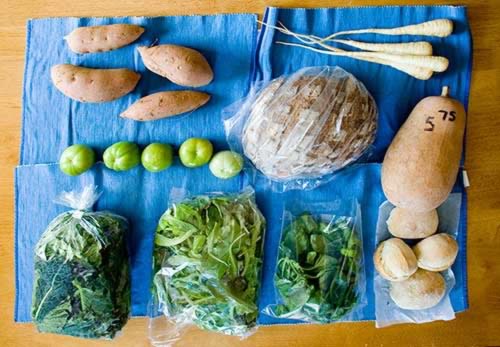
Eating local foods is our top strategy for saving money, but we have several methods of trying to keep our grocery costs reasonable.
- We buy frequently-used items in bulk at Costco (a membership-based store, similar to BJ’s and Sam’s Club) and, if those foods will spoil too quickly, split the items and the cost with friends. Costco has recently developed a much more extensive collection of organic foods than they previously offered.
- We make liberal use of cheap vegetarian proteins: four servings of organic tofu will set you back $2; beans are even cheaper than that. Tofu and beans poorly prepared can be boring or even disgusting, but they can be marvelous when they are well-prepared. And eggs — oh, glorious eggs! A fried egg placed on some peppered asparagus or a frittata loaded with eggs, cheese, and vegetables can be a transcendent experience.
- We attempt to keep our meals as empty of refined foods as possible. Pre-packaged meals, store-bought sauces, etc. are sometimes ridiculously expensive. Keeping many of our meals based on foods close to their natural state (steel-cut oats instead of instant, flavored oatmeal, for example) helps keep costs down.
- We freeze leftovers in individual-sized, labeled containers (we use tupperware-like containers from Ikea and Sharpie’s erasable label system) and take those leftovers to work to microwave for lunches. Doling a dinner’s leftovers into individual portions and freezing them right after dinner prevents us from having rotting leftovers wasting away in our fridge.
- Last, and possibly the least intuitive, we buy high-quality, high-cost items when doing so will mean the difference between an okay meal and a great one. We never want to feel deprived by our meals. Sometimes a small amount of an expensive ingredient makes all the difference. A small amount of pricey, freshly grated parmesan from Italy might be just the thing to give life to some steamed vegetables, or an incredible curry sauce might be costly until you consider that it gives you a satisfying Thai restaurant-like experience for $1 a serving. Sometimes paying a little more is worth it to keep yourself feeling satisfied with lower prices in the long run.
In my early twenties, I developed a hormone-linked cancer. In the process of researching different life elements that create or fight cancer, I realized that if I were to lead a long life, my lifestyle of high meat, processed carb, and dairy consumption had to go — and I had to get rid of the pesticides and added hormones in my diet. The switch to a mostly vegetarian, mostly organic lifestyle has decreased my cholesterol level and blood pressure, reduced my weight, and increased the level of my health. It’s also possible the shift in my lifestyle has prevented the return of cancer. With the exception of prevented medical expenses, those are benefits that are difficult to measure in dollars. Certainly, though, the value to my quality of life is much higher than the cost of increasing my vegetable intake has been.
Vegetarians of all stripes may be interested in The Veg Blog. If you’d like to grow your own vegetables, be sure to check out my wife’s recent GRS article on starting a garden.
This article is about Food, Frugality, Shopping Friday, 2nd February 2007 (by J.D. Roth)


RSS Feeds
Facebook
GRS Twitter


February 2nd, 2007 at 6:01 am
Great post! Another thing to consider is that, at least according to some researchers, the anti-cancer benefits of eating even conventional (non-organic) vegetables far outweigh the cancer risks from ingesting pesticide residues. See this news release from UC Berkeley for example. So if you feel like you can’t afford to buy organic, or if you don’t have a good source of organic produce nearby, you can still get major health benefits by eating more vegetables, even if they’re conventional and not organic. I almost always buy organic produce myself, but I do it because of the environmental benefits of organic farming, not because I think it’s healthier for me. On the other hand, if eating pesticide residues worries you, you probably should seek out organic foods because you’ll probably feel healthier doing so.
February 2nd, 2007 at 6:48 am
Thanks for the link — one entry in particular your readers may be interested in is my Vegan Zine Roundup. Vegan cookzines tend to focus on eating on the cheap and are great resources for those trying to save some money.
February 2nd, 2007 at 7:15 am
I am a guilty omnivore. I love meat, yet I suspect — as Sally and Brad and others have suggested — that an all-vegetable (or mostly-vegetable) diet would be healthier for me. Can anyone point to studies regarding the benefits of a vegetarian diet? Something like “vegetarians live, on average, 3.6 years longer than those who eat meat”? I suspect there have been such studies, but I don’t know where to find them.
Worse, I believe strongly in animal intelligence, that the beasts of the air and the sea and the sky are smarter than we generally credit. It seems wrong for me to eat meat in light of this. And yet I do. I switch off that part of my brain. I rationalize that humans have always been omnivores, that it’s natural, and why should I fight nature? But it’s just rationalization.
The main problem is that I don’t like a wide variety of vegetables. I have some favorites, but the entire cruciferous branch of the family leaves me cold.
February 2nd, 2007 at 7:44 am
J.D., here’s a quote from Bruce Ames, the UC Berkeley scientist who’s been a big champion of the benefits of a diet rich in vegetables:
More here
There are some great vegetarian or near-vegetarian cookbooks out there that would inspire you to eat more vegetables. For most of the last 10 years or so I practically lived on the receipes from one cookbook, The Moosewood Restaurant Cooks at Home, which is a far cry from the old high-fat and granola-crunchy Moosewood Cookbook by Mollie Katzen. The “Moosewood Restaurant Cooks at Home” is full of fast, mostly low-fat, and easy recipes (everything under 30 minutes to prepare) that are sophisticated and delicious. I still cook a lot from that book, but my girlfriend is French and a dedicated carnivore, so I eat a lot more meat now than I used to! Another good choice is Renee Shepherd’s two little “Recipes from a Kitchen Garden” cookbooks, which have some of the most wonderful vegetable dishes I’ve ever eaten. Very highly recommended.
February 2nd, 2007 at 7:45 am
[...] This article came from getrichslowly.org. [...]
February 2nd, 2007 at 8:23 am
Very helpful post. I am contemplating a vegetarian experiment so this will be very helpful getting started.
February 2nd, 2007 at 8:40 am
JD–Start small by eating vegetarian meals a few days a week and see how it goes. I also think, the more you experiment with eating new fruits and vegetables, like you did last night when we dined with you, the more fruit and vegetable dishes you’ll like. Your palate can change over time. I wouldn’t be surprised if it hasn’t already begun to change now that you are eating less sugar.
One of my favorite ways to incorporate vegetarian meals into my diet: homemade soup. Spend some time on the weekends making batches of vegetarian soups, stews, or chilis and freezing them for dinners or lunches. Or make a batch of curry paste to freeze so you can whip up vegetarian curries in no time.
Next time you are over, feel free to peruse or borrow from my vegetarian cookbook collection.
February 2nd, 2007 at 9:05 am
Joining the local CSA is one of the best cost cutting decisions my wife and I have made. It has allowed us to enjoy organic produce at a fraction of the cost.
list of CSA’s near you.
http://www.localharvest.org/
February 2nd, 2007 at 9:19 am
“the need for Americans to reduce oil consumption.”
…
“In the 60 miles around Atlanta”
You can’t do both of these things. Driving a 2800+ lb car (you don’t have an SUV, do you?) 120 miles to buy 10 lbs of produce is not more fuel efficient than walking down to the corner store and buying the fruits and veggies there that have traveled in bulk.
February 2nd, 2007 at 9:29 am
One key thing to mention is that farmers markets are decidedly NOT cheaper for everyone, particularly those of us living in certain large cities. I was shocked when I moved from one of the big, square agricultural states in the middle of the country (where one could buy red bell peppers for $0.25 each at the farmer’s market) to DC. Yikes! It’s worth it to really look at the price per pound and compare to what you can get at grocery stores.
The biggest way I’ve learned to save money on the veggie-centric diet (I eat meat with some meals, but what vegetables are in the fridge determine what I’m going to eat for each meal) is to start paying really close attention to what is in season, and only buying that. No buying tomatoes in February, even if you find a really cool recipe. No squash in June. Not only does this force you to really stretch and learn new recipes/foods (bok choy is both delicious and way cheaper than asparagus in early spring), but it is *significantly* cheaper. More environmentally friendly, I wager, as well.
February 2nd, 2007 at 9:37 am
My experiences with farmers markets, at least the ones near me, have been mixed: good produce, but usually more expensive than the supermarket. My suspicion is that, around here, farmers markets cater more to the affluent than the frugal.
We do however have a good farm shop nearby which is good, cheap, and a local business.
Other tips for cheaper veggies:
a) Keep an eye on supermarket fliers for what fruits & vegetables are on sale this week — plan accordingly.
b) Shop at ethnic groceries/supermarkets — produce is often a lot cheaper, plus you’ll discover lots of fun new stuff. (I’m still working my way through all the various leaf vegetables the Chinese supermarket near me at work offers; it also has fantastic, fresh, locally-produced tofu.)
February 2nd, 2007 at 9:47 am
I have been vegetarian for 10 or 11 years now. We currently live in an area with a LOT of farmer’s markets, which would be nice if the prices were anything like other people experience. Last summer I actually wrote down all the prices for things and found that my local grocery store has everything anywhere from 1/2 to 1/3 the price of the farmer’s markets. My local farmer’s markets must be catering to tourists.
There are also a few CSA things here. I compared the prices, and those prices are completely insane. There is no way I am going to pay 4 times what I pay at the store to support local farms. I just can’t afford that. I went on a farm tour last year and the prices at each farm were completely ridiculous. Most of the farms offer some kind of stand during the summer & fall, which is why I went on the tour–I thought it would be nice to meet farmers and see who might be selling what. I’d love to buy locally but in almost every instance here it is not affordable.
I found a single farm stand that has wonderful produce and wonderful prices and when they set up their table (card table! with an honesty box!) I go about once or twice a week and buy a bunch of stuff, leaving a big tip.
I have found that local is nearly always healthier, but it is almost never cheaper. Fortunately I have a patch of sunshine and this year I hope to grow a bunch of things I like to eat, have a surplus, and freeze or dry that surplus.
February 2nd, 2007 at 9:50 am
I’m sorry, I had one more thing to add. Those pick your own places are AWESOME… except when they are directly under the pathway of Navy jet training areas. Nothing like some jet fuel with your raspberries.
February 2nd, 2007 at 9:51 am
One of our new goals (not resolution) for this year was to eat more vegetarian dishes. A study was published on how Vegan diets limit the needs for medication for Type II diabetes which my husband has. So far we have at least eaten more veggies and fruits and have done so very inexpensively.
Because we can’t afford organic and some of the chain grocery stores here in Chicagoland seem to not know what a real sale is we shop at the local produce markets. There we can get 20 limes for $1, Avacados for $.39 each, cabbage for $.18/lb, etc. They also carry lots of very different produce like pomegranites, baby bok choy, Indian eggplant, persimmons, cactus leaves, etc and we try them every once in awhile.
I also found a new blog (I have no affliation) http://www.veganfamilyliving.com Vegan Family Living that is focused on sharing information on mostly the diet aspect of vegan living.
I love farmers markets but we have a hard time finding one on a weekend that is close by.
February 2nd, 2007 at 10:00 am
CSAs are the best - great way to try new veggies, meet your neighbors, and get access to the best tasting veggies grown by someone you will get to know (and often picked that day!) We’ve been part of the same CSA for four or five years now and we love it. Our farm also encourages folks to come out and pick - last summer we took our (then) one year old out to pick tomatoes - he had so much fun and we got to make a big pot of yummy sauce.
February 2nd, 2007 at 10:00 am
James’ mention of ethnic markets prompts me to offer up a recommendation for Portland area readers: Fubonn out on 82nd Ave. It’s cheaper than Uwajimaya and the produce section is huge. Find a cookbook or two on curries (Thai or Indian), do your shopping there, and you’ll have delicious (and cheap) veggie-centric food for days!
February 2nd, 2007 at 10:41 am
I’ve been an ovo-lacto vegetarian since 2000.
The tricks to becoming a vegetarian are not complex. Some *are* hard though.
When I became a vegetarian, I was living in a fraternity house at college. I didn’t have much money, and there was a lot of pressure and teasing about doing this “unmanly” thing. The small amount of pressure you will get from your parents and friends will not be anything as bad as many of us went through.
Eating out vegetarian:
1. Learn to order ridiculous sounding things “I’ll have the chicken pad thai without the chicken or shrimp”
2. Don’t complain when you occasionally need to order a pile of a la carte items to eat at a restaurant with your friends. On average, you’ll make up for those times with all the times there are normal plates for you
3. Create a short explanation of what you’re doing and why. Say it 42 times one evening (to yourself or partner). Now when someone asks, you won’t have any emotional reaction at all, and therefore won’t dread eating with them.
4. Expect many people to think you’re a PETA. Find one thing to object to about them, and one thing to commend what they’ve they’ve done.
5. Learn the difference between vegan and vegetarian. You will have to explain it *many* times.
Eating with your vegetarian family
1. Buy at least 2 good cook books. I’ll list a few at the end of this list that deal well with this.
2. Learn how to pick out a veggie/fruit that is ripe (I use the book listed at the end). Unripe veggies taste nasty to everyone. And no, tomatoes you buy at the supermarket aren’t ripe. All of those are unripe, just like the green ones. They’ve just been turned red with a dose of ethylene gas
3. Learn to cook more complex dishes. Meat is a complex thing. It has a lot of flavors that stand out. Veggies aren’t very complex things on their own. You need to learn about 6 spices and 4 herbs to really be able to keep your food from being overly bland. I suggest cumin, tumeric, ground red pepper, coriander, mustard seed and black pepper for the spices. For the herbs, learn cilantro, flat leaf parsely, oregeno (dried and fresh) and thyme( dried and fresh).
4. *SLOWLY* change your fat intake. Many people will drop to 1/9th or 1/10 their fat intake when they “go veg” or “go vegan”. This does *not* make them feel good, and also can cause their skin to dry out. We cook in butter all the time (while saturated fat, the buteric acid makes it act more like unsaturated fat in the body). Vegetarians still fry things. My favorite foods are eggplant parmesan (which is fried) and friend zucchini. You will have a much lower *saturated* fat intake when you’re a vegetarian, and you will have a lower overall fat intake (which is only important from a caloric standpoint).
5. Learn to make filling foods. You will eat less protein as a veg. This is not a bad thing from a nutritional standpoint, you need very little protein when not trying to add muscle mass. However, the lack of protein can make some omnivores and new vegetarians overeat (if you’re making stuff that tastes good). I cook dinner for 6-18 friends of mine every Sunday night, and we quite often see them overeating (and borrowing some Rolaids afterwards) when we don’t observe this rule. Learn how to cook things like barley, lentils, steel cut oats and really try to think of “fiber” as a food group.
Eating when visiting friends:
1. This is the hardest part about being a vegetarian. If its a dinner party, let your host know, offer to bring a dish or two.
2. If its an event like a wedding, eat beforehand, and pick around (your eating habits shouldn’t be worth bringing up to your hosts, who honestly have more than enough to worry about). Keep a pack of nuts in your pocket if you can’t eat beforehand, and sneak some to fill you up. If someone provides vegetarian meals, thank them profusely.
3. Some times you have to chose between what you eat and offending people some. You can lie and say you already ate at a catered work thing, etc, but sometimes, you gotta pick your battle. Its not easy, but this just happens sometimes.
I’ll copy this entry at the blog I’ve never started writing in (http://grogandvittles.blogspot.com/) about food.
(This entry is there, and there will be more).
–Michael
Good Cookbooks:
http://snipurl.com/threebowlcookbook - has whole meals planned out for you (honestly a hard part of vegetarianism)
http://snipurl.com/sundaysatmoosewood - Dishes from all over the world (has some fish recipes, but plenty that aren’t fish related).
Good veggie picking guide:
http://snipurl.com/produce_picker
February 2nd, 2007 at 11:07 am
My wife and I were both fortunate to be raised as vegetarians and are raising our three boys that way as well.
I have to chime in with those praising u-pick patches. We pick a ton of fruit every summer. In the past we have picked apples, blueberries, strawberries, blackberries. The places are almost always cheaper than buying at the store and usually much better in quality. We eat lots of fresh fruit this way during the summer and freeze tons of it for use through out the year. There’s nothing like a bowl of oatmeal on a cold winter morning loaded down with lots of frozen fruit (and a dab of whipped cream).
Another great source of inexpensive fruits and vegetables are Amish communities. We live near a large Amish community (in central MO) and buy lots of fresh produce and fruit from them. I like to drive through and envy their beautiful gardens and I like it even more when they start hanging signs up showing the vegetables they have ready for sale. They also bring in fruit from other Amish communities to sell. We buy several crates of peaches every summer from them. They also hold produce auctions periodically, but I have no experience with that.
February 2nd, 2007 at 11:29 am
[...] I recently wrote a guest post on frugal vegetarian eating for J.D. Roth at Get Rich Slowly, and my post is up there today. Go check it out, and while you’re there, check out J.D.’s blog in general. Various posts he’s written on financial issues have had me contemplating some of my choices and making some changes in my life. I really value what J.D.’s blog adds to the blogosphere. [...]
February 3rd, 2007 at 4:30 pm
If you want to read more about the health benefits of a plant-based diet, read The China Study by Dr. Campbell. It is a fascinating read, and (as far as I can tell) good science. A real eye-opener. . . you will never look at aminal proteins the same way again!
February 3rd, 2007 at 5:24 pm
[...] J.D. over at Get Rich Slowly brins us some helpful tips on being a vegetarian for cheap. You can combine those tips with our tips on saving money at the grocery store, even if you are a carnivore. [...]
February 4th, 2007 at 4:10 am
I’m vegan (and have a mostly-vegan husband), and I unfortunately have trouble finding good prices at farmer’s markets here. Back when it was in season, local corn was 3 times the price there that it was in the grocery store, as an example. But fortunately there are many wonderful places to do u-pick here in the summer and fall, which is always cheaper, and that food tends to taste better than what’s in the grocery store.
February 4th, 2007 at 7:17 am
I’ve actually found some of the produce sold at these farmers markets to be quite expensive (or at least in Atlanta). It’s like they are charging a premium now that these things are becoming fairly popular. I find that I get better value at some of my local organic grocery stores (non-Whole Foods of course).
February 4th, 2007 at 2:09 pm
[...] Fresh fruits and veggies can get expensive when you’re eating a healthy vegetarian diet, but there are ways to eat vegetarian on the cheap, too. [...]
February 4th, 2007 at 4:40 pm
I always try to get organic or free range meat. I go to a local butcher so the meat is properly aged and not filled with preservative gases.
I also get a hamper of organic fruit and veggies delivered each week.
These options do cost more, but I have prioritized my health. I try not to waste anything. Last night I stayed up late pickling some left over cauliflower. It was really easy and I can’t wait to sample it.
February 7th, 2007 at 11:26 pm
[...] Here is a nice post from this blog on Frugality. « Folic acid may boost brain power | [...]
March 3rd, 2007 at 9:48 am
[...] 2nd: How to eat vegetarian on the cheap (a guest post from [...]
March 4th, 2007 at 8:50 am
What an excellent post. I’m a lifelong vegetarian and it gets my seal of approval.
For the NYC area I’ll add that Urban Organic is a great option, basically a “CSA that delivers” — like a cross between a traditional CSA and FreshDirect. It costs more than careful shopping at a greenmarket, but some people think the cost is worth the convenience.
March 4th, 2007 at 8:54 am
Also EcoMeal.org, which I’m personally sad about because they stopped delivering to my area for lack of enough consumer interest, but which I have to mention as another outstanding organic delivery service. They’re cheaper and much more eco-savvy than FreshDirect.
March 15th, 2007 at 5:25 am
[...] ones I’ve been incorporating for a while. And I definitely plan on incorporating some of J.D.’s tips on how to eat vegetarian on the cheap once our farmer’s market opens up in [...]
May 25th, 2007 at 1:00 am
[...] Unlimited is a new wedding blog from GRS reader Sally. (Sally contributed the guest post on how to eat vegetarian on the cheap.) Her site is devoted to “having the wedding you want at a price you can afford”. [...]
November 14th, 2007 at 9:47 pm
Ouch - vegitarian. I’d rather die an early death. Seriously. You guys are troopers.
Don’t get me wrong I love certain vegetables and grains. But not nearly as much as slow roasted pot roast with brown gravy.
January 28th, 2008 at 9:33 am
[...] one of the newly found (to me) but growing to be favorite blogs I came across this great article on how to eat vegetarian without breaking the bank. A lot of the tips are common, like buying at [...]
May 18th, 2009 at 3:20 pm
The claim that eating vegetarian is a _claim_, not a _fact_.
It’s true that most of us eat too much meat, but banishing meat for good is not part of a balanced diet and can easily lead to health issues.
So for god’s sake stop this pointless veggie-is-healthy propaganda. Eat less meat or eat no meat because you feel sorry for animals. But don’t expect to get healthy because of it.
For every study which claims vegetarianism is healthy is another one which claims that it isn’t, so just go the middle way and eat less meat, not sacrificing it for good.
May 27th, 2009 at 12:50 pm
old article, but whatever.
You realize vegetarianism isn’t *new* right?
That there are various groups of people that have been vegetarian for a long time. Does the diet of a Buddhist lead to health issues later in their life?
There are more health issues among people that eat meat then those that don’t.
December 1st, 2009 at 8:13 am
For h #34, after giving up meat and dairy I haven’t ever felt better or healthier. It all depends on what works for the individual. Veggie is healthy if done right. Just because you don’t agree doesn’t make it incorrect or propganda.
December 12th, 2009 at 8:41 pm
Yah, I have a feeling that the vegetarians who are not healthy are the ones who don’t have time to cook. It’s the cookbook issue. I was raised eating lots of vegetarian dishes. My mother never wanted to pressure me but thinking back she did not eat half as much meat as I did, and I ate less then most people. I find it continually baffling to realize that people eat meat with every meal!
In any case even I have run into the issue of ‘what do I make for dinner? I don’t know. I could make…no, that has meat in it. What about….no, that doesn’t work either. Maybe I just won’t bother.’
I think not eating leads to almost as many health issues as eating does.
February 1st, 2010 at 11:39 am
Some unmentioned tips that I have found: TVP it is really cheep and a great way to add protein to just about anything. You can make vegi-burgers on the cheep with it and freeze them for that quick meal. Also make large batches of bread by hand and freeze the dough. You can add different things to the various loves before freezing. Try freezing some of the dough in balls for rolls on the quick. Save all those vegi scraps and make your own stock in a big batch then divide and freeze. Soup is so cheep and easy if you already have stock. A couple of weekends of big batch prep and you can have a freezer full a cheep bases for any meal.