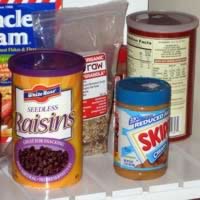
The Thrifty Food Plan Challenge: Eating Well for Less Print
Wednesday, 9th May 2007 (by J.D.)This article is about Food, Frugality, Money Hacks
Oregon governor Ted Kulongoski recently spent a much-publicized week eating on a food-stamp budget. His motive, he said, was to gain a new appreciation for the working poor. Rebecca Blood notes that “the Governor’s stunt is a little misleading”:
No one expects food stamp recipients to eat on only $21 a week (though I’m sure some people try). The USDA’s Thrifty Food Plan (from which food stamp allotments are derived) is spartan enough, but the most recent figures provide an adult male between the ages of 20 and 50 years of age with $35.40 a week for food—part of which will be provided by food stamps, and part by the individual, depending on their income. Regardless, the Governor’s point is well taken. It’s not a lot of money to spend on a week’s worth of food.
Kulongoski’s effort spurred Blood to action. During the month of May, she is attempting to feed her husband and herself on a “Thrifty Food Plan” budget using organic food. She doesn’t know if this will be easy or difficult, but she’s chronicling the process. Her budget is $74.00 per week. During the first week, she spent $65.46.
Blood’s project is fascinating, but I’m more intrigued by the US Department of Agriculture pages she linked to. The Cost of Food at Home page features monthly PDF documents from January 1994 to present. These PDFs provide information about suggested food costs based on a number of factors, including gender and age. They currently list four food plans: a thrifty food plan ($74.00/week for an average couple), a low-cost plan ($93.40/week), a moderate-cost plan ($115.20/week), and a liberal plan ($144.50/week). As Blood mentioned, the thrifty food plan is the basis for food stamp allotments.
The USDA Center for Nutrition Policy and Promotion publishes a 76-page booklet entitled Recipes and Tips for Healthy, Thrifty Meals (PDF). Many of the tips here are familiar to frugal cooks:
- Use planned leftovers to save both time and money.
- Do “batch cooking” when your food budget and time allow.
- Shop with a list.
- Use coupons when possible.
- Try store brands.
- Stock up when certain products are on sale.
- Compare unit price.
The booklet also includes a list of best buys for cost and nutrition, tips for healthy cooking, and fifty pages of recipes. Recipes and Tips for Healthy, Thrifty Meals is also available in HTML format. Or you may order a printed copy from the government for $5.50.
Other information available from the USDA web site includes:
- Dietary Guidelines for Americans, including the handy brochure Finding Your Way to a Healthier You (PDF).
- The Healthy Eating Index, which is a measure of diet quality. (This section baffles me. It’s written in government-speak, and not aimed at the average person.)
- A list of additional nutrition resources.
Last June I asked GRS readers, “How much do you spend on food?” I noted that Kris and I were spending $400/month on groceries and about $200/month dining out. Those numbers remain unchanged. We’ve also discussed healthy food on an unhealthy budget.
[Rebecca's Pocket: Eating organic on a food stamp budget]

RSS Feeds
Facebook
Twitter


May 9th, 2007 at 9:47 am
Wow, if we never ate out at restaurants, we’d still spend about C$400 a month on food for a family of three — and that’s with organic foods. What exactly do people eat that causes them to spend so much?
May 9th, 2007 at 9:53 am
What exactly do people eat that causes them to spend so much?
I don’t know. I was wondering that myself.
Though Kris and I practice certain frugal shopping habits, we eat well. Very well. Despite this, our food costs are not extravagant, at least when compared to the government guidelines.
On the other hand, a friend recently told me he spends $1300/month on groceries for his family of four. They eat very well, as you can imagine, and often entertain.
May 9th, 2007 at 9:58 am
My monthly food budget breaks down like this:
$200 groceries
$180 eating out
$100 work lunches
It looks like a lot for a single guy, but it’s not as bad as it seems. The eating out includes dates, so the majority of the time I’m paying for my girlfriend too. Also, the $100 for work lunches is a maximum. Usually, I have quite a bit of that left over that carries over into my budget for the next month.
I probably only spend about $300-$350 a month feeding myself, which would put be somewhere between the thrifty and the low cost plans.
May 9th, 2007 at 10:04 am
Having just moved in with my girlfriend we are cooking at home much more than going out. We also plan three or four meals for the week and try to eat leftovers for lunch and dinner on the days we do not cook. It has helped our budget tremendously by doing just a little planning. We tend to go out to lunch or dinner a couple of times a month just to not get too burned out.
How many times a month do you go out to eat on $200 a month on average?
May 9th, 2007 at 10:17 am
My wife and I almost never eat out - 1 -2 times a month at most - and our grocery budget is $200/month; that includes breakfast lunch (I brown-bag everyday) and dinner. And I think we eat pretty well. True, we don’t eat steak, but we have roast, salmon, chicken, fresh fuits and veggies, etc. We buy almost no convenience foods - most everything is made from scratch. I can’t believe the “thrifty” plan is still 60% more than our budget.
Is my wife just that outstanding of a shopper? (We are actually *under* budget by about $20/mon, 10%, so far this year.)
May 9th, 2007 at 10:19 am
I generally eat out about 6 times a month. Like I said, I usually pay for my girlfriend as well, so the average ticket is around $30.
I realize that I could cut back, but it’s not really breaking my budget and it’s worth it for me. Since I live by myself, preparing my own food means making 3 meals a day, every day, by myself. There are some tricks that I use, such as making large meals and eating leftovers. However, it’s nice to have a break from it once or twice a week.
May 9th, 2007 at 10:21 am
Funny, we shop at Super Target or Wal-Mart, we do buy a good bit of generic and not a lot of organic (unfortunately) and we spend $500-700 a month on food. It drives me absolutely crazy. When I hear someone spends $400 or less, I wonder how on earth they do it? I make most things from scratch. We do buy things besides food there, though - like diapers, baby wipes, shampoo, etc. Is this stuff factored in to your $400 a month?
May 9th, 2007 at 10:42 am
How many times a month do you go out to eat on $200 a month on average?
That’s a difficult question to answer. We go in phases. We tend to eat out at expensive places during the winter, and cheap places in the summer. (Don’t ask me why — I don’t know.) I suspect that the number of times we eat out during a month remains roughly constant.
I’d guess we eat out about once a week. In the winter, this can lead to some hefty expenses (upwards of $400/month), but in the summer the cost is much less (below $100/month). Also, I try to eat lunch with a friend every Friday, but that’s pretty cheap, really.
May 9th, 2007 at 11:15 am
My budget is the same as dabrfe’s. My husband and I eat the same things every day at work and only buy lunch on very special occasions. We each take a granola bar, an apple, and a lunch item - he has a sandwich and I have 1/2 can of soup.
Dinner is where we splurge. I plan out our meals a week in advance, and cook everything from scratch. I’m vegan, so our proteins are dirt cheap (cans of beans are 70 cents and tofu’s $1/lb) so that means I can spend more money on good, fresh spices, organic fruits and veggies, and our biggest vice - quality coffee.
We attend a vegan meetup once a month where the organizers tend to get delicious all-you-can-eat buffets arranged for $10-15. Otherwise we don’t really eat out much.
I far prefer cooking a really nice dinner then kicking back on the couch with my husband to going to a restaurant where we’re required to - god forbid - wear pants and act like grown-ups!
May 9th, 2007 at 11:21 am
This is fascinating. I have always wondered what other people pay per week or per month for groceries. I allow about $100 a week for groceries. This sort of includes trips to Costco… if I don’t have to buy something at the store, I spend the leftover money on dog toys…
I don’t know how much we spend eating out because my husband drives to the store and buys a sandwich at least 6 times a week for dinner or lunch (he just likes someone else to make it, I guess) and we go out sometimes on Fridays for dinner, but he pays for that. I buy most of the groceries and he pays for dinner out, usually. He is not permitted to go to the grocery store because he is an impulse junkie.
May 9th, 2007 at 11:46 am
As far as what people are eating that causes them to spend so much, as related to food stamp allotments…
I think it has partly to do with neighborhood and access. I can only speak for where I am, which is Baltimore. There are very few supermarkets in city neighborhoods with a higher percentage of people receiving some form of assistance, and those supermarkets charge a noticeable premium on their foods - especially whole foods, ironically enough. Even markets that cater to a more upscale crowd are noticeably more expensive. For instance, not far from my job downtown, Super Fresh has built a small scale market obviously geared to the empty nesters and young professionals moving into the area. I’ve browsed there and picked up last minute items a time or two, and my coworkers and I have remarked how the prices on some things - once again, especially things like fresh meat, fish, and vegetables - are noticeably higher than at the mega markets in the suburbs.
Add to this that an estimated 32% of Baltimore residents have no access to a car and rely on the woefully inadequate public transportation system or on “hacks” - unlicensed cab operators. There’s an entire hack culture and industry built around the city’s few supermarkets - they hang out and wait for people to come out loaded down with the month’s purchases, and for a small fee take them home and help them get the groceries into the house. The whole situation makes access to afordable food a real dilemma for many people.
On the other side, I think all of this has lead to the explosion of Farmer’s Markets in the city - especially the City Market each Sunday. Many of the vendors are equipped with Independence Card readers (our version of food stamps - a preloaded debit card that can only be used at specific places and for specific items). It’s been a great thing because people can get fresh foods at a fraction of supermarket prices, and it is packed with people of all kinds every week.
May 9th, 2007 at 11:53 am
I am really surprised that you spend $600 a month on food for 2 people. Think how much faster you could be out of debt if you could lower that amount? I feed my family of 6 on $400 a month - period. It is challenging, especially as my kids grow and eat more.
However if I had $600 a month for food I am not sure what I would buy. I think I would really have trouble spending that much money on food. Sometimes I think if I only had $50 more to spend each month, then I wouldn’t worry about the grocery money so much. But we have a ton of food in the house, it isn’t as if my pantry is bare by the end of the month. We always have a lot of food here. So while $400 is challenging for us, it isn’t impossible.
Oh, and we don’t eat out for 2 reasons. I have 4 small children and one child has lots of food allergies. It isn’t very fun for us to go out to eat at this stage in life.
May 9th, 2007 at 12:14 pm
I thought about this a little more. I used to work for a food bank. In impoverished areas, there are often no or very few grocery stores. People in those areas depend on convenience foods. Some people have absolutely no cooking skills. Others do not have cooking facilities, can openers, refrigerators and so on.
But, for the average person, I still think even the thrify budget is attainable, if you’re willing to batch cook, eat leftovers, freezer foods and so on.
May 9th, 2007 at 12:32 pm
Yes, I think the thing that people are missing here is that the Food Stamp Program is a federal program with one set of federal guidelines (well, on the benefit calculation part at least) on the “average” cost of groceries. However, a national average is not very precise. Just think about the national average spent on housing–if someone told you the average rent was $600, you’re going to see a lot of people on the West Coast feeling very smug that they pay much less (for a nice apartment, no less!) while a lot of people in East Coast cities are shaking their heads than anyone could even *find* rent for twice that amount.
I moved from Iowa to DC, and my average food bill nearly tripled–and I haven’t gained almost any weight, so it’s not that I’m eating more. Food in DC is just more expensive. I can’t explain it. I’m practically a vegetarian, so it’s not the cost of meat. A huge part is not having a car and having to shop at the places nearest the metro, rather than the cheapest places. The farmers markets alone are about 5 times the cost–in Iowa, you could get a couple of red peppers for a dollar, and here’s it’s around $3 or $4 a pound (which is still cheaper than the supermarket in a lot of cases).
Anyway, just thought I’d point out that the cost of food varies quite a bit across the U.S., so people who spend a lot aren’t necessarily irresponsible or buying caviar every day. It’s really a shame that the thrifty food budget doesn’t take into account location, because it ends up really hurting the poor who live in cities rather than rural areas.
May 9th, 2007 at 12:34 pm
I don’t think the food stamp amounts are that bad. When my husband and I were in college (we got married young, and it wasn’t that long ago) we spent well under the amount that people get in food stamps.
A year ago we moved from the intermountain west to the northeast, and I’ve been struggling to keep our grocery costs down. The northeast is just more expensive. Last month I tried Once A Month Cooking (also called Freezer Cooking) for the first time and cut my grocery bill in half!!!
I’m feeding a family of four for $400/month. That includes lots of fresh fruit, veggies, milk, and things that we enjoy–chicken, steak, roast, pork chops, etc. I also buy one item each week for “food storage” (a three month supply of food in case my husband loses his job, the bird flu hits, etc.)
May 9th, 2007 at 12:41 pm
Has anyone here invested in Consumer Supported Agriculture? I recently became aware that you can buy a share in a farm and they will set aside a portion of the harvest for you on a weekly basis. Here is the information that I found on Wikipedia for it.
http://en.wikipedia.org/wiki/Community-supported_agriculture
Myself and a few friends at my college are trying it for this summer. We will let you know.
May 9th, 2007 at 12:45 pm
The governor’s idea is interesting, reminds of the one dollar / one day blogger. I won’t ruin the ending, but a guy decided to eat only $1 worth of food per day for an entire month, refusing any free food from friends for family and only accepting free coffee at work. Great read.
I have a similar yet very different problem. I live alone and eat alone very often, so batch cooking is hard for me. Most meals from cook books are for four servings, that’s nearly a week’s worth of food, provided I don’t get sick of eating the same thing every night.
Lately I’ve been tossing food because I can’t cook it fast enough or grow tired of the same thing daily. Freezing doesn’t always work either. My total monthly grocery bill is somewhere around $70, so it’s not like I spend a ton of loot on food either and maybe eat out 3-4 times a month.
May 9th, 2007 at 12:45 pm
I don’t really have much to add on grocery store budgets. I hate the grocery store and as a result my husband does most of our shopping and he tends to go once every 3 weeks or so and spends a lot. He buys a lot of prepared foods b/c neither of us like to cook and I eat many of my dinners at work. I’m going to have to take a look at Quiken and see what we are spending. I would like to cook more and have that as an inspirational goal.
I did want to suggest a great book called Nickel and Dimed which sorta follows the gov.’s theme of trying to live on food stamps. In Nickel and Dimed that author tries out various minimum wage jobs and tries to live off the wages (housing, food, health care, etc.). Its a good book to get out of the library.
May 9th, 2007 at 2:21 pm
[...] Eating Well for Less. [...]
May 9th, 2007 at 3:49 pm
We are in Denver, Colorado, and spend about $360 for the month for our family of 3. This also includes dog food and bird food for the bird feeder, and some toilet paper and things like that. This covers most of our meals, including lunches - our dining out budget is about $80 a month. We eat very well, largely organic, lots of “luxury” foods like nuts. I buy lots of things at Costco — if they are a good deal. I also use GroceryGame for coupon lists (although after a year or so, I think I could give it up). The keys for us have been:
– Using a price book like Amy Dacyczyn promoted in the Tightwad Gazette so we know if a deal is a deal or not.
– Using coupons — but not allowing them to influence us to buy extras that we wouldn’t normally buy or eat.
We buy special foods like granola bars with a sale & coupon, and I might pay 60 cents or $1 a box — I would NEVER pay their marked $3.69 a box.
I usually “save” at least 35% on the markdown section of my grocery receipt.
May 9th, 2007 at 4:21 pm
wow,
this is a really interesting discussion! I live in australia, and my husband and i have a food budget of $140 a fortnight - which doesn’t sound like much, but is often much more than I spend. and we do have steak on occasion.
anyway, in terms of emergency budgets, hillbillyhousewife.com has an emergency “$45 to feed a family of 4″ menu. it’s not gourmet, but it covers all the basic foodgroups. and there’s dessert!
also, a suggestion from the simplesavings.com.au website. Try the $21 challenge! for one week, go through the cupboards, see what you have in the freezer - then see if you can feed your family that week with $20 and change. most of us have odd things floating around at the back of the freezer, and this challenge is to try to use them up. some members do it monthly (or less) and contribute what they don’t spend towards paying off their credit cards.
May 9th, 2007 at 6:08 pm
Hmm — I am starting to come to the conclusion that I don’t know how to shop.
I’m also near Denver, and for just myself (and my dog) I budget $300 a month for groceries and usually use it all. I’ve gotten into the habit of only going once every two weeks since it seems like no matter what it goes past $100 for one week or two, which frustrates me every time.
That’s not including eating out. That IS including my dog’s pricey dog food and assorted household items like laundry.
I’ve realized that I don’t ever shop for just the week. Once I see specials that I want, I always stock up, which is why my grocery bill skyrockets I think.
So I needed to stop at the grocery store tonight for a few select items. (unfortunately I did it when tired and hungry). I got through the fresh produce just fine, but then a few great specials caught my eye and they were in places where I have gaps in the cupboard. Of course what I bought will stretch out over a few weeks, but still.
Add that to the dog food and laundry supplies and it was $102.
May 9th, 2007 at 6:24 pm
I think my biggest problem with the grocery bill is living in a small apartment with a small fridge, no extra freezer or pantry space, and a small kitchen with no room to store bulk.
May 9th, 2007 at 6:51 pm
I spend between $100-120 on groceries per month. I’m single, though, and I tend to eat very simple meals. Lots of rice, beans, vegetables, pasta, etc., and meat tends to be an exception rather than the rule.
May 9th, 2007 at 7:50 pm
Ok, I feel like a freak. I feed a family of 3 for $250 on groceries for the big trip and then milk/veggies/fruit runs for another $25/month. That includes all the cleaners, soap, shampoo and most of the other household items. That also includes at least a couple extra adults during a dinner at my place for twice a month.
So $275/3 people/2 meals per day x 30 days = $1.53 per person per meal per day.
(I only include breakfast and supper since my wife runs a daycare with its own food budget that cover our lunches).
It’s not like I’m being cheap either here. I eat roasts, steak, chicken, pork. I have a big breakfast every Sunday. Yet I should point out I avoid prefabricated food. Is that really that much of a cost savings?
CD
May 9th, 2007 at 10:19 pm
Another Denverite here…
We spend about $500 per month for a family of four, and that includes at least one trip to Whole Foods and a lot of organic produce & dairy.
Our budget does include cleaning supplies, but I very rarely buy anything other than dishsoap & laundry detergent because I make my own, using castile soap, vinegar, baking soda & borax (or washing soda) for the most part. Additionally, we don’t buy paper products other than toilet paper. We use only the basic toiletries (e.g. shampoo, conditioner, soap, & a good moisturizer with sunscreen because we live in the mile-high city, after all).
I do keep a price book, but I rarely use coupons because they’re almost always for processed foods, which as a rule we try not to eat. (Cheerios are the biggest exception to that rule.) I make my own bread and sweets, but not to save money. I just enjoy baking. We do not drink soda or coffee.
Generally, I think and that our budget, if anything, is probably a bit too generous. We could get along fine spending less.
May 10th, 2007 at 7:34 am
I spend about $200/mo for just myself. That includes eating out, but doesn’t include toiletries, other household items, or dog food. I don’t eat any meat and rarely purchase beverages, but I do eat a lot of organic foods.
Mike Finch, I too struggle with finding recipes scaled for 1 or 2 servings. You might want to try checking out some cookbooks from the library; I found one that had a section devoted to cooking for one or two people.
May 10th, 2007 at 7:37 am
My boyfriend and I live together in Brooklyn and spend $35-45 per week for a total of about $160 at C-town for most groceries, toilet paper, laundry detergent, etc. However, this store does not sell any produce whatsoever, so we spend an additional $10-15 per week on fruits and vegetables from corner stores or the Union Square farmer’s market near my work. So that’s about $210 on groceries altogether.
We probably spend another $50 per month eating out/buying coffee, though we have been trying to eliminate this spending by putting more effort into planning meals at home.
It is easy to imagine some of the low-income members of our community foregoing the expense of fruits and vegetables, since these are either not in the neighborhood (farmer’s market) or do not accept credit cards or food stamps (corner stores.) On top of that add the convenience of a bodega (most do accept food stamps) on every corner selling chips, soda, and candy bars for cheap, and it’s hard not to understand the source of the childhood obesity rampant in our area.
May 10th, 2007 at 10:48 am
There was a similiar post on June 23rd 2006 (in the archives) on how much do people spend on food….(wow, I know this site well!) If people want to read up more about it.
I am single, and spend $30.00 a week on food. That includes breakfast, lunch (brown bag), and dinner, and enough chicken broth and canned tomatoes to make soup out of leftover veges and meats. I also foodsaver leftovers and make a large batch of soup each week. I eat meat at every lunch and dinner accompanied by fresh steamed veggies. I never buy brand names. The secret is to know where to shop. In Massachusetts and southern New Hampshire, theres a chain of supermarkets called Market Basket….cheap cheap cheap!
May 10th, 2007 at 12:10 pm
On the other end of the equation, last month we spent over $500 on eating out.
I’m not so sure about what we spend on groceries - hubby does most of that, and a lot of what he buys depends on what’s cheap that week. So one month we’ll have one grocery run of $150 or so plus $20-40 at farmer’s markets. Around Thanksgiving / Xmas (lots of specials) we might spend $300 or $400 filling the freezer and pantry, and every few years we get a side of organic grass-fed beef. So the best measure would be to average it out.
May 10th, 2007 at 12:19 pm
We spend a fortune on food, it really annoys me and I’m always trying to reduce costs. However, there are genuine reasons for our higher costs:
We’re in the UK where prices are quite a lot higher than the US
We eat organic fruit and vegetables (although it’s not much more expensive because we tend to throw away less and I’ve noticed we’re also eating less meat and a lot more fruit and veg, which is obviously good for our health and our finances)
We get most of our groceries delivered so we aren’t able to pick up deals in the store
We have three adults who all work from home so we’re eating all our meals and snacks here, plus we have a teenage boy and you know how they eat!
Although we usually eat very healthy home-made food, we’re all dealing with chronic illness and if everyone is ill at once we tend to resort to takeaways out of desperation
Our health issues mean that we can’t eat a lot of ‘normal’ food - my partner can’t eat potatoes or tomatoes, which cuts out a lot of cheap standards. I can’t eat gluten and gluten-free foods are a lot more expensive than versions containing gluten. We also tend to avoid dairy and sugar and we do quite a bit of our shopping at health food stores.
Obviously some of this is choice but other things, like the potatoes and gluten, really aren’t (believe me, I would love to be able to eat ordinary bread again but it really isn’t pretty when I do). I’m not trying to make excuses here, just wanted to point out that there can be valid reasons for higher food bills that don’t include eating champagne and lobster every night.
May 13th, 2007 at 11:27 am
For me, the hardest part about thrifty food budget spending is figuring out how much to buy, planning the right size meals, and planning well for leftovers.
When you first start your store purchases, you will have to buy some items that are not on sale. After all, if you are out of corn and corn is not on sale, you will have to pay full price. But, most of your purchases should be only the sale items. Buy enough to last until that item is on sale again. If that means you have to buy 12 lbs of boneless skinless chicken breasts at $1.79 a pound, then you won’t need to pay $2.99-$3.99 a pound when it is not on sale. Same thing for other meats. Frozen veggies also hold up well and I stock up when they are $1 for a 1 lb bag or less. Leftovers can still be nuked the next day.
As far as the size of the meal, I bang my head everyday. If I cook for just my spouse and I, her son and girlfriend come home hungry. If I cook for all 4, they come home and have already eaten or are going out to eat…..I just can’t win.
I tried the “save the leftovers in the fridge” bit, but it just turned out to be a temporary garbage can.
That leads to the last part, and plan for leftovers. I now immediately freeze “home tv dinners” with leftovers. You can use freezer safe plastic containers, foil pans, or anything you have available. I used to collect the “Stouffer’s” pans from friends who eat that high sodium stuff, put my meals in them, then cover with heavy foil and freeze. On weekends when spouse works, or when she is working late, I just take one out and nuke it. Also helps with portion control.
Love your articles, JD. Keep up the excellent work!!!
May 14th, 2007 at 9:19 am
How much is the difference in what people spend per month attributable to geographic location? Is food more expensive in some places than in others?
I live in Michigan, and my wife and I (no kids) budget $350 a month for groceries, including toiletries and non-food consumables in that figure (soap, laundry detergent, dishsoap, toilet paper, paper towels, garbage bags, cleaning supplies, shampoo, toothpaste, deodorant, etc). We only buy meat on sale, and buy enough to last for 6-8 weeks, keeping it frozen. If it runs out before it’s on sale again, we don’t have that kind of meat for awhile, but we’re both okay with eating most meat, so it hasn’t ever been a problem to not have something for a few weeks.
We often come in under budget. Our eating out at restaurants budget is not included in that, but we only allow ourselves $100 a month of “fun money”, which is used for eating out, movies, bowling, roller-skating, or anything of the entertainment variety.
Our diet includes shrimp, steak, fish, chicken, beef; frozen vegetables; rice, noodles, potatoes. Most dinners are made of a mix of those three things: steak, baked potato and veggies, or shrimp mixed with noodles and veggies and stir-fry sauce, or spaghetti and chicken with vegetables on the side. Lunches are usually leftovers or sandwich or soup/salad and fruit; breakfast is cereal/fruit/toast or eggs/fruit/toast; occasionally bacon or pancakes. We eat really well as far as I’m concerned.
May 14th, 2007 at 9:26 am
Some of the folks wondering why people eat so poorly on food stamps might be interested in this article:
http://www.michaelpollan.com/article.php?id=88
May 15th, 2007 at 7:59 pm
If anything I think the numbers might be generous. My typical budget was $75 a week for 3 people for groceries ( which often included non-food products like cleaning products). I dont really follow a budget anymore, but when I did I managed fine. And I wasn’t in any kind of desperation mode. We werent having Ramen for dinner or anything.
June 14th, 2007 at 9:13 pm
[...] much closer to the USDA’s “thrifty food plan”, a topic that’s been popular recently (the comments are especially interesting on that last link). Knowing that $300/month for two people [...]
July 11th, 2007 at 6:12 pm
[...] But it isn’t — especially if you bend the rules to follow the rules. For a great overview of the whole situation, check out Get Rich Slowly’s post on the matter. [...]
July 21st, 2007 at 1:01 am
Grow your own (practical on even a VERY small amount of land … small enough that you probably don’t even have to own it.)
You do NOT need meat. Get over to it.
Cook 2-3 times a week, alternate between leftovers.
Learn to ‘convert’ leftovers into a completely new dish. Pinto beans become ‘refritos con chile y queso). Cold mashed potatoes with an egg squeezed into them become potato pancakes … ‘gourmet’ if you add some dried dill, parsley or other favored seasoning … and on and on.
An egg and some lame-looking cooked veggies become an omelet.
$5 per person per day is plenty. And then some.
July 21st, 2007 at 7:45 am
Buy buying my beef a side at a time through my employer (see “How To Buy a Side of Beef”, I pay a total cost of $2.20 per pound. This is after meat costs, kill fee, cut and wrap fees (in commercial vacuum packing) and allowing 20% loss for bone, excess fat, etc. This means a proper 4 ounce serving rings in at about 55 cents. Not a bad price for meat fresher and better quality than you can get at any grocery store, and well within my budget.
August 27th, 2007 at 2:00 pm
I SPEND 1,000 A MONTH ON FOOD FOR 2 PEOPLE. mY TEENAGE SON HAS FRIENDS WHO EAT HERE AND HE TELLS ME WE NEVER HAVE ANY FOOD COMPARED TO HIS FRIENDS HOUSES. tHIS SUMMER IT WENT UP TO 1200. i HAVE NO CLUE AS TO HOW YOU ALL EAT. i DO BUY LOTS OF ORGANIC, THE DAIRY IS HIGH WHEN ORGANIC.
November 15th, 2007 at 5:00 am
[...] The thrifty food plan challenge: Eating well for less [...]
November 18th, 2007 at 5:57 am
I enjoy reading about how others save money at the store. I need to comment on the Food Stamp issue….More than once I have been behind people who are making food stamp purchases and they are definitely NOT making the most of the money they receive. To give them the benefit of the doubt, maybe they are buying steak, lobster and other expensive extras because you can’t use food stamps at restaurants ??? I am not saying all people on food stamps do that…there will always be the ones that abuse the system and I am a firm believer in EDUCATION when it comes to helping people. I have never been on food stamps (tried years ago under extreme circumstances but turned down because I had a car that wasn’t a piece of junk) but I believe that if more people were educated about how to shop, and actually took the advice, they could stretch the food stamp dollars better. I see alot of “Kid Cuisine” meals and canned ravioli in some and that food is just CRAP. I also have to add that when I would see the “Feed the Children” commercials and they would show a person’s refigerator with a huge jar of Miracle Whip and the big jar of dill pickles I would wonder….”could you buy less of those and put that money towards something else more cost effective?” But again that goes back to EDUCATION. I don’t think just giving them free food without some knowledge is the answer. I could also rant on about how people take free food but smoke, have satellite tv, and drive brand new cars but…….I will get off my soap box and thank the veterans for being able to speak my mind !!
December 6th, 2007 at 2:52 pm
[...] The U.S. Department of Agriculture’s information on the cost of food. [...]
July 31st, 2008 at 6:51 pm
I feed a family of 7 on about 4oo.00 a month.We live on one income and get177.00 a month in food stamps.We have a real hard time making it from payday to payday.A lot of times we literally have nothing in the house on the first and 15th.
August 21st, 2008 at 2:04 pm
For our family of 5, our monthly bill now averages $700 per month. We could give up meat or produce. I won’t sacrafice produce because it’s needed for optimum health. I was vegan for 10 years and learned how to eat cheap and super healthy. My husband and kids, on the other hand, refuse to give up meat, which is not needed for optimum health.
Since the beginning of spring/summer, our monthly average grocery bill has gone up approximately $150 per month (up from $450/550, now its at $650/700). So now, my husband is looking forward to more (not all) vegetarian dishes. We rarely eat out unless we get a gift card for a gift or something like that. I cook mostly from scratch, which is oddly expensive.
Eating healthy now and later can contribute to future health care savings and possibly nix the need for medications, not always though. I have friends who struggle financially a lot worse than we do and they are unable to afford the simple luxury of fresh produce or good meats. They live on hot dogs and hamburgers and boxed side dishes. It’s truly terrible.
Who knows, one day all of us may end up having to share living space with neighbors just to stay afloat financially.
December 18th, 2008 at 12:39 pm
I think most Americans aren’t happy with simple diets. You can buy a large bag of beans and brown rice at a wholesale house, Smart and Final, for under $40. They will last a long time. Carrots are cheap and during the winter so is cabbage. I made a batch of hummus on Monday and I’ve been eating it with trisket crackers for lunch and an apple every day. .60cents worth of garbanzo beans for the hummus with three lemons and sesame seeds,and garlic. Probably about $1.50 for the hummus and I’m on the 4th day. $.2.00 for a box of Trisket whole grain crackers, apples, not sure. Oatmeal for breakfast, cabbage and mixed vegitable chicken soup for dinner. Yes, simple. I have also in my frig some cooked brown rice for stir fry with vegies and some black beans with tomatoes for burrito’s. Frozen vegies are often .79 cents a # on sale. I stock up. I would say it all is under $15 a week. All healthy, all simple.
March 25th, 2009 at 4:11 pm
I feed my family for $30.00 a week. Vegetarian meals that are very tasty. No processed or boxed foods. I make my own cheese weekly. My own whole wheat with flax bread too. We are not hungry. We have whole grains. Fresh fruits and veggies only. We make our own spaghetti sauces from scratch. We have seitan for meat substitutes. Sometimes tvp but I feel that is not quite as healthy. I don’t understand how it can be difficult to be healthy on food stamps. I find vegan meals to be much cheaper than standard fare but you just have to shop! I want to have healthy food everyday. I work hard to make it happen. It is a priority. We don’t even purchase fruit juice or soda pop.
March 30th, 2009 at 3:01 pm
What specific goverment address is used for
ordering the $5.50 copy of —
Recipes and Tips for Healthy, Thrifty Meals?
Thanks - Sharon