The Myth of Multitasking: How Doing It All Gets Nothing Done
Published on - August 21st, 2008 (by J.D. Roth) Multitasking has killed my productivity. At this moment, on this computer, I have:
- Five open browser windows with a total of 59 open tabs (in Safari)
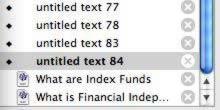
- 79 open text documents (in BBEdit) — I am not joking
- 14 open images (in Photoshop)
- 55 unread messages in my mailbox (and 48 additional unread Get Rich Slowly comments)
- Three open chat sessions
- Seven open word processing documents (in Microsoft Word)
- And ten other open applications

That’s 227 discrete tasks awaiting my attention. That doesn’t count the dozen or so books submitted for review, the eight unread personal finance magazines, and the pile of papers spilling onto the floor.
Do you know how many tasks I can focus on at a time? Only one.
And do you know how productive I am because I try to do so much at once? Not very. By trying to do it all at once, I get very little done. According to author David Crenshaw, I have bought into The Myth of Multitasking.
The Myth of Multitasking
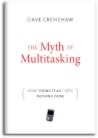
Multitasking is a misnomer, Crenshaw argues in his new book. In fact, he says, multitasking is a lie. No — multitasking is worse than a lie. Crenshaw writes:
When most people refer to multitasking, they are really talking about switchtasking. No matter how they do it, switching rapidly between two things is just not very efficient or effective.
His book contains a marvelous exercise with which readers can prove to themselves that this is actually the case, that “switchtasking” takes longer than actually doing one thing at a time. In “The Autumn of the Multitaskers” (from the November 2007 issue of The Atlantic), Walter Kirn also wrote about this phenomenon:
The great irony of multitasking [is] that its overall goal, getting more done in less time, turns out to be chimerical. In reality, multitasking slows our thinking…A brain attempting to perform two tasks simultaneously will, because of all the back-and-forth stress, exhibit a substantial lag in information processing.
Multitasking — or switchtasking — makes us less productive, costs us time, and generally leads to the feeling that we’ll never catch up.
In search of lost time
Crenshaw’s book suggests some tips for overcoming multitasking in the workplace. In addition, his website offers three “beginning steps” to help slow down switchtasking in your life:
- Take control of technology. Make space for yourself. Turn off your cell phone. Close your e-mail and chat programs. Shut the door to your office. Or, if you’re like me, learn to deal with one browser tab or one document at a time.
- Schedule what can be scheduled. To minimize interruptions and mindless switchtasking, schedule whatever you can. Learn to use a calendar to schedule meetings with people so that you can give them your full attention. Set aside specific times each day to check your voicemail and email. (This is a technique that Tim Ferriss preaches in The 4-Hour Workweek.)
- Focus on the person. When you deal with other people, be in the moment. Do not divide your attention between the conversation and another task. Be an active part of the conversation. Listen. Take care of everything before moving on.
The Myth of Multitasking is a short book that conveys a single, critical idea: to do two things at once is to do neither. While I think this book is excellent, and while it was exactly what I needed to read at this point in my life, I would not be willing to purchase it for the $20 cover price. It’s well worth a trip to the library, though. (And it might make a good gift for a boss or spouse or a co-worker.)
On the other hand, if Crenshaw’s book really can make me more productive, then it’s worth $20 and much, much more.
GRS is committed to helping our readers save and achieve your financial goals.Savings interest rates may be low, but that’s all the more reason to shop for the best rate.Find the highest savings interest rate from Ally Bank, Capital One 360, Everbank, and more.
This article is about Books, Hints and Tips, Self-Improvement
Disclaimer: This content is not provided or commissioned by American Express. Opinions expressed here are author's alone, not those of American Express, and have not been reviewed, approved or otherwise endorsed by American Express. This site may be compensated through American Express Affiliate Program.
Discover is a paid advertiser of this site. Reasonable efforts are made to maintain accurate information. See the Discover online credit card application for full terms and conditions on offers and rewards.
SEARCH FOR RECENT ARTICLES


I am terrible at ignoring email and the net(look where I am right now). However,closing the door is a good idea since I work where people are likely to come in to chat and complain and sit while I am trying to work. Unfortunately, people with a valid need to see me are less likely to come past a closed door than those who are just looking for a chat. And I have a co-worker(non- worker) who talks loudly on her cell phone for hours each day(somehow she thinks that is better than speaking quietly into her desk phone, plays her radio too loudly and now has started to watch Tv an hour or two a day on her computer- so closing the door is almost a necessity! Mgmt ignores this- we have non-tasking mgmt- no work savs a lot of time for them
loading....
If you’re in a position where switching tasks is a frequent requirement, make a quick note of where you’re leaving off before switching to the next “fire.” This few seconds will end up saving a lot of time when you come back to the task and try to figure out where to jump in.
loading....
Take a look at NowDoThis.com. I saw it linked to on ZenHabits a while back.
It’s a delightfully simple way to keep track of your goals for the day, while not getting trapped into thinking you’re multitasking.
loading....
Like NowDoThis, there is also Nozbe.com (free and paid versions), which follows the book Getting Things Done! JD if you can manage to get all those tasks listed and split into projects, you can isolate just the NEXT action needed for each project.
I stick with the free version because it forces me to only have 5 projects. But the “next action” page is great – I don’t have to worry about the entire list. And, remember the 80/20 rule – are all those 227 things part of your 20% most important activities??
loading....
We consume information but do we ever stop to think of what it is that information consumes? It consumes our attention.
To be “information rich” is to be “attention poor.”
Much like a portfolio of investments, we should “allocate our attention” to overcome the poverty it would otherwise create…
loading....
That is such a temptation on the computer…it takes no time at all to get 50 different projects going, all while you’re sitting in one chair.
loading....
i’m most productive when i’m not at the computer. fortunately, my job is not really a computer based job.
i have several large-scale projects going on at any given time. each project has a dedicated timeslot in my day, because these things run on a 24-hour cycle.
this is what my boss refers to as multitasking- managing multiple projects at once. i do not multitask in the sense that i’m trying to do more than one thing at one time. i always focus my attention, because if i don’t, i might lose 3-4 WEEKS worth of work by messing up! that’s more than most people stand to lose.
loading....
Arrrrrggggghhhhhh, I HATE multitaskers. I work in a call centre and people call us all the time to discuss their bill or troubleshoot their computers or phones or cable boxes and they are always doing something else. People call us on the freeway to pay their damn bill and I have to listen to them rummage around for their Visa card. Or I have to use every fiber in my body to not flip out at a customer with a screaming baby in the background cause she thought it would be a good idea to call me while she is giving junior a bath. Then there are people who put me on hold to take another call. Remember back in the days of yore when you took one phone call at a time? The world did not stop spinning.
Of course since they are not concentrating on any of their tasks, I have to repeat myself over and over and over again, stretching a 4 minute call into a 24 minute call.
Multitasking is evil. Eeeeeevvvvvviiiiiillllll. It must be stopped. Okay, I am done my little rant. Thanks for listening.
loading....
JD,
We are all craftsmen in our respective trades, and each craftsman uses one tool at a time, and for a particular task that one tool gains primary focus. When a car mechanic is changing out a radiator, he’ll primarily use wrenches to loosen bolts. A salesperson will use the phone to arrange meetings with customers or talk to remote clients he can’t see in person. The writer will use their word processor (or pencil and paper
) to write their ideas. The system administrator will use a program to connect to the systems he manages so he can make updates or troubleshoot issues.
We all have tools in our respective toolboxes. Each one can only be used at a time, but that doesn’t mean the others aren’t used on the same job. The car mechanic will also use a funnel to drain the radiator, or pliers to clamp a hose. The salesperson will use email for non-realtime communication. The writer might need to have 59 tabs open on their web browser to research what they are writing about. A system administrator might have a ticket tracking tool open to update the customer on a problem.
Knowing which tool to use at the right time is a project management skill everyone needs to learn early, or else they end up with too many tasks to work on, their tools spread out in a mess around them, and a high degree of stress while they try and make it all work.
loading....
@The Financial Philosopher
‘To be “information rich” is to be “attention poor.”’
You don’t need to divert your attention to every bit of information coming at you, all the time. Computers are a tool, and need to be used properly. You can wrap yourself up in distractions at your computer, or you can use them to focus information in the most useful way.
I use Google Reader to organize all the different sites I read each day. I use it specifically to gather information that is of interest or relevance when I sit down to use it. If something isn’t relevant right then, I mark it read and move on. If something is interesting but not relevant, I bookmark it for later reading, tagged on Delicious so I can find things that are relevant. Everything that I find both interesting and relevant gets read, and I move on to the next task.
For example, I have now finished going through my Reader list for personal finance topics, bookmarked the work related topics that I will read later, and caught up on my comics
. Now my attention will shift to getting ready for work.
loading....
Over the past few years I’ve tried getting off the multitasking bandwagon. Now I’m all over the idea of singletasking. If you’re going to do something do it and do it right. Rather than having 14 things open at once focus on one. Do it till its done and move on. If you’re still overloaded cut back.
I think I’ll have to give this book a read.
loading....
I don’t agree that multitasking makes you more inefficient. But yes if one will try to do 100 tasks at one time, thats a problem. Otherwise, managing 3 – 5 tasks at one time can really be productive most of the time.
loading....
I hate multitasking. I am a guy and I can’t do it. I like to keep it simple. One thing at a time. At the moment I am trying to flip 3 websites for cash and run my own blog and I am finding focusing on 4 different blogs a very difficult task.
Decided to mainly focus on my one blog.
Multitasking is for the special people…but not for me
loading....
Thank you! This is so true. And you’re right that you don’t need to spend $20 to figure it out.
I like what jtimberman says about the use of tools: I also have several browser tabs open and a number of programs running, because when I’m editing scholarly copy I have to check facts. Meanwhile, if I’m working from home, I access Outlook through a Web interface, and I don’t want to have to reload it every time I feel like checking e-mail. If I’m reading math copy, I need Acrobat Professional, Word, and sometimes Excel to be running at all times, plus I need several hard-copy reference works at hand, especially if the author is not a native speaker of English.
That said, I think you still have to work hard not to be overwhelmed by the demands of these tools, which sometimes come at you (e-mail, chat, & phones especially) instead of working for you.
I effectively disabled the dratted telephone. I won’t use the Great Desert University’s annoying voicemail system. Instead I put my own answering machine on the thing, and I use it to screen my calls. If we’re having a meeting in my office, I turn the volume down so caller’s yakking (some of them go on at length!) doesn’t interfere with conversation. If a call comes in when I’m focusing on a job, I let the caller leave a message unless the matter is so urgent it can’t be put off till I finish what I’m doing. And I refuse to use a cell phone for anything other than emergencies — I don’t answer it and I don’t return voicemails, since they’re from people who called the wrong number, anyway.
An electronic calendar can help block out time for quiet work. At GDU, when someone “invites” you to a meeting in Outlook, they can see your schedule. The dean’s secretary sees that I have a lot of “meetings” during the times when I do my best work, and that deflects her from summoning me at inconvenient times.
And of course, the list: I use hard-copy lists to outline tasks and list them by priority.
When I leave my desk, I make a note on a yellow pad that says “Next: [enter the next step here].” This helps when you need to return to a task in progress.
@ slackerjo: People who have to work phones have my sympathy. On the other hand, if their employers would refrain from sticking people on the hold button and making them listen to aggravating ads or gawdawful music, then callers wouldn’t behave the way they do. When I have to call a business with a punchabutton maze, as soon as they start to pump ads or Muzak into my ear, I switch to the squawk box and go on about my business. While I understand that it’s not YOU who has treated me rudely, by the time you get to me I still have already been treated rudely by your company, and so I feel no obligation to do anything other than what you describe. Punchabutton phone mazes are abusive; you can’t be surprised if callers respond with something other than sweetness and light. Or if they decide to use the wasted time on hold doing something constructive.
loading....
I heard this quote somewhere and I always remember it:
“Multitasking just means you can do many things, but not very well”
loading....
I know that e-mail is the worst drag on my time. In fact, after reading this, I shut my open e-mail window and plan to ignore it until 4:00 today!
loading....
Even though I have 4 businesses I run including my blog. I have to focus at one at a time. The key is to schedule different time periods to focus only on one thing.
Email is a killer.
loading....
Great! I’ll pick up this book and read it while I’m watching TV, listening to music, and keeping up on my internet feeds. All at the same time!
loading....
I can’t ignore email, in fact it kills me to watch the email icon on my google alert. I too have a mac and can’t imagine my processor keeping up with all those applications. My powerbook g4 slows down once I have 6 tabs open on firefox and itunes running. You must have one amazing mac!
loading....
59 open browser tabs? I generally peak at about 8 browser tabs, and I thought I was bad.
A few months ago I found a cool (free) tool called Rescue Time http://www.rescuetime.com You can install it on your computer and it tracks what applications and websites you are visiting, and then totals up the time spent at each so you can evaluate your productivity. I haven’t used it to increase my productivity at all, but it’s fun to see where I spend my time.
loading....
Yeah multitasking is bad.
In fact it reduces IQ!!
Attempting to carry out multiple of tasks simultaneously just doesn’t suit the way that our brains work. In fact, research shows that multitasking reduces your intelligence more than smoking pot (I could have given you the link here, but then you would have to multitask and lose attention =P ). This happens because the brain can only truly concentrate properly on thing at a time. It takes a while for the brain to assess the task at hand and what has to be done to complete it. Certain tasks require a lot more concentration than other tasks because they require a creative response to the stimulus at hand.
Finally, is effective multitasking possible? I would say “Yes” but only in a very partial way. For tasks that we are fully skilled at, that don’t need any problem solving and that can be done on ‘involuntary’ then it is possible. For example, most people can drive while listening to radio. A good musician can play guitar while sing at the same time. I, myself can perfectly run while chewing a gum while thinking what would be dinner that night. If it’s simple, or if it’s learned through repetition, then its reasonable but for new and unique tasks, then forget it.
Sam
Fix My Personal Finance
http://fixmypersonalfinance.com
loading....
I’m a terrible multitasker. I’m learning to give it up little by little.
The turning point was when I realized that I was doing a crappier job with the truly important tasks, just to get ahead by a few minutes on something irrelevant.
And I finally stopped trying to do anything else when I’m on the phone. Mom deserves better than half my attention.
loading....
another writer makes a bold statement to get your attention, then rephrases the title in his book to deliver a boring and useless message of common sense.
If you’re the organized chaos type, you can multi-task. I would include myself in this group. Yes we are difficult at completing a project but more than capable of doing so.
If you are like the most important women in my life (mom and girlfriend) and insist on order and neatness, you can’t multi-task.
JD, that is more than chaos; with that type workload going on you could probably cook dinner on the computer, especially if thats a Macbook
loading....
227 tasks — blows my mind. And 59 tabs, wow, and I thought I was bad. I “multitask” because I can’t keep my attention on one thing for very long — I looked at probably 5 other websites between starting and finishing this post and its comments. But I am excited about NowDoThis.com that someone mentioned above. It’s now sitting there staring at me no matter what webpage I’m on, remind me that I actually work to do.
loading....
I have never been a fan of multitasking. Also, I tried using Google Calendar, Todoist.com, and dontforgetthemilk.com; however, I was not able to stick to any one of these in the long run. Finally I returned to basics – which is just putting down everthing on a piece of paper.
A Dawn Journal
http://www.adawnjournal.com
loading....
Thanks for the post, JD.
If you want to take a multitasking test online, go to:
htp://www.davecrenshaw.com/exercise.html
I’d love to hear your results!
-Dave
loading....
I read similar information about the scientific study behind why multi-tasking is a myth in the book “Brain Rules” by molecular biologist John Medina. While it isn’t focused on productivity, I enjoyed the book and would recommend it to anyone interested in knowing more about how we learn and retain information.
If you want a sample of what it’s about, Dr. Medina’s site is here – http://www.brainrules.net/
loading....
I will refrain from being a big geek talking about the neuroscience behind this. Instead, I will just say that the best thing to do is figure out how long your attention span is. I can only focus on one thing at a time for a few hours or so. After that, productivity goes down because my brain needs to be excited. So I “switch task” every few hours.
Single-tasking does NOT work for me – if I worked on something until it got done in its entirety, I would never get anything done. Instead, I have to break things up into smaller pieces and go back and forth (just not every few seconds).
But multitasking is not all bad. I can think of times when it works well for me – I catch up on the Daily Show while running on the treadmill. I read a book/do work while commuting on the train. I chat with friends while unloading the dishwasher. Certain tasks do not need your full attention the entire time – my entire thinking brain doesn’t need to be involved in deciding whether clothes are dark or light, when I’ve got an algorithm in place due to practice. The trick is to find out which tasks you’ve got on automatic.
loading....
Great post – you must have a powerful PC (or is it a Mac) that is able to run all those tasks. You may be able to only do one task at a time, but you should be able to think of multiple tasks to be done…this is where organization is crtical and start by cleaning up your “paper” clutter. See more on this : http://www.savingtoinvest.com/2008/04/financial-spring-cleaning-organize-your.html.
loading....
Wow, JD, I thought *I* was terrible about task-switching, but your numbers make me look focused!
I find Crenshaw’s quiz — at least the online version — to be rather disingenuously skewed. The keyboard tabbing is set in both samples to go down each column separately, so that for the ‘multitasking’ option you have to mouse-click each field, whereas in the ‘solotasking’ option you get to use the much faster keyboard shortcut. Not fair …
loading....
@ jtimberman:
“You don’t need to divert your attention to every bit of information coming at you, all the time.”
I never said that one needs to “divert” their attention — I used the word “allocate,” which has a fundamentally different meaning.
Perhaps you intended to expand on my point, which was to say that the over-abundance of information enables an individual to become “attention poor” if their attention is not allocated properly.
Having access to a wealth of information does not, by default, make someone “attention poor.” It only makes it more possible…
By the way, like you, I also use a Google Reader. It sounds as if you are following my implied suggestion exactly…
Cheers…
Kent @ The Financial Philosopher
loading....
I have been thinking of reading the “Getting Things Done” book (I forget the author). Has anyone read it? I guess that is just one more thing to get done!
loading....
I have this lofty goal: get all my tabs and documents closed and start from scratch, handling one thing at a time. The problem with this is that it means I can’t start anything new. I can only process existing stuff. It doesn’t work well. I think this is the sign of something deeper, the same something that makes me hoard useless crap.
loading....
deepali: The book addresses these as two different types of tasking:
Switchtasking: Focusing on multiple tasks that require effort or attention
Background tasking: Focusing on on tasks while something mindless or mundane occurs in the background.
You’re right: background tasking can actually be very efficient.
However, what most people are referring to when they talk about multitasking is switchtasking.
Karawynn: There is nothing disingenuous about the test…just poor programming. We’ll work on fixing that.
Also, did you try the offline version, as well? The results are the same.
loading....
I’ve always been a terrible multi-tasker. I have to do one thing at a time; that’s the only way that things get done well in my world. Women often brag about being fabulous multi-taskers, which can make those like me feel less capable. I fail to see how not giving full attention to any particular task is superior. It’s nice to see the research backing up what I’ve always known to be true for me.
loading....
I don’t know whether this is technically referred to as switchtasking or multitasking, but I function best when I have several tasks going at once. I like to think of my brain as a stove top; I’m just moving things around on the burners. I might be focusing on one thing when I’m suddenly struck with an idea relating to something on a “back burner” so I quickly shift topics and work on the new idea.
My mind enjoys being very active; when I only have one thing to focus on, I get bored with that and start thinking about all sorts of other things. Maybe I just work best under some sort of self-imposed pressure, but I’ve always enjoyed multitasking – or switchtasking, as it were – in school and in each job I’ve had.
loading....
I think one’s efficiency with multitasking also has to do with the complexity of the tasks involved.
I can do certain things — like orchestrate the preparation of several dishes for a meal — very well and that requires multitasking.
I can also multitask well with something like juggling laundry/household chores.
I CANNOT handle multitasking when driving. Nor can I multitask if I’m trying to write. Both of these require my full attention.
I also cannot handle the complexities of my job particularly well, although it also demands I multitask a lot. I need to focus a lot of attention on what I’m doing — troubleshooting systems and code.
loading....
J.D. – I posted on this exact topic early this morning when my computer shut down. I am a web programmer and was in the middle of work when it died. Because I was only working on one task I was able to get right back into it. I have been trying to do one thing at a time for a little while now and this experience proved to me that although multitasking can have its place its often less useful than we think!
loading....
I did the quiz. There was less than a 10% difference in my scores. According to the site, people typically take twice as long doing the multitasking part…
Does this mean I am an effective multi-tasker? Or simply that I know my keyboard well?
loading....
I don’t know… In my job, the ability to multitask (or perhaps switchtask?) is a very useful skill. I work in a chemistry lab, and a lot of analyses have wait times. I’ll start one thing that has a 15-minute wait, then start something else that takes 5 minutes to set up and has a 5-minute wait, then start something else that takes 20 minutes to run, then work on the second thing until the first 15-minute wait is over, etc. On a busy day, I’ll have 5 to 10 things going at once. If I did them all one at a time, I wouldn’t get half of it done because I’d waste so much time waiting for things to finish.
Plus, I find that it’s a lot more efficient to group similar tasks together. For example, I run all my analyses first, and when I’m done with everything, I gather all the data to enter in the computer all at once.
loading....
Sara:
What you are describing is “background tasking”.
loading....
Sometimes when I have something that’s slow to down load I will do something else until it’s finished. Or while playing on line poker I will fold a hand and blog while waiting for the next hand to automatically pop up. Otherwise poker is boring waiting for the next hand.
loading....
As a few above have mentioned… how much RAM do you have?!?! My little iBook gets testy once I have about 4-6 tabs and 3 programs. Maybe that’s partly because I never shut it down. But also because I have 256MB of RAM. I guess I never thought of my puny RAM as a tool to help me focus.
does this mean I need a new computer, or I better not get a new computer or it will ruin my productivity?
loading....
For those asking about the computer that has to bear the brunt of my foolish habits: I’m on a 2.8 GHz iMac with 3gb of RAM. Overkill for GRS, obviously, but not if I’m going to have so many windows open!
loading....
Hi, sorry to say but the line
“Multitasking is a misnomer, Crenshaw argues in HIS new book.”
sums it up for me.
I have found in my work that this stereotype, I’m afraid, does often fit.
However, I do also think the types of brain we have has an effect. My son for example is a good multi-tasker, so its not all male/female brain. He is also 19 and a digital native. Maybe that too has a lot to do with it.
I prefer to have a lot of things open and go in and out of tasks, reading and completing the easy ones as I go along. I like the random interruption of a new find on the web, or in a magazine/book interrupting this process and if it attracts my attention, I leave it open and go back to it. For head down tasks, if I have the scope in my schedule, I choose a day, morning or afternoon to concentrate on it, but when I tire after finishing a chapter/section etc, I like to break from it with the noise of other things, then go back refreshed.
That approach used to drive a particularly limited ‘do one thing at a time’ male boss mad. However I’m good at what I do and get results that couldn’t be argued with. He learned a lot!
I am a divorced woman and raised two children on my own. Needs must when the devil drives.
loading....
I had no idea people had this many tabs open at one time until recently, and I was shocked! What’s the point? I don’t understand why you wouldn’t just write down a list of things to do and open things as you go. It seems so confusing and convoluted otherwise!
loading....
Maybe this is true for the business world, but in managing a home, multi-tasking IS effective and NECESSARY. Additionally, deepali has a good point. We’re not all wired to focus on one task to its completion.
loading....
O_O However much work you’re getting done, you have an amazing computer system! Mine would implode if I had half that amount running at once.
My husband is one of few people who can truly multi-task, probably because he has outrageously bad ADD. He was on Ritalin before most people had even heard of it. He frequently watches TV and listens to the radio at the same time.
The part that’s no fun for me is when he’s doing three things and I yell at him for not listening to me, and he rattles back what I said word for word. :p
loading....
Crenshaw is right on for me with tech. I can only do one thing at a time on the computer, TV and phone. But don’t try to tell a chef or a mom with a toddler and a baby that she can’t effectively multitask.
I think there is value in breaking down jobs into small enough chunks that one task serves many purposes. Think of it in cooking terms: if you have three recipes needing chopped onions, isn’t it more efficient to chop the onions all at once and only wash the cutting board and knife once? But perhaps that microtasking is the opposite of multitasking?
loading....
Progress! On my laptop (which, unfortunately, is not the computer in the examples above), I’m down to 17 open tabs and just a handful of text documents. I have high hopes that I’ll be able to close everything out by the end of the day, actually.
Then begins the huge battle with the desktop machine…
loading....