You Can’t Always Get What You Want: The Dark Side of Personal Finance
Published on - November 24th, 2008 (by J.D. Roth) I drove down to clean the moss of the roof of my mother’s house last week. I spent several hours on top of the house with my cousin Nick, scraping and hosing and blowing away years of green growth. We chatted as we worked. I told him that I was going to speak with a literary agent on the following day, and that I hoped I might soon have a book deal.
“How does that work?” he asked me. “How do you make money on that?”
I did my best to explain, but it was difficult. I’m not sure I fully understand the system myself. “When a writer sells a book, he gets an advance on the profits,” I said as I scraped moss from between the shingles.
“For example, I might get a $10,000 advance. The publisher pays this to me before the book is even printed. As the book sells, I am entitled to a share of the profits from each copy. However, I see none of that until my share of the earnings is at least $10,000. Then, if sales are strong, I get paid for anything beyond that initial $10,000. The advance is guaranteed money — they can’t take it back unless I don’t write the book — but I don’t get any more unless the book sells well.”
“And the agent?” asked Nick. He was hosing away the moss and debris I’d scraped from the cracks.
“The agent gets 15% of everything I earn,” I said. “But that’s okay. In theory, she’ll more than make up for it by getting me a better deal, a bigger advance. It’s sort of like hiring an accountant to do your taxes. It costs you something, but in general you get more than you pay for.”
“If you do sell a book, what will you do with your advance?” Nick asked.
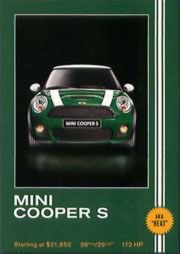
“That’s a good question,” I said. “I don’t know. What I really want to do is buy a Mini Cooper. I’ve been saying that for a long time now. I hate my car, and every time I see a Mini, I covet it. My advance is likely to be small, but if I got a really big advance, maybe I could afford to buy one outright.”
I stopped scraping shingles and began scooping crap out of the gutter.
“That seems so crazy, though.” I said. “I barely drive now as it is. I don’t need a brand-new sporty little car. I could put that money into savings. Or into the stock market.”
I paused to think.
“But I really want that car. I’m obsessed with it. I’ve got to get over that. I’ve got to stop wanting.”
“Why do you have to stop wanting?” Nick asked.
“Wanting is bad,” I said. “Wanting makes me buy things.”
I was remembering Yoda’s speech from The Phantom Menace: Fear is the path to the Dark Side. Fear leads to anger. Anger leads to hate. Hate leads to suffering.
I imagined that the personal finance equivalent might be: Want is the path to the Dark Side. Want leads to spending. Spending leads to debt. Debt leads to suffering.

Nick set me straight. “It’s not bad to want things,” he said. “Want is good. It keeps you motivated. It makes you save and earn. Look at you. You wouldn’t be where you are today if you hadn’t wanted to get out of debt.”
“That’s not the same thing,” I said.
“It’s close enough,” Nick said. He stopped his work, pulled off his cap, and wiped his brow. “It’s okay to have something in your life that you hate. And it’s okay to have something you want. It’s natural. The problem is that once you get that thing, you’re just going to hate something else, you’re just going to want something more. It’s not want that’s the problem, but the habit of constantly satisfying wants.”
I was about to argue with him, but then I realized that he was right. Wanting isn’t the problem. Problems occur when we develop the habit of indulging every want, or wants we cannot afford.
When I accumulated debt in the mid-1990s, I was constantly satisfying my wants. I wanted a new computer, so I bought it. Because I had the new computer, I wanted a bigger monitor, so I bought it. I wanted a better graphics card, so I bought it. I wanted new games, so I bought them. The wanting never ended, and neither did the spending. I didn’t know how to say, “Enough!”
“I want things too,” Nick said. “But I’ve learned that it’s okay. It’s fun to want things. It’s even okay to buy the things you want sometimes, too, if you can afford it. It’s like when you were a kid, and you cut pictures out of magazines showing the things you dreamed about. You’d save up to buy a football or a bicycle or a BB gun. That was fun.”
“I think I see what you’re saying,” I said. I picked up the rake and began to sweep the oak leaves over the edge of the roof, watching them whump to the ground. “Wanting keeps us motivated. It gives us goals. So it’s not a bad thing in and of itself. And it’s not even a problem to satisfy some wants. The problem is when we try to satisfy all of our wants, when we get caught up in a never-ending series of wants.”
“Exactly,” Nick said.
After we’d finished working, we climbed down and picked up our tools. I was cold and tired and wet. I was hungry. I wanted a hamburger. I wanted a big, juicy bacon cheeseburger, a side of fries, and a coke.
My initial reaction was to dismiss this, both for health and financial reasons, but then I thought of my conversation with Nick. I thought of the five dollars I had in my pocket. I thought of the four hours I’d just spent on the roof scraping moss. I made up my mind. On the way home, I stopped at a drive-thru and I bought a hamburger. It was delicious. It was just what I wanted.
Today, as I was writing this story, I found myself craving a hamburger again. And fries. And a coke. But today, I didn’t fulfill that desire. I knew better than to fall into the cycle.
Sometimes it’s okay to buy the things we want, but the constant fulfillment of desire can lead to the Dark Side of personal finance.
GRS is committed to helping our readers save and achieve your financial goals.Savings interest rates may be low, but that’s all the more reason to shop for the best rate.Find the highest savings interest rate from Ally Bank, Capital One 360, Everbank, and more.
This article is about Basics, Psychology, Real-Life
Disclaimer: This content is not provided or commissioned by American Express. Opinions expressed here are author's alone, not those of American Express, and have not been reviewed, approved or otherwise endorsed by American Express. This site may be compensated through American Express Affiliate Program.
Discover is a paid advertiser of this site. Reasonable efforts are made to maintain accurate information. See the Discover online credit card application for full terms and conditions on offers and rewards.
SEARCH FOR RECENT ARTICLES


Good article. Of course, I appreciate any personal finance story that can make a reference to a speech by Yoda
.
loading....
I’m not sure that anyone can mentally afford to be 100% disciplined 100% of the time. So, don’t be afraid to be flexible. And anyway, there is definitely no easy answer to anything.
loading....
Would you just buy the damn car already?
loading....
Love this post. There is definitely a difference between wanting something and indulging every want. Treating yourself every now and then, when you can afford it, is fine. But what happens when what used to be an occasional indulgence becomes commonplace?
Also, I think your post says a lot about contentment.
loading....
Sage advice. Nick is absolutely right.
loading....
I don’t want to be a bubble-buster, but JD, I would encourage you not to count that advance money just yet.
I used to work in a publishing house, and still take on side work as a freelance editor/writer to help make ends meet. The advances you read about in the news make up less than 1% of all books published. Most deals – particularly first book deals with relative (or total) unknowns … and forgive me, but you do fall in this category, your fantastic blog notwithstanding – have little ($2,000) or no advance whatsoever. And the climate for betting on the come (which is all that an advance is) is getting colder and colder.
I may be all wet. You may have found the most spectacular literary agent on the face of the earth (though I’d love to have a chat with you to explain why you DON’T need an agent), and said agent may get you that mythical $10k deal. If I am, I offer you my heartiest congratulations.
Literary deals aside, I really appreciated this “wanting” post. All things in moderation. The trouble is remembering what moderation actually is in the midst of totally jonesing for something cool.
loading....
I’ve followed your blog for quite a while. This is absolutely the best thing I’ve ever seen here. It’s just so RIGHT.
loading....
Good luck with the book deal…would it be a collection of your blog posts?
Have you thought of renting a mini-cooper for a special occasion like a birthday or road trip? I have a friend who indulges his love of exotic cars by renting them. I think he’s rented a Jaguar, a Ferrari and a Porche.
loading....
Want is the path to the Dark Side. Want leads to spending. Spending leads to debt. Debt leads to suffering
Nicely put
I agree on Nick, with
“Want is good. It keeps you motivated”
but we just have to learn how to balance it
loading....
Very good article. And good luck on that book deal!
loading....
I think it depends on how much advance money you get. I have a friend who got a rare, rare book deal of 6 figures. Her books have been on the NYT bestseller list a few times. But she was the rare exception. However, if you get a 6 figure deal, do us all a favor and buy the Mini Cooper, and take lots of pictures and post it on the website!
But in reality you likely won’t get enough to buy a used Mini. In which case the stock market looks like your best bet. If the market rebounds (as history shows it will) then you might be able to get the Min with the invested money.
On a separate note you’ve coveted that Mini for a long time. At this point it is almost certain to not live up to your expectations. I wanted a luxury sports sedan all my life. I finally bought one a few years ago, used, low miles, and good price. Its been less than spectacular. Sure it looks better and handles better than a Camry, but its been less reliable. It is much more costly – everything from gas to wipers appears to cost more than on a non-lux car. I don’t necessarily regret the purchase, but it hasn’t lived up to my expectations, probably cause I wanted it for so long and thought owning one would be so nice. I think I’ve realized…its just a car, too.
loading....
I’m in the same boat, JD. I’ve wanted a MINI for about 5 years now. I’m currently working to pay off some debts, and each year I’ve said “Hopefully next year, I’ll finally get my MINI.”
loading....
J.D., thanks for this post. It’s a remarkably clear, concise piece about the very heart of managing personal finance. I know my experience has been that some folks – usually the ones who have the greatest need for some discipline and focus in their personal finance – are resistant to changing their ways because they fear they’ll “never be able to do anything fun again” or some such nonsense. It’s not about total deprivation – heck, even Gandhi kept lots of books – but about balance and focusing on what you really want.
Unfortunately, of course, that means there’s no easy path to getting this right – no “silver bullet” that fixes it for everyone. If there were, you wouldn’t be doing this blog, right?
But it does mean we can each look at our own wants and needs and try to be clear about how we address those.
loading....
This post reminded me of something I heard on one of those PBS seminars with Dr. Wayne Dyer. He said one of the most freeing experiences of his life was giving away his most prized possession, because the item seemed to own him, rather than him owning the item.
Even though you don’t yet own the mini, perhaps you can identify it as the thing you prize the most. Free yourself by looking only at the practical aspects of a car. Four tires, some sheet metal, a little oil and gas designed to get us from A to B. Sure, there are different designs, and features, and brands, but when you get down to it, they are strictly functional items used for transportation.
I’m a truck guy, myself, and wanted a Chevy Silverado for the longest. One day, on a whim, I went to a dealership, traded in my beater and signed for a Chevy Silverado. It was beautiful. I loved it! A few months later I sold it. As the new owner backed out of my driveway I felt forever cured of car fever. It really was liberating.
loading....
Have you driven a Mini yet? If not, see if you can rent one for a few days. Not sure if the Mini is one of them, but I rent a lot for work and I find a lot of cars don’t live up to the hype. (I really wanted a Prius until I rented one on a work trip. I didn’t dislike the car or anything, but from driving it for a few days I could tell that it wouldn’t be a good fit for me.)
Also, I have a friend who owns a Mini and she says it only runs well on high-grade gas. The price of parts may contribute to a much highter TCO as well.
From the publishing side of things, I have to agree with the earlier commenters that a first-book advance high enough to buy a Mini is a rare thing indeed. Less rare if you’re writing non-fic with broad appeal, but still.
Check out John Scalzi’s Real World Book Deal Descriptions for an idea of the general amounts involved. (After taxes + agent, a Mini Cooper would require a deal on the fifth bracket up.)
loading....
I definitely agree with Nick on everything he said. Of course you need to save, but what is the point of savings if you don’t get what you want. It’s is natural for humans to want something new and good, but as you already said we need to control our wants, to not get caught-up in never endings wants.
My opinion is that we need to satisfy all of them, but not all at once. You can make something like a wish list and get them later, make it like a calendar (I’m talking about the big stuff, not about hamburgers:)), and in that time you also save and some more ideas can come to your mind and bring more money.
I think you should get the Mini Cooper.
Good article.
Michael
loading....
The secret to both happiness and saving, moderation is. Much saving leaves no happiness too. Much spending leaves no money too. Money and happiness, to have, moderation, one must have. Hmmmmmm.
loading....
@Christy
I hear you! I’m not banking on any particular advance. The number I used was only a hypothetical. And the dreams of a new car are just that: dreams. For me, any potential book deal will be a great way to reach a larger audience. Obviously, I’d love to have a big advance, but it’s not something I’m counting on.
loading....
Fantastic article and great Yoda reference. Like everything else moderation needs to be exercised in order to achieve balance. Afterall, there is no point in being rich and miserable.
loading....
Great insight. It’s so easy to say, “exactly.” Boy is it tough to put it into practice though. It’s literally retraining yourself to think and spend differently.
Thanks.
loading....
The Mini Cooper is a chic car anyways.
loading....
What an excellent post JD! Very thoughtful, and accurate.
I also think that many people don’t make a decision on what luxuries they can afford, and which luxuries they don’t really need.
I really good hamburger at a restaurant, its relatively cheap, reasonably healthy, and who wants to fry meat in the house (smoky, smelly, greasy). What a deal, $5 for a little nirvana.
But it is so easy to turn a reward for hard work into an entitlement, diminishing the reward and creating an awful spending pattern.
Also, I have noticed, that anything that people get on a regular basis becomes mundane and unappreciated. I believe the term for this is jaded.
Rich or poor, the ability to appreciate the little things in life is the key to the pursuit of happiness.
loading....
I also think that your post speaks to the lack of self control that has become epidemic in American society. I think that it is at the core of our current fiscal melt down, and it is in every one of the stories about how people lost their homes.
loading....
I think part of being smart (or smarter) with one’s money is that there should be some pay off both in the short term (i.e. new pair of shoes) in the mid term (a vacation or a new car) and in the long term (a comfortable retirement).
Wanting a new car was a great motivation for me. I put that item on our 2008 saving list and we saved up that money until we had enough for a nused car. Buying a car with cash was a wonderful experience and every time I get into my new car I am enjoying it. I waited so long to get a new car that I know I appreciate it all the more.
loading....
Excellent article.
I think one of the ways to determine the importance of our wants is to look at the ‘why’s’ behind them. Coveting something because you are drawn to it, dream of it, love the way it would fit into your life can be a huge motivator.
But if the reason you really want it (speaking hypothetically here – not of you specifically) is because your friends and neighbors all drive new, impressive cars or because you are trying to maintain a ‘lifestyle’ or because you just like new gadgets or, or, or, … Well that is different.
Sometimes the easiest answer to yes or no is ‘Why.’
loading....
Speaking of wants, don’t let that advance lure you into a bad publishing deal. Why not self publish? You may not reach as large an audience, but you’ll definitely grab a larger share of the profits (quality over quantity).
http://johntreed.com/HTWP.html
or
http://www.lulu.com
loading....
Nice post, I’m having trouble getting past that barrier myself. Wants got me into debt, how could they possibly be good. But then I remember, I also wanted to get out of debt. Desire can lead to good things as well. It’s a balancing act, one I am still working on.
loading....
The wanting gives us goals. Sure it’s a silly car, but it will motivate you to write a good book and help out people like us.
It’s not the best advice, but it goes along with your story. When my dad was starting out in his business, his boss told him to buy a car and go into debt. Why? Because going into debt and having that extra payment would motivate my dad to work harder. Working harder would put more money in his bank account and would thus pay for the car (and would probably pay his boss more $$). Same idea, but less responsible than buying a Mini with a book advance.
loading....
I added a phrase to the post clarifying the fact that I realize any advance I get is likely to be small. It’s not a crucial detail, but I don’t want the conversation to get sidetracked by this topic. I’m not doing the book for money. Obviously, I would love to earn a lot of money on it, but that’s not my primary motivation.
loading....
Great article… What a great point to appreciate, and occasionally indulge, small treats like a burger.
Sometimes I’ll buy a beer for my ride home (on a bike, everybody chill). The fact that it’s not a habit it what makes it so satisfying and fun.
If you can satisfy yourself like that for a couple bucks, I’d say we’re on the right track!
Also, great Yoda reference.
loading....
JD,
What you’re looking at with the Mini, and what you’re writing about here is “Opportunity Cost”. There’s nothing wrong with buying some wants, sure, but you lose the opportunity to let your money work for you and grow when you buy every want. Especially when the wants are expensive and rapidly depreciating assets.
loading....
JD, have you started a mini slush fund?
What I’d do is this — set yourself a goal that a small percentage of everything you ear, goes into this fund — say, 1-5%.
Then take that off the top of every bit of money that comes your way. Don’t treat whatever advance you get differently. Just take your percentage off of it and pop the rest into your normal, sensible funds.
It will motivate you to keep the money rolling in and when you are able to buy the mini — voila! free from guilt that your robbing money from a “better” use.
loading....
I loved this article. I am so used to saying “I don’t want anything” which is so TOTALLY untrue. I do want things. I’m just not indulging in buying everything I want, or might need down the road, or give as gift, or maybe save it for one of the kids (I’ve used all of the above at least once!)…….
This is an article that I need to read at least once a month to keep on track.
loading....
firstly, the $10k is NOT guaranteed. Let me make this clear: in most book contracts, if the book doesn’t sell — or if it only sells in those “discount” bins — then it is quite possible for the publisher to SEND YOU A BILL. Under no circumstances should you spend that $10 in something as illiquid as a car.
Being a writer is a lot like being a farmer, or even an inventor… the person who does all the thinking, all the creating, and all the hard work DOESN’T GET PAID SQUAT.
The money is only made in the distribution channels.
Frankly… considering the popularity of your blog, you should just be your own distribution channel. I would HIGHLY recommend a self-publishing experiment. Check out Lulu:
http://www.lulu.com/
You could set a profit margin (like $5 per book), then allow your users to choose what kind of book they wanted: hard cover, soft cover, or PDF. The e-Book would sell like hotcakes to most of your subscribers, and the other dead-tree versions would make nice gifts.
loading....
J.D., the problem is not knowing what you truly want. That’s the real problem. It isn’t that wanting is bad or that satisfying our wants is bad. It’s our failure to truly discern what we want at the deepest core of our being. The very fact that most things we covet that are material things end up being meaningless to us shortly after we buy them should be an indicator to us that what we truly want is something different than that. But, alas, it often doesn’t.
So the real problem is in discerning what we really want and giving priority to those deeper values.
loading....
Yes, I do have a Mini Cooper savings account. I throw little bits of money into it now and then. Right now I think it has something like $1500. It’s just another subaccount at ING Direct, and is dedicated solely to this purpose. The real question at the heart of this story is: if I do sell a book, where do I put the advance money? Do I put it in the Mini Cooper subaccount? Or do I put it someplace more sensible?
loading....
First of all, good luck on your book deal!
Second, in my mind limitations are really the juice of life whether we face physical, emotional, mental, or financial limitations. Imagine we lived forever and had everything we ever wanted! Would we really want that? What would be the point of living?
loading....
to be clear…
Even with a fixed $5 profit margin, the e-book would be very cheap… like $7-$10. The softcover would be about twice the cost, and the hardcover a bit more.
Lulu also has editing and typesetting services, but then you’ll have to come up with about $1000 before you could publish it. Or, you could have a friend do typesetting, and select 10 of your loyal readers to do the editing for you in exchange for a free book.
loading....
Great post J.D. I couldn’t agree with you more. I’ve been following your blog for a couple years now. I look forward to your book.
loading....
To cite another wise pointy-eared one:
“After a time, you may find that having is not so pleasing a thing, after all, as wanting. It is not logical, but it is often true.”
loading....
Wayne Dyer says give away your most prized possession- ok, does he want my two kids? They still cost a lot. I am confused because I don’t know what my most prized possession is in terms of a thing. I know my house(paid off) is the most valuable possession. I also have some inherited jewelry- I don’t really like it and keep it in a safty deposit box. I could give away or sell almost everything(my husband can barely give away a worn out shirt) so what would I keep(besides my kids)that is irreplacable? Besides some photos, I don’t really know.
loading....
The question isn’t much more than a hypothetical “What should I actually do if I get a decent sized wad of money?” It doesn’t have to be a book advance for this scenario.
For instance, my Mom is terminally ill. She does have some money, assuming that it’s not all spent on her care before she dies (BTW, if it is, I’m way OK with that. I’m just providing another situation where JD’s scenario applies).
Let’s say for the sake of argument that I’ll get $50,000 from inheritance in the next six months. My goal for car replacement, which will be partially funded by then, is $8,000. I need a replacement car and it should be between $6,000 and $8,000. But I want a newer car than $8,000 can buy. In this situation, should I put away $8,000 until the current car dies, or take $15,000 and buy a car off-lease as soon as the money hits the bank account?
(For Dave Ramsey fans, I have no debt, have a 3 month emergency fund and my other sinking funds will be funded in full. Under this scenario, I can easily put another three months aside and fund retirement at at least 15% and I don’t own a house.)
loading....
I realize that buying stuff doesn’t buy happiness and the lord knows I’ve bought plenty of STUFF. Now that I have that idea firmly planted in my brain, it has become so much easier to tame the “want” beast. Can’t buy me love.
loading....
I often use the “wanting” feelings to satisfy the “having” feelings.
That is, I’ll think long and hard about how badly I want the new BMW 3 series (going over the product features, color, and how I would go on endless road trips) and thereafter I think about the car payments, maintenance, fuel costs, and how I have a late model vehicle that is paid off and running fine. Point being is that I often fully give into “wanting” consumer products, but I rarely pull the trigger on the “haveing.”
loading....
JD,
I know you are a big fan of Your Money Your Life. What you are discusing falls right in line with the “Happiness Curve.” As we earn more our desires increase, and once we surpass comfort we are heading towards enough. We peak at enough and begin a downward spiral when we start chasing more. I guess your question is does the Mini fall into the catagory of “More” or is it still “Enough” since you have went about it in a sensible manner. I think if you find a good buy on one (possibly used) and have the money, buy it. You have to drive something, it might as well be something you enjoy. You have established saving and investing practices, you can afford all of your needs and this falls in the range of your “Wants” according to the Balanced Money formula. Come on JD you know the answer to this one! Buy the Mini with the Money. (Whenever you actually get paid).
loading....
Very nice article, JD! Good luck with the book deal.
loading....
JD:
I’ve been reading you for a few months now and referred multiple people to your blog because I find it so helpful on the “everyday” level. Some days I disagree with you and some days I find myself nodding my head violently and sending URLs to everyone I know.
The biggest thing I’ve learned from you, though, is that our “treats” aren’t the problem. It’s when those treats become a habit. For years I’ve been saying I need a daily latte from Starbucks and it’s just part of my budget. No, I don’t. I may need (or want) the caffeine, but I don’t need it at the cost of $4/cup. Three months ago I stopped buying that daily latte. Now I may go on the weekends or, during very stressful times, once during the week, but now it has the result I want: it’s a true pick-me-up, a treat I give myself when I really need it. Since I started doing this, I’ve even changed “my drink” from a latte to a simple cup of brewed coffee, so even those treats cost me half of what I would have spent.
And the other days? Well, I brew a cup of coffee at home. Coffee made from beans that I learned to roast myself, thereby costing less than half of what roasted beans cost and earning me the knowledge of coffee roasting and what makes a good cup. It also earns me about $100/month I would have spent before.
Today’s post was the perfect summation of the lesson you’ve given me. Wanting things is not bad. It’s continuously indulging those wants that makes them detrimental and not special. It spoils us, much like if I were to give my young daughter cookies every day. No longer would I get to see her face light up and watch her dance around the kitchen when she gets that special treat!
loading....
Hey JD, argue hard for the advance. You have a steady audience of over 60K, and a witty and informative style of writing tailor-made for this economic time. You’ve been doing this for years and are one of the more impressive blogs on the net. In the past, publishers were putting out books by fly-by-night blogs; this was their bad business practice. Just because you’re a blog writer doesn’t put you in that category, so don’t let them say it! Good luck, and thanks for showing us yet again what hard work and perseverance can get you!
loading....
I think these are your best posts – the ones that are conversations that lead to profundities.
But I think there is one piece missing – our relationship to our “wants”. Wanting is not bad, and indulging a want is not bad. What is the ultimate problem is WHY we indulge the want. Is it because we truly want/need it, or because we’ve beaten ourselves up so much for wanting that we finally just caved in and did it?
The same applies to other aspects of our lives. I think until we can get in touch with and be with our wants/needs/desires, we’ll continuously get ourselves caught up in this vicious cycle of wanting, feeling guilty, indulging, fearing that we’ll never get better, and then beating ourselves up… and starting all over.
THAT is what Yoda meant.
loading....
I know exactly how you feel about the MINI. I really want one as well but since I bought a new car last year I figure in 10 years or so when this one kicks the old bucket I will have a nice fund together to buy the car I want. Maybe there will even be something cooler than a Mini Cooper in the US (maybe a legal Kei car!)
loading....