Nine Lessons in Wealth-Building from The Millionaire Next Door
Published on - February 9th, 2011 (by Robert Brokamp) This is a guest post from Robert Brokamp of The Motley Fool. Robert is a Certified Financial Planner and the adviser for The Motley Fool’s Rule Your Retirement service. He contributes one new article to Get Rich Slowly every two weeks.
Want to become a millionaire? Then perhaps you should start by studying the behaviors of people who have done it. But don’t worry – you don’t need to stop the next Mercedes you see and ask the driver intrusive questions, because two authors have done all the work for you. One of their findings: Most millionaires don’t drive a Mercedes.
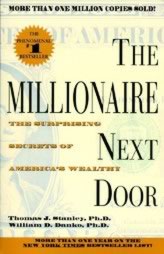
Check out the lists of the best financial books of all time, and you’re bound to find several that include The Millionaire Next Door: Surprising Secrets of America’s Wealthy. Written in 1996 by marketing professors William Danko and Thomas Stanley, its main premise is that people who look rich may not actually be rich; they overspend — often on symbols of wealth — but actually have modest portfolios and, sometimes, big debts. On the other hand, actual millionaires tend to live in middle-income neighborhoods, drive economical cars, wear simple watches, and buy suits off the rack.
You’ve likely heard of the book. You may be familiar with the premise. Perhaps you even read it way back when. But if you read it again — as I recently have — you’ll be reminded of some of true gems of wisdom Danko and Stanley gleaned from their thousands of surveys of millionaires.
To give you a taste, this post will highlight some of the timeless — along with the lesser-known — lessons of The Millionaire Next Door as well as Stanley’s 2009 book, Stop Acting Rich…and Start Living Like a Real Millionaire. (A future post will feature my interview with Dr. Stanley.)
Lesson #1: Income Does Not Equal Wealth
Yes, higher-income households tend to have more wealth than lower- and middle-income households. But the size of a paycheck explains only approximately 30% of the variation of wealth among households. What really matters is how much of the income is invested. On average, millionaires invest nearly 20% of their income.
Danko and Stanley offer a formula for determining whether you have a net worth that is commensurate with your income:
Multiply your age times your realized pretax annual household income from all sources except inheritances. Divide by 10. This, less any inherited wealth, is what your net worth should be.
The authors rightly call it a “simple rule of thumb”; a more thorough analysis would look at lifetime income, not just the most recent year. Plus, it strikes me that it’s more accurate for people who are at least a couple of decades into their careers. It’s not realistic, for example, to think a 25-year-old who makes $30,000 would have accumulated $75,000 (25 x 30,000 ÷ 10). However, for those in their mid-40s and later to meet this metric, they would have needed to save 10% to 15% of their incomes throughout their careers, or started later but saved 20% to 25% of their incomes. That’s not common, but also not impossible.
The formula also helps in sorting out the millionaires-to-be and the millionaire-wannabes. Those in the top quartile of wealth accumulation are prodigious accumulators of wealth (PAWs), according to Danko and Stanley. Those in the bottom quartile are under accumulators of wealth (UAWs).
Lesson #2: Work That Budget
The majority of millionaires have a budget. Of those who don’t, they have what the authors called “an artificial economic environment of scarcity,” more commonly known as “pay yourself first.” In other words, they invest a good chunk of their income before they can spend any of it.
As for those who do budget and plan out their expenses for the coming year, no, they don’t enjoy it any more than the rest of us. But they appreciate the “payoff,” as well as fear the consequences of not doing it. As the authors wrote, “It’s much easier to budget if you visualize the long-term benefits of this task.”
Lesson #3: Know Where Your Dough Doth Go
Similar to the previous point, almost two-thirds of millionaires can answer “yes” to this question: “Do you know how much your family spends each year for food, clothing, and shelter?” In contrast, only 35% of high-income non-millionaires answered yes to this question. Millionaires are more likely to track their spending.
Lesson #4: Know Where You Want Your Dough to Go
Another two-thirds of millionaires answered in the affirmative to this question: “Do you have a clearly defined set of daily, weekly, monthly, annual, and lifetime goals?” One example: a woman who wants to have $5 million by the age of 65, at which point she’ll retire. At the time of the book’s publication, she had already reached millionaire status — on an annual income of $90,000. As for those who answered “no” to the question, many of them are retired and have already reached their goal of financial independence.
Lesson #5: Time Is Money
All this budgeting and goaling takes time, but millionaires are willing to spend it. Prodigious accumulators of wealth spend nearly twice as many hours per month planning their investments as under accumulators of wealth. The majority of PAWs agreed with the following statements, while the majority of UAWs did not:
- “I spend a lot of time planning my financial future.”
- “Usually, I have sufficient time to handle my investments properly.”
- “When it comes to the allocation of my time, I place the management of my assets before my other activities.”
You don’t have to earn a big six-figure salary for planning to pay off. In a survey of 854 middle-income workers, Danko and Stanley found “a strong positive correlation” between investment planning and wealth accumulation. This extra planning doesn’t just happen. According to the authors, “Most PAWs have a regimented planning schedule. Each week, each month, each year, they plan their investments.”
Lesson #6: Love the Home You’re With
Your choice of home — and how often you choose a new one — will determine your ability to accumulate wealth. According to The Millionaire Next Door, that wealthy family has been next door for quite a while. Half of millionaires have lived in the same house for more than 20 years.
In Stop Acting Rich, Thomas Stanley digs deeper into how your address affects your spending, writing:
Nothing has a greater impact on your wealth and your consumption than your choices of house and neighborhood. If you live in a high-price home in an exclusive community, you will spend more than you should and your ability to save and build wealth will be compromised…. [P]eople who live in million-dollar homes are not millionaires. They may be high-income producers but, by trying to emulate glittering rich millionaires, they are living a treadmill existence.
He cites several statistics to back this up, including:
- Ninety percent of millionaires live in homes valued below $1 million; 28.3% live in homes valued at $300,000 or less.
- On average, millionaires have a mortgage that is less than one-third of the value of their homes.
- If you really want to reduce your housing bill, join the 67,000 millionaires who live in mobile homes.
If you’re looking to buy a home, Stanley provides this advice: “The market value of the home you purchase should be less than three times your household’s total annual realized income.”
Lesson #7: Love the Spouse You’re With
The majority of wealthy people are married and stay married to the same person. Of course, marriage shouldn’t be just about money. We’re sure that 24-year-old Crystal Harris has other reasons for being engaged to 84-year-old Hugh Hefner; perhaps she loves his pipe. But several studies have shown that people who are married accumulate more wealth than those who are single or divorced.
However, it’s important to marry someone with the right financial habits. In the majority of millionaire households studied by Danko and Stanley, the husband is the main breadwinner and tends to be frugal, but the wife is even more frugal. As they wrote, “A couple cannot accumulate wealth if one of its members is a hyperconsumer.”
Lesson #8: Don’t Drive Away Your Wealth
The majority of millionaires own their cars, rather than lease. Approximately a quarter have a current-year model, but another quarter drive a car that is four years old or older. More than a third tend to buy used vehicles. What is the most popular car maker among millionaires, according to Stop Acting Rich? Toyota.
So who’s driving all those BMWs and Mercedes-es? Not millionaires. Eighty-six percent of “prestige/luxury” cars are bought by non-millionaires. In fact, Stanley writes that “one in three people who traded in their old car for a new one were upside down and owed more on the trade-in than its market value.” It’s tough to get wealthy doing stuff like that.
Lesson #9: The Rich Are Different — They’re Happier
At this point, you might be wondering whether all this living below your means is worth it. Sure, millionaires having bigger portfolios — but are they happier? Danko and Stanley’s research indicates that they are. According to their research, “Financially independent people are happier than those in their same income/age cohort who are not financially secure.”
First of all, PAWs worry less than UAWs. There’s a peace of mind that comes from living below your means and having money in the bank. But they also don’t expect “status” purchases to improve their happiness, because evidence shows it doesn’t happen. Among the people surveyed, those who drive a BMW and wear a Rolex are not happier than those who drive a Honda and wear a Timex.
The Double-sided Benefits of Living Below Your Means
After reading these books, it occurred to me that there are actually two benefits of learning to live on much less than your paycheck.
- The first, of course, is that you can save more.
- But secondly, it also means that you ultimately need to save less.
Permit me to demonstrate.
Someone who makes $50,000 but lives on just $40,000 can contribute $10,000 a year to her nest egg, and can retire when that nest egg is big enough to generate — along with Social Security and other benefits — $40,000 a year. However, someone who makes $50,000 but spends, say, $48,000 is contributing just $2,000 to a portfolio that must eventually help provide $48,000 a year in retirement. In other words, she’s saving less yet needs to accumulate more.
Thus, when it comes to retirement planning, adopting the lifestyle of the “millionaire next door” means you can save more toward a lower-priced goal. That’s a formula that can help even non-millionaires achieve their retirement goals.
GRS is committed to helping our readers save and achieve your financial goals.Savings interest rates may be low, but that’s all the more reason to shop for the best rate.Find the highest savings interest rate from Ally Bank, Capital One 360, Everbank, and more.
This article is about Books, Gurus, Hints and Tips
Disclaimer: This content is not provided or commissioned by American Express. Opinions expressed here are author's alone, not those of American Express, and have not been reviewed, approved or otherwise endorsed by American Express. This site may be compensated through American Express Affiliate Program.
Discover is a paid advertiser of this site. Reasonable efforts are made to maintain accurate information. See the Discover online credit card application for full terms and conditions on offers and rewards.
SEARCH FOR RECENT ARTICLES


Lesson #6 – Love the home you’re with. I think this is one of the most important lessons that nobody thinks about!
If we live right next to someone that has a Mercedes and a large boat, after a little while, we’re going to want the same thing! But, if we live next to someone that is impressed with their new push-lawnmower, chances are that we’re not going to be inclined to make a crazy purchase on a big boat.
Along the same lines, it you live in the country rather than the city, you won’t want those lavish things that the people in the city have. It’s just because you’re not seeing it as often, so you’re brain doesn’t trick you into thinking you need it.
If you don’t want to get caught up with the purchases of the Joneses, make sure to distance yourself from them.
loading....
I completely agree! If you are living close to the Jones’ and trying to be like them you are in a terrible position. If you work your finances in a better way you can build a wealthy retirement, whether through proper investing or MLM ideas. If you play your cards right when the time is right you can have those nicer things, but without the added stress of debt or long term financial commitments! Great article my friend!
loading....
I agree with Derek that #6 is underestimated by many. I frequently counsel clients who plan to sell their homes in as little as 3 years–like when they finish graduate school.
We live in an area where home prices are steady but the prospective buyers underestimate both the costs of buying and the costs of selling, not to mention the interest they’ve paid on their mortgages.
I don’t think homeownership is, or should be, all about the money. But I get a little shiver down my spine when I talk to someone who thinks they can make a big profit after owning a short time. They’d probably do better investing the difference between their rent payment and mortgage and waiting to buy until they’re ready to land in one place for a while.
loading....
“We’re sure…Crystal Harris has other reasons for being engaged…Hugh Hefner; perhaps she loves his pipe.”
I see what you did there…
Ahem, back on topic. This is a great book, and well-summarized here. The thing I struggle with is Lesson #5, specifically how to use that time wisely.
loading....
Great review of the book and the lessons it outlines. And very timely, since I was planning on re-reading it.
I have been saying for years just because someone owns an expensive car or house does not mean they are wealthy. It may mean they are in a lot of debt.
loading....
My favorite quote from the book is “big hat, no cattle” which translated for non Texans means lots of crap, no networth.
loading....
Thanks for reminding me of these points from one of my favorite personal finance books. Another concept I really believe in from the book is the idea of “Affirmative Action- Family Style.”
Essentially, to oversimplify the term, it means that if your parents keep giving you money, you will never learn to walk on your own two feet, and that parents tend to give more and more to the child who is not self-reliant and neglect the other children who are, which in turn makes the child being given the money/etc., ever more reliant on his parents and makes the other children ever better at fending for themselves.
I have seen this in a few families and really believe it is true.
loading....
It’s a good book! My favorite section was the one on money and kids and how not to raise kids who are permanently dependent.
loading....
This is one of my fave books and a good reminder that those we see with flashy things and fancy cars might be rich but in fact many of them might be poor (i.e. in debt, overleveraged, underwater).
loading....
“pay yourself first”
I agree with this idea, but how does that apply to debt repayment? It seems to contradict Ramsey’s debt snowball method which is the dominant debt repayment plan on this and other sites. Do you pay yourself first, then deal with debts? That would change the order of baby steps– 1) save 10% for short-term savings/emergency fund, 2) save 10% in a retirement fund, then 3) start the debt snowball.
loading....
There is an iPhone app for the debt snowball. I’ve used the snowball for both my house and business debt. Both Dave Ramsey and John Cummita have excellent programs for debt reduction and wealth building. I followed Cummuta’s advice to the “T”. I can tell you that you will become wealthy following their programs. You just need to learn to say no to pretty much any purchases or fast food until you are completely out of debt. It is SO worth it though! The peace of mind that comes from being debt free and having money saved is priceless! My book keeper thought I was completely nuts when I applied the snowball to my business. She watched it work and then had to convince her husband that it worked. They are now completely debt free. The husband just lost his job of 30 years and they decided to go to Hawaii for 2 weeks because they could pay cash and not hurt their finances. It works if you stick to the plan! Good luck! You can do it!
loading....
Denying or properly regulating the “economic outpatient care” as they call it is harder to accomplish in practice than when I read about it some years ago. Having one in college and one getting ready to go, I can certainly feel how hard it can be, especially if you as the parent have the means to over provide or the experience to see them heading for the edge of the dock. Best I can say is sometimes it’s better to let them risk falling in and getting wet, and being ready to offer a little help directing them to a ladder and maybe giving them a small towel for drying off, then constantly running interference trying to keep them from the risk of falling in or immediately pulling them out. Amazingly enough they don’t fall in all that often or fall off the same dock twice.
loading....
Just curious, is the Millionaire Women Next Door by Thomas Stanley a recommended read by Mr. Brokamp? I looked up the Millionaire Next Door at the library and noticed there is a book dedicated to women millionaire’s.
loading....
I’m not a big fan of the book as I found some great ideas but way too much time spent on buying cars and giving money to your children, neither of which apply to my situation (child free and driving a 12 year old Oldsmobile by choice).
That, and the incredibly flawed “rule of thumb” formula. I read the book in my late 20s and as a accounting major I could not understand how any author would justify a 20 something having 3 times their current income in net worth when they graduate with student loan debt and have only worked a few years. That UAW/PAW thing is everywhere in the book and if it doesn’t apply to you it makes the book hard to take.
This review didn’t mention, but as I pointed out in the last discussion on this, the formula really understates what you need to retire comfortably in your mid 60s too. So it’s bad for 20s and 30s and past 60s, really only applies to 40/50 year olds.
That said, I’m glad this review tackled that point right away and said it doesn’t work for everyone!
One criticsm I’ve seen laid on the book is that the authors have a Scrooge McDuck philosophy of hoarding money for the sake of having money. Like the grandmother who is told NOT to pay for a private school for her grandchild (the child lives in a bad school district) and she snaps back something like “what the hell else am I supposed to do with the money, burn it?” I think they go a little far in their frugality to the point of miser-dom sometimes.
But it is good to see here in this review the *benefits* of frugality to this extent mentioned, happiness. All the self-denial should have some tangible benefit besides a big net worth. I would just think there is a large area between Scrooge McDuck and spendthrift, however that maximizes happiness. Like helping your granddaughter go to a good school instead of the crackhouse school.
Good review.
loading....
‘
JD
If someone were to ask me to point out one article and only one article from getrichslowly.org, reading which they could get the whole essence of the idea of getting rich slowly, I would be pointing them to this article.
Good Job, Robert. Keep it up.
loading....
After nearly two years of saving and paying down debt, I’ve just now realized “The Double-sided Benefits of Living Below Your Means”.
If (well, when) I pay my car off, not only is that hundreds less out of my pocket in bills every month, but it means the balance on my emergency fund can be thousands lower since I don’t have to save ~6 months of car payments to cover a job loss.
loading....
Where you live does matter a whole lot, but maybe not in the way that one commenter noted. I live in the country and not in the city, but have found it necessary to buy things that a typical city dweller may not have.
For example, 8 years ago, I bought a plow truck to clear my driveway every snowstorm. A large expense at the time, but it saved me $80 (and probably much more now)every time it snowed AND allowed me to clear the drive the way I wanted it clear. We also made a decision 5 years ago to install a whole house generator that automatically kicks on when the power goes out. This happens quite frequently here in the northeast! Pwer went out last year while we were away and had it not been for the generator, I am sure we would have returned to burst water pipes throughout the house.
Also, living in the country has forced us to buy cars more often just to commute to work, whereas as a city dweller (I used to be one once)I would just take the T and never had a car.
And, yes I am exposed to the “luxuries” of life every day since I work in the city and am barraged with advertisements for all of it. I am not buying a Pandora necklace this year for Valentine’s day for my wife. But, she understands that!
loading....
Thanks for this! I get a little sad about our lifestyle sometimes because our friends all have nice cars and Blackberries and some are even buying houses at 24…
Nice to know it will all be worth it someday! Time to start investing
loading....
I just got around to reading this book last summer. Along with Your Money or Your Life, The Millionaire Next Door was the spring that catapulted me towards the goals I’m working on today.
It’s easy to have misconceptions about those that own lots of flashy “stuff.” Sometimes the true measure of wealth is not how much you have, but by how little you need.
loading....
Typo Alert: Lessong #2 No “g” necessary
I love this book. This book is what really got me determined to do something about my finances and a lot of the lessons learned in it whiz through my head constantly. Great review/summary. I didn’t know Dr. Stanley had a new book!
loading....
This book also was the catalyst for my own financial journey. The simple truths and lessons of this book, presented and backed up with robust academic research made me decide to get my financial life under control, pay off debt and invest.
Pat
http://compoundingreturns.blogspot.com
loading....
I just got around to reading this book last summer. Along with Your Money or Your Life, The Millionaire Next Door was the spring that catapulted me towards the goals I’m working on today.
It’s easy to have misconceptions about the wealth of those with lots of flashy “stuff.” Sometimes the true measure of wealth can be realized by understanding that it’s not how much you have, it’s how little you need!
loading....
I just calculated the “rule of thumb” and it was spot-on with a difference of $1,099.
loading....
What a nice article – and a timely one, for me. Maybe I’ll finally pick up that book.
As Mr. Brokamp and others have mentioned, the rule of thumb for net worth doesn’t work for people who aren’t in their 40s or 50s. I’m 28 and am thisclose to being debt-free. When I did the math, I laughed out loud at the supposed net worth I should be rocking. Even if I hadn’t been paying off student loans, that just doesn’t seem possible.
And @Wayne (#12): Those Pandora things are hideous. Glad you’re avoiding one. Chocolate is cheaper.
loading....
This is an excellent article. Every single thing in it that the millionaires say NOT to do, I’ve done. Especially the luxury home. I should never have bought it because it drained my finances for the 6 years I owned it. I live a completely different financial life today ~ I live in an older established neighborhood which I really like, I drive a 2002 car that still looks and runs great, I invest and save. I am much happier as a result.
loading....
I’m actually going to be the odd one out here and say I really didn’t like the book. It may sound silly, but the identity politics of it really bothered me — I actually found myself feeling, “Oh, no, I’m not a straight white married tough-minded southern man … guess I’ll never be rich.” I just think some people who aren’t much like the people profiled in the book will just find it depressing.
loading....
I loved this book when I read it in my 20s. It had a huge influence on me and a slight influence on my husband, who is a bit spendy. (Drives a used BMW) It’s a bit depressing that we are missing the mark on the “rule of thumb.” According to my calculations, we should have $800K in net worth and we have about half of that at ages 40 and 41. I attribute this to our wages early in our careers being low. My husband has just in the past three years seen his income grow. Add to that our portfolios losing 40 percent of their values in 2008. They have recovered since, but still lost a lot of time for gains. Also, our modest house has held its value but not gone up. Overall, I am proud of where we are. We live beneath our means and still have a lot of fun.
loading....
@Patti – that is what I dislike about the book. It takes a *very* flawed formula and makes people feel depressed because they don’t reach it. Why would the formula assume you’ve made the same money your whole life? It fails huge if you’ve had a big pay increase recently by assuming you’ve made that and saved 10% of it since birth. Ugh. FAIL.
You’re having fun, saving, and living within your means. Who is this book to tell you you’re a failure at accumulating wealth or anything else? Ugh.
loading....
I agree with Adam. While the book makes a lot of very good and valid points, the authors point out “wastes” of money by families who go on ski trips or European vacations. Granted, if you can’t afford to do that, you shouldn’t do it, but if you have the money, go enjoy life! After my brother read it he suggested changing the title to “How to save a lot of money and never hav fun.”
loading....
I noticed there is another Stanley book titled Millionaire Mind, is it worth a read?
loading....
I have enjoyed the book, and find it tough to argue with these points. All reflect wisdom that has clearly worked with a sample of people.
#1 above is really a good one to examine further. Yes, income does not equal wealth. It’s what you do with your income that can be most impactful for the most of us. Having said that, income itself IS an important driver in achieving wealth. You need to make money in order to save it. If two people have comparable expenses, but one has a higher income, who will be more likely to accumulate wealth? The key there is keeping expenses stable while avoiding increasing them as income grows.
loading....
@18–Thanks for the catch! I’ve made the edit.
loading....
The MND is a must read for anyone who is searching for financial independence. Yes, you will have to make some sacrifices like luxurious European vacations. Is it worth the sacrifice? You’ll have to answer that question.
loading....
I thought the Millionaire Next Door was a book well worth reading. Recently, I picked up is newer “Stop Acting Rich and Start Living Like a Real Millionaire” (from the library) and about that book, I say: skip it. It was patronizing and had little, if anything, new to offer. Just fyi for others…
loading....
Wonderful summary of books I haven’t yet read, I’m checking them out of the library ASAP for details. Thanks!
-
ps- @ #32 Kristen– I’ll heed your advice and start with the Millionaire Next Door. Thanks.
loading....
#24 — Thank you for saying exactly what I felt when I read this. Excluded. So since I’m a single, urban woman who doesn’t own a home, I have no hope of being rich? Ugh. I guess I should move to the middle of nowhere, find some 60 year old man to marry and quit my high-paying job to stay at home and be frugal.
loading....
MND is a fascinating read. I agree with Robert about all the good points. Everyone should read it at least once. With that said, I wanted to tell what I don’t like about it, just to give the other side of the coin. May be its just me being defensive
as I am not a perfect MND, so take it with a grain of salt…
The book seem to encourage saving for the sake of saving, almost hoarding cash. Someone living in trailer park, drinks only free beer, shops at JCPenny, buying car by pounds(!) and never spends any money, but has 1 million in the bank is better than someone with a big house, car, takes vacations to Europe, kids in private school, but with only 500k. If saving money is just the thing that makes you happy, it is fine. But for the rest of us, what is the point in saving money for the sake of saving money? If the public schools are bad, I AM sending my kids to private schools, because that is my priority. I will make an educated decision to do that. And the book seem to imply that if I am sending my kids to private school, I must be irresponsible with my money. I won’t buy in JCPenny. Yes, they are cheap but the quality is also cheap a lot of times. I would much rather buy a better quality comforter the first time and keep it for a long time instead of buying 3 different cheap comforters during the same time period. It is all in the balance. Life is full of choices. As JD always says, it is better to be happy than to be just rich. I might have some expensive taste in certain categories, but I prioritize my spending and spend on things that are important to me. That makes me a villain according to the book
I am not faulting the book, it is an amazing read. But I would have liked more if it also stressed about “educated” life choices – You don’t have to be frugal in every aspect of your life, have control of your money, save on things that are not important to you, spend on things that makes you happy, know the meaning of sacrifice and if you choices makes you content with life, with little less money in the bank, so be it.
loading....
I read this book two years ago and I loved it.
Like many of you, I was a bit frustrated by the net worth formula. Clearly this formula is for people who are more established and have been earning more than a year or two. I’m 26 now, have been in the same job for 3 and a half years. This formula tells me I should have about 88% of my total post college earnings in my net worth. Two years ago, I think net worth the formula gave me was more than my entire lifetime earnings to that point.
That said, does anyone know of any similar formulas for twenty somethings? For me, as a general rule, so long as my net worth goes up, I’m happy.
Right now, I feel if I get my savings rate close to the to the 15-20% recommended by the book then I’m doing pretty good and that for me this is a better indicator of my accumulation of wealth than if I am close to that formula.
loading....
Great article and two good reasons to live below your means, yet the most satisfying ability attending a surplus of any resource is the ability to give it where needed. Jesus said, “it is more blessed to give than to receive”. Trying it proves it true.
loading....
I’ve read this book and while it is really a great eye opener to the power of budgeting and saving and it can be a source of ideas for budgeting, I think many people who read it take the wrong message away due to the hidden bad assumption in the title: Having a million dollar net worth DOES NOT make you *rich* by modern American standards.
“Millionaire” was used as a synonym for “rich” in the 60s and 70s because that was an INCREDIBLE amount of money at the time. But, to be honest, it just isn’t anymore.
I’m sure many people read this book (and the book kind of enhances this feeling due to the language used, etc) and think, “Wow, there are all of these “rich” people who got that way just because they saved their asses off” but, truth is, those people are not who we envy or would like to live like when we think of the idea of being “rich”.
The fact is, to be able to live a lifestyle where you are not scraping and saving all the time, you really do have to have a huge income AND have the ability to budget that income (you can go broke with any income as the book states but it wrongly implies you can be “rich” with a modest income).
And to be honest, I think this is what most Americans actually want. The people who are in this book are upper middle class people who live like lower middle class people with austere lifestyles and as a result get some added security later in life. If that is what you are shooting for, great. But I actually don’t think it is what most people are aspiring to financially.
Rampant consumerism is horrible in our society but I think the lifestyle espoused in this book is too much the OTHER way. So, taken as a source book of budgeting and as an inspiration to stop hyperconsumerism it is awesome.
But as a way to “get rich”? This is only part of the story and you need to balance it with some quality of life while you’re still young. IMHO.
That said, having an above average net worth is certainly an admirable goal but I think the book is way too heavily skewed towards the accumulation of net worth to the point where. While you may be able to accumulate a million dollars worth of wealth on a $30000 a year income, it is not worth the sacrifice
loading....
@ #24 I’m single, child-free and I rent and you also echoed my sentiments after reading this book. The profiles of what the millionaires in this country look like are interesting, but not practically useful. I couldn’t really apply anything from this book into my own life. I almost stopped reading after finding out I was a UAW. I think I stopped reading after the chapter about “economic outpatient care” or something like that. TMND is not a how-to book–a point that gets ignored amidst all the glowing reviews it receives.
loading....
@29: I took issue with your comment about having to sacrifice “luxurious vacations” for “financial independence”. In my mind – I want the independence in order to TAKE the vacations. I can see your comment being a little more balanced by adding “worth the sacrifice early in life” but really what’s the point of sitting on a ton of money? Use the money to have good experiences that you enjoy within reason (ie, no debt). “Retirement” can come at any age – that is, when you no longer need a job to sustain you. But this does not mean giving up things you enjoy, it just means you have to balance those things or make enough money to do them all. No debt is the key thing to keep in mind, not no fun.
loading....
Stop Acting Rich got too much into what kinds of wines and liquor the rich own; that got old and annoying quickly. Other than that, it was just okay.
I guess it did save me time from asking every millionaire how they achieved their wealth. Time is money, ya know?
loading....
Ok I have to comment on something. It kind of makes me laugh a little when people say – “this rule of thumb is bogus because my numbers don’t match it”… LOL… Guys, not to be rude but that means you might NOT BE A PAW (possibly – you can always catch up my increasing income and investing while decreasing expense). I also hear people say things like, “my numbers don’t match the rule of thumb because we made less money when we were younger”… Nooooooooo – you just weren’t living below you means (however meager) and saving/investing 20-30% of your income. You might also mention that you have a lot of student loans – so that’s why your numbers don’t match… Noooooo – what this means is that you didn’t get any scholarships or save the money out of your income (in high school etc.) to go to college without student loans like a PAW would most likely do. People think the ratio doesn’t make sense because everybody is underwater on their homes – but many PAWS take out tiny mortgages or pay for their house with cash.
Think about this – how long have you been living within your means, investing and otherwise doing financially responsible things? If some of you were honest you would admit that it has only been for a couple years. You may think the ratio is off base because you are doing all the right things but don’t fit in the guidelines. However a PAW of your same age and income may have significantly more assets than you because they have been practicing this wealth accumulating behavior consistently FOR YEARS AND YEARS AND DECADES.
My point is this: this rule of thumb is WAY more accurate than most people give it credit. And I believe this is because most people want to rationalize why they don’t fit within the guidelines of the ratio…
I grew up very poor but I am firmly in the PAW group at age 25 because of my behavior (seriously living below my means and investing the difference) when I was making $5,000 a year and when I am now making $110,000 a year.
Also I disagree with those that say the book is not a how-to book. The book profiles REAL MILLIONARES – if you want to be one then just emulate the behaviors that are outlined in the book. Our friend over at freemoneyfinance.com read this book years ago and is a millionaire that lives a very comfortable lifestyle because he followed the principles in this book.
loading....
#24 hit the nail on the head! Missed that post earlier.
A ton of the profiled in the anecdotes of TMND were older white males who didn’t have a college education, owned their own businesses, and had a stay at home wife for their now adult kids. Sort of exclusionary for a reader like me single in my 20s to associate with but I took that with a grain of salt since those people were a “typical millionaire” in the mid 90s. Those people are so removed from my life that it’s hard to listen to the “tips” given by the book and associate with them : “buy cars by the pound”, “don’t give money to your kids”, how is that helpful to me?
But the general message of not assuming the BMW drivers are all millionaires is a good point and the book makes that loud and clear. Social commentary with a lesson? Yes. Self help personal finance book for the masses? No.
Also liked #35 – very good points!
loading....
I was incredibly inspired when I first read this book – the idea that millionaires were actually “normal” people really took hold in me, that I, too, could be a millionaire one day. What I did find, what that the book was very heavy on statistics, and there was less interpretation than implication – which I think is what the commenters about are saying about not being a married white male with a SAHM being frugal.
Another positive point I liked about this book, was that it emphasized frugality by pointing out what NOT to do rather than what to do. Maybe it’s just the way I see things, but I’d rather hear someone tell me “Don’t lease a BMW” than “You should go out an buy a beater for $500 in cash.”
If anyone has read all of the books, I’d be interested in knowing if the others are worth reading, or just rehashes like some other PF authors’ books.
And Wayne (#15) – I think that the Pandora bracelets are nothing but charm bracelets for grownups. Overpriced novelty item from my childhood. I have already told me husband what kind of chocolate I want
loading....
@ Nate
We went through this last time. The formula is flawed and makes no sense for people in their 20s nor for people in their mid 60s about to retire. I believe the authors of the book even came out and said so when pressed. Why would you defend something the creators of the formula have even said is a flaw in it?
Go back to that thread and look at the comments.
EG
65 year, retiring, made $75,000 a year before he retired. To be a PAW he would only need a net worth higher than $478,500. If he withdrew 4% of that a year (general guidance), he would have an income of $19,500, a decrease of ~75% in income compared to pre-retirement. That is not near enough, but the formula you say works for all says he’s a PAW! So it must be true even if he eats cat food!!
EG
25 Year Old. Has worked for 3 years, and because he was diligent, he paid for his education himself and graduated with no debt! What a PAW he is. And now he just got a raise and earns $50,000 (previously he made $40,000). He should have a net worth of $125,000, though he has only earned $130,000 in his lifetime. So he should have saved 96% of his gross income? Wow! Too bad Uncle Same took about 33% of that gross income leaving him with only 64%, before he had to take care of pesky things like shelter, food, and clothing.
“LOL” at yourself.
loading....
I agree with Adam (#12). I think too often people forget that money is a mean to an end, not the end itself. Furthermore, no one is guaranteed tomorrow – I can’t think of anything I’d regret more than dying with a bank account filled with millions and unfulfilled dreams. So if you can chase the things you want to do in a financially responsible manner – whether it’s travel, entrepreneurship, or something else – do it! What else are you going to spend the money on?
loading....
I get what you’re saying but I don’t believe that everyone that drives a BMW is poor or in debt, some people are rich and live rich and they’re happy. What’s wrong with that?
The rich help keep the economy going. What’s wrong with that? Absolutely nothing. No I’m not rich. I don’t believe in sacrifice. I believe in spending consciously and not living like a miser.
I don’t have debt, my credit scores are in the 700s. I don’t think there’s anything wrong with going on a nice vacation if you can afford to.
If you read history, humans never tend to do well with self-denial for long periods of time. I believe in spending consciously and not in sacrificing my quality of life.
You know my parents are retired, they travel, they have two nice homes paid off, they eat out, etc. They never had debt, always saved for what they wanted their entire lives, they’re middle class but they’re able to live nicely.
They’re the type of people that shop around before they buy and it seems that people say you have to be a miser to become well-off in old age and that’s not true. I think what helps them is they don’t overspend, and they don’t have money pit hobbies.
IMO you can have what you need and want if you stay out of debt, educate yourself financially, save and invest and don’t overspend. Its possible to retire and live nicely without having to be a miser throughout your 20s,30s, and 40s.
This books seems to say that you need to be a miser if you want to be well off in retirement and old age and that’s just not true.
loading....
I have to totally agree with Nate (#40). I don’t think the formula is as flawed as so many people WANT it to be. When I graduated school at 22 and got my first “real” job that paid $48k/a, I was a PAW because I had these funny things called part-time and co-op jobs since I was 13 and started saving even then.
loading....
Wow Ann. Great you had part time jobs that let you save over $200,000 at 22. You know a PAW is someone who has twice what an AAW does ($48k x 22 / 10 x 2 = $211,200 net worth). Were those co-op jobs as a drug dealer or high priced call girl?
And forgive me if I don’t believe you that you had $200k in the bank of your own money that you made working at McDonald’s when you were 22. Do you guys even know what you’re saying is ridiculous?
loading....
Wow! What is with all the hostility toward this post? The Millionaire Next Door is not meant to be a blueprint of steps to follow in your life. It is a snapshot of people that have achieved Millionaire status and some of the decisions that they made to get there. That does not mean that you need to do every one of their steps or any of them for that matter. It simply points out a few statistical facts…do with them what you will. Is the formula flawed? Absolutely! But all formulas that attempt to give simple answers to what are very complicated questions with multiple variables are flawed simply because the variables are too great.That doesn’t mean that they are a bad place to start.
There is a lot of wisdom and information to be taken from this book (and this post). Instead of dismissing everything because you don’t like one little piece of it try looking at the bigger picture.
loading....