If you're new here, you may want to learn what this site is about. I encourage you to subscribe to my RSS feed. Thanks for visiting!
One of my favorite saving techniques is the use of targeted accounts. If I want to save for something big — like a Mini Cooper, for example — I’ll open a new savings account specifically for this purpose. I first learned about this method from Robert Pagliarini’s The Six-Day Financial Makeover:
Traditionally, most people invested for various vague goals and lumped all of their savings together in a single investment account. That’s pretty boring. It’s not very inspiring or effective. Purpose-Driven Investing satisfies our need for a purpose and our need for instant gratification by thinking of each of our goals as a separate “basket”. Each of our baskets represents a single goal with a clear purpose that we can see and grow.
What does this mean in the real world? It means that we have a single investment account for every goal. For example, if one of your goals is to take the family on a European vacation, create a separate savings account called “Family European Vacation Fund”. This account or basket contains all of your savings toward that one goal. Every penny in the account is for the European vacation — not for retirement, a new car, your emergency fund, your kids’ college tuition, or any other goal.
I like this idea, and have been using it ever since I saved for my Nintendo Wii.
Until recently, I kept my targeted savings accounts at the local credit union where they earned me a paltry 0.35%. For the past few months, Get Rich Slowly readers have been urging me to move all of my savings to ING Direct, which is where I keep my emergency fund. “It’s easy,” my readers tell me. “You can open multiple accounts, give them any name you want, and track them all from the same screen. You can even open a checking account!”
Last month, I finally overcame inertia to try this myself. My readers were right: opening multiple accounts at ING Direct is easy. (It’s probably easy at FNBO Direct and many other online banks, as well.)
Step one: Choose an account
First, I logged into my ING Direct account summary page. From there, I clicked the big “Open an Account” button.
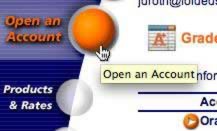
I was directed to a page listing a variety of available accounts, including business and retirement accounts. Because I wanted to open another savings account, that’s the option I selected.

On the next screen, I was asked to further refine the account type:
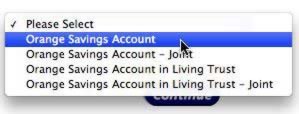
Step two: Fund the account
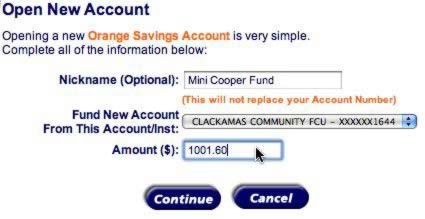
Next came the good part: I selected how much I wanted to put into the account and where those funds would come from. I was also able to give the new account a nickname. Since I was opening these extra accounts specifically for targeted saving, it makes sense to name each one based on my goal.
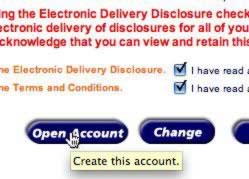
Finally, I had to agree to the terms and conditions of the account.
Step three: Wait
Then the waiting began. Because ING Direct had to “pull” the money from my credit union, it took several days for the cash to transfer to my accounts. At first they appeared empty:

After the money had transferred, it was easy for me to track all of my savings goals in one place.

Next on my list? Exploring ING Direct’s certificates of deposit and business accounts.
A useful tool
Thank you to all of the readers who suggested this. I don’t know why I took so long to try it. I’m sure this technique isn’t limited to ING Direct. I was doing something similar at my local credit union (though without the pretty interface, account nicknames, or high interest rates), so I suspect that other online banks offer similar functionality.
Not everyone needs multiple accounts to save for goals. My wife, for example, is perfectly content with a single gigantic savings account for everything. But for me, being able to separate funds like this is awesome. It keeps me motivated to save. And because it doesn’t cost me a penny, I’m happy to do it.
Note: This article was originally scheduled to appear on June 12th, but Trent at The Simple Dollar posted his handy (and similar) guide to budgeting with an online bank that day, so I delayed my story for a few weeks.


.jpg)

July 2nd, 2008 at 11:25 am
For those of us that don’t have this ability at their bank/credit union, couldn’t it be just as easy to create new accounts in quicken/mint/other financial tracking software?
I’ve never thought of doing this, but it makes a lot of sense. Thanks for the tip!
July 2nd, 2008 at 11:28 am
I’ve scanned the site and I can’t find out any information about minimum balance information. For example, if I set up a savings account to earmark money for let’s say my car insurance, if I then empty that account, are there fees/issues with this. Any ING Account holders know?
July 2nd, 2008 at 11:39 am
Is this a hard query on your credit report? I’m buying a house and just want to not touch my credit score until the loan has been taken out.
Side note: Does FHA loans take your credit score into account in any way?
July 2nd, 2008 at 11:45 am
Probably. In fact, I know a lot of Get Rich Slowly readers do this very thing in Quicken. I haven’t tried it myself. Maybe I should!
Amy wrote: I’ve scanned the site and I can’t find out any information about minimum balance information.
From the site: “There is no minimum balance required to open your Orange Savings Account, and you don’t have to keep a specific balance in your account to qualify for a high interest rate.”
Eric wrote: Is this a hard query on your credit report?
Hm. I don’t think there’s a hard query on your credit report, at least not for multiple accounts. BUT DON’T QUOTE ME ON THAT. Also, I don’t know about FHA and credit scores…
July 2nd, 2008 at 11:54 am
Have you tried using smartypig for these savings? I’m curious how this site works, but I wanted to hear from someone who’s used it.
I LOVE ING.
July 2nd, 2008 at 11:59 am
I love ING. I’ve been saving there for three years now and I started last year opening some CDs. My goal is to have 12 CDs, one maturing each month, my own version of a CD ladder. I have 7 already! It’s as easy to open a CD as it is a savings account. I’ve never seen anything from ING on my credit reports - and I review them annually.
July 2nd, 2008 at 12:01 pm
I’ve been doing this since reading The Simple Dollar post. I love using the sub accounts. We have one for property taxes, and it is obvious what the money is for, so I know we won’t spend it. We have spent money in the past without remembering upcoming expenses. We’re really getting our finances in control this year, and the separate ING accounts make me feel like all of our irregular expenses have been acoounted for.
July 2nd, 2008 at 12:01 pm
James–that is one way to go, however there are some people who cannot budget their money unless it is physically separated out.
JD–you are absolutely correct about it being just as easy with HSBC. I have a preference toward keeping my money there as my emergency fund because: a)they pay more than ING (3.50% until August 15th), and b)they give an ATM card for emergency access to the funds (talk about a true emergency fund!)
I also noticed that a good number of people are still skeptical about so-called “online banks”. I wrote a post the other day trying to separate fact from myth regarding these institutions
http://letsblogmoney.com/2008/06/25/isnt-it-time-you-start-looking-to-online-banks-to-boost-savings/
July 2nd, 2008 at 12:10 pm
If you get a little account crazy and open too many you’ll probably eventually wonder how to close an account. Google says (or said a few weeks ago) that you had to call them to do it.
It’s actually super simple. Simply transfer all of your money out of an account and next to the transfer confirmation button there will be a “Close account” button. Click that and you’ll get any unpaid interest and close the account.
July 2nd, 2008 at 12:21 pm
I do a version of this compartmentalization with my Money program for just a single savings account. I create withdrawal “new items” titled for “college” or “vacation” or “gifts” and then put into and take out of each one the appropriate amount as the months roll by. I date these items in the future so I can look at the current date to know what my actual account balance is, then see how much I have assigned to each of those items, then see how much “free money” I have in the account. It works beautifully for me and with fewer account numbers to deal with.
July 2nd, 2008 at 12:37 pm
This is why I love internet banking over Traditional brick and mortar banks!
You have so much more flexibility with regards to designated accounts for certain things.
In the “old days” it was a lengthy process getting an new account established at a bank.
Personally, I use USAA as a bank and one of the neatest features they have is called “Deposit at Home”. If you need to deposit a check, you simply place it in your scanner and click “submit”. It’s amazing!
My dad used to tease me about my online back with the questions “that sucks that you have to deposit your checks by mail”. When I showed him the check scanning feature he slipped!
Good article, and good luck with your Mini-Cooper, sweet car!!
Personally, my wife and I have been saving for a Toyota 4Runner, with gas prices the way they are prices are coming down quicker they we are saving up!!
ben
July 2nd, 2008 at 12:39 pm
Sweet! This will help me save for a new camera lens. In my main savings accounts, I have several “envelopes” with savings goals and I siphon off the interest to add to my emergency savings. But with a special account for a new camera lens - I can keep the interest in that account, helping me gather the money a bit faster!
July 2nd, 2008 at 12:41 pm
Here’s my question: With ING (or someone else) can I open an account that is based in a foreign currency–like the Euro? I would, of course, be finding it with an US$ based account.
Why? My wife and I travel to Europe typically once a year. I toyed with the idea of opening a bank account somewhere in Europe where I could save money in Euros for future trips. This also ends up acting a slight hedge fun again the rising cost of the Euro.
I never did get anywhere with this idea. Anyone?
July 2nd, 2008 at 12:43 pm
Interesting…Not sure if we have something like this in Australia…Going to research them this week to check out.
July 2nd, 2008 at 12:47 pm
You must like orange, now here is another site that has a little less orange, but pays about 25% more on their CD’s GMAC. lots of others out there also. Nice plug for them,and for people who don’t check things out. Poor article JD.
July 2nd, 2008 at 12:59 pm
I have 2 Orange Savings accounts, one for emergency and the other is my ’splurge’ fund. I think this is better than opening up 5 - 6 savings accounts. At least mentally, you wouldn’t feel guilty about spending money from the splurge fund.
July 2nd, 2008 at 1:02 pm
I’m content with having a single account for my savings and just recently made ING my permanent savings as well. Along the same lines what I have done is linked my Roth IRA to withdrawal from my ING automatically at the same times ING auto-deposits from my offline checking.
July 2nd, 2008 at 1:03 pm
I recently used this feature on ING when I sold my car.
I would rather the buyer wire me money versus a cashiers check, yet I was not comfortable giving out my banking account number. So I created a new account on ING, gave the buyer this account number, and immediately transferred the money to my main account after payment and closed this “temporary” account.
It worked out very well.
July 2nd, 2008 at 1:10 pm
@Norm
GMAC’s savings interest rates are the same as ING’s (3.00%), and JD didn’t really mention anything about CDs in this article, except that he was planning on exploring them in a future article.
He also specifically pointed out this could be done at other banks as well:
“My readers were right: opening multiple accounts at ING Direct is easy. (It’s probably easy at HSBC Direct and many other online banks, as well.)”
JD has said he uses ING as an example because thats where he banks. There’s no conspiracy here.
July 2nd, 2008 at 1:13 pm
@Sandy
I was curious about your question and Holocron’s question. ING does have a page link for Australia - http://home.ingdirect.com/pop_up/flags.html I too am very curious now about being able to open an account in another country (and what kind of fees would be involved…hmmm.)
July 2nd, 2008 at 1:14 pm
I use ING and sub-accts. Works well for me.
Have never seen an inquiry on my credit report regarding.
July 2nd, 2008 at 1:16 pm
We’ve been using these sub-accounts at ING for the last few months and I love them! It motivates me to see savings accumulating for a specific goal. We rename one of the funds based on the next thing we need to save up for and purchase (i.e. sofa, exterior door, etc.).
July 2nd, 2008 at 1:18 pm
You mention it doesn’t cost you a penny to split your money up into these different accounts, but does it cost you anything in lost interest?
What I mean is, do you lose out on earning more interest from a single large pool of money versus smaller pools of money split up like this?
July 2nd, 2008 at 1:24 pm
(Ok - last comment for a while.) The ING “branches” in other countries require a person to be a resident in that country to apply for their accounts. Drat - all the ones I looked at had better interest.
July 2nd, 2008 at 1:24 pm
To the best of my knowledge, all of these sub-accounts are earning the same interest rate, so there should be no loss of earnings.
July 2nd, 2008 at 1:29 pm
My husband and I had several sub accounts “charity,” “vacation,” “child” in addition to our joint savings and emergency…. After much debate we went back to have just one joint savings, and will take the money out of there.. I kind of miss the old system though, it was easier to see the money grow!
July 2nd, 2008 at 1:30 pm
Is ING FDIC insured?
Online banking scares me.
I’m just afraid that one day, the internet will explode. How will I get my money? I guess my bank could explode too, but there are other branches where I could get my money.
Am I just being too old fashioned?
July 2nd, 2008 at 1:32 pm
I am already having an account at ING,but don’t know that we can open multiple savings account after reading this I did opened up another account to keep better track of my savings.
July 2nd, 2008 at 1:32 pm
JD is correct, there is no loss of interest income due to the splits. It simply comes down to fundamentals: if you have $1,000 earning 3% after a year you earn $30 versus having 10 $100 accounts each earning $3 for a total of $30. Every Orange Savings account earns the same interest rate since essentially they are each separate accounts with individual account numbers.
July 2nd, 2008 at 1:44 pm
The smartest thing I ever did for my own personal peace of mind was to do exactly what your article suggests. I have USAA online banking w/my funds in their money market account with 4 sub-accounts and I have automatic transfers taken out of my checking account, (also w/them) in amounts designated by me into those sub-accounts. For example one is called: New Used Car Fund. I have $250 going into it automatically each month. At the end of 5 years, I’ll have $15,000 by doing this. I figure I can write a check for a good used car, every 5 years, for the rest of my life by doing this. Of course, I may not need/want one in 5 year’s time, so will let that fund build. Another sub-account I call Taxes, B-Days, Christmas. I own my home outright, so have to pay property taxes 2x a year, so this fund is for irregular expenses basically - those taxes and b-days and Christmas. It’s comforting to me to know I’ll have $ x about of dollars for Christmas and b-days and if I see something that is perfect w/good value, I can purchase it from that fund. I have another sub account called Emergency Fund, and I decided an $80 monthly auto deposit going into that, brings me peace of mind. I’m covered for one major house and or car repair emergency, but what if you get two in a row? And then I have another automatic payment going into a Vacation fund. I have all these amounts deducted automatically from my checking account on the 2nd of each month. What I especially like about this system is that I don’t have to worry when I spend money if I’m taking money away from saving up for a car, or for those irregular expenses etc. And then if I spend less each week say on my food bill, what I’ll do is decide where to put that difference - into my car fund? emergency fund? xmas fund? All these funds are earning the same interest. (I also have CD’s toward a new used car too — use that as another investment tool).
July 2nd, 2008 at 1:51 pm
Beth–see post #8 for a link to my blog which may alleviate some of your concerns.
July 2nd, 2008 at 1:54 pm
Yep, I do this exact same thing at ING Direct. In fact, I’m buying my first fun thing using this method tomorrow - a surf board! I’ve been wanting to learn how to surf for a while now so I’m excited.
July 2nd, 2008 at 1:55 pm
@Norm:
With GMAC you also have a minimum $500 in order to avoid fees in the 3.9% account. That doesn’t work so well if you’re opening a subaccount with $25 and are only depositing up to $100 a month.
July 2nd, 2008 at 1:57 pm
Huh. Well math was always my nemesis. I just figured that compounding would work out better for me the more I had “piled” together rather than splitting things up.
Curse you weak math skills!!
July 2nd, 2008 at 2:06 pm
@Holocron
I investigated this too: it turns out that you have to have a large sum in order that the interest earned offsets the fees.
If I recall, a savings account at Barclay’s with a 9 pound monthly fee and 2.5% AER means that you have to have around 4,000 pounds to break even with the fees.
That’s around $8,000 which isn’t bad, but that means that the first $8,000 of your money saved overseas is not earning interest. If you’re interested, check out Barclay’s, Lloyd’s and HSBC. Search Google for “online international savings account” too.
July 2nd, 2008 at 2:19 pm
For those that might be interested… I’ve been a member of ING since 2004. I started when the interest rate was 2.2% and have seen it go as high as 4.5%. There are absolutely no fees for anything unless you do something wrong (NSF). You can open up as many sub accounts as you like and only have to put a $1 in to start. If you get a referral from someone and put in $250 to start, you will get a $25 gift (listed as interest) and they will get $10. You get the $25 immediately to start building daily interest (which you can watch build if you like that kind of thing) but you won’t be able to *touch* that $25 until you’ve been a member for 30 days.
You can get the Electric Orange checking account with a debit card and a overdraft protection at 12% interest. This will allow you to do online billing as well with paper checks or electric checks. EO checking is currently 1.5% interest (if I remember) with savings at 3.0%) Around January, the checking was 3.5%, with no minimum to earn interest like most “brick and mortars”. They are FDICi-insured up to $100,000 as well. If you have any other questions, email me at fait@fait.homeip.net I would be glad to answer questions. Clark Howard turned me on to ING and I simply love it. Also if you need a referral, I can do that as well. I have several left (you get 10 referrals to give out).
July 2nd, 2008 at 2:21 pm
@Beth:
ING and HSBC are two of the biggest banks in the world, and have been around for a long, long time. The *Direct arms of their banks are their internet banks. They are fully FDIC insured, but really you should have nothing to worry about. These are international companies that are very secure.
On the other end of the scale, there have been a few online banks that have gone under recently. They were FDIC insured as well, and to the best of my knowledge, the process has gone as smoothly as possible for all parties involved.
At this stage of the game, as long as you stick with reputable banks, you shouldn’t have any more fear dealing with an online entity than you do dealing with the brick and mortar bank down the street.
July 2nd, 2008 at 2:35 pm
question about checking account at ing:
I called them up and asked about a checking account and ing said they didn’t offer that.
am I mistaken? Do they really offer a checking account in addittion to the savings acct?
July 2nd, 2008 at 2:49 pm
We have a bunch of ING savings accounts: emergency account, escrow accounts for each home we own, vacation/travel account, nused car fund, baby, gifts/christmas, etc.
Having a bunch of accounts works for me because I can quickly see where I am on my goals or make sure I am saving enough for my escrow payments. I have auto transfers set up for my accounts so it requires no effort on my part.
July 2nd, 2008 at 2:59 pm
@Covert7
It’ll be the same interest.
For example, take $100 @ 10%. That’s $10 interest for a total of $110.
If you have 2 accounts each at $50, they’ll both earn $5 @ 10% interest. Add those 2 up, and you’ll get the same $10 interest for a $110 total.
July 2nd, 2008 at 3:14 pm
John–here is the direct link to the checking account they offer called the Electric Orange account
http://home.ingdirect.com/products/products.asp?s=ElectricOrange
July 2nd, 2008 at 4:23 pm
I’m pretty sure you will get a credit inquiry from ING if you open a checking account with overdraft protection. The overdraft protection is basically a form of credit, so they do check it.
After I opened my ING Orange Checking Account with overdraft, I happened to get the free annual copy of my credit report. It showed an inquiry from ING.
July 2nd, 2008 at 4:34 pm
I love this setup too, I’m doing it for a “funds for fun” account. I want to do more, but I just recently took my money out of scottrade, meaning that I have over 50k in ing, so I opened up electric orange to get that extra .2% on my savings.
unfortunately, it no longer makes sense to do this for various things, so I guess I have to turn to excel to track various savings.
July 2nd, 2008 at 4:41 pm
J.D. is right. I just recently did this at HSBC Direct. It was really easy. Since I already had an account applying for others was really simple. It really has helped me out to do the sub-accounts because I had a bunch of stuff lumped into one savings account. Now it is easier to see exactly what I have for each thing: school, vacation, emergency, etc.
Good post, JD.
July 2nd, 2008 at 4:51 pm
I also have a few “invites” available to give out if anyone wants one for the $25 bonus (you have to open the savings or checking with $250). And I’ll get $10 too!
Email me at ronrph2000″at”gmail.com
July 2nd, 2008 at 5:10 pm
I love this concept. Besides “spend less than you earn,” I think this is probably the most important strategy for personal finance. I talk about targeted accounts to many people, and the response is more often than not “wow, that’s a good idea, I should do that” and they do! I only discovered the sub-accounts recently, which makes the whole process much easier.
July 2nd, 2008 at 5:32 pm
i opened my ING savings account this week and i’m contemplating moving my other savings accounts from HSBC online, although HSBC is offering 3.5% rather than INGs 3.0% and i’m contemplating whether the .5% is worth it. ING seems much more user friendly. any advice? haha
July 2nd, 2008 at 5:54 pm
I just maintain one each of savings and Electric Orange at ING, my sub-account process is creating lines in an OpenOffice spreadsheet. Any spreadsheet software should work for this. This lets me create “accounts” for as many purposes as I need. To ING, it is one large lump of money, to me, it is 26 (at the moment) purpose-driven accounts.
For me, this has a number of advantages. I can tweak my “accounts” as often as I care to with no danger of exceeding the 6-transfer per month limit on savings. Also, when I had an unexpected car repair to deal with, raiding several “accounts” to avoid going into debt again was just a matter of juggling a few numbers and transferring to EO to pay the mechanic.
I created a second tab in the sheet to track how much I borrowed from each project and that is allowing me to track the process of paying back the accounts to pre-repair levels.
This may not work for everyone, but it lets me reserve money for any large or small-but-important project, like license plate renewals, hired mailbox rent, auto club membership, a weekend trip, planned household repairs, medical expenses, car repairs (after the various projects are paid back) and so forth without creating a lot of real accounts to keep track of.
For projects where I have a target, I have both a target column and a “distance remaining” column that tells me how far I have to go.
And, to prevent me from losing track of anything, I have a cell that cross-checks the savings account balance against the projects, if everything is accounted for, the cell has a value of zero. Any other value and I’ve got some numbers to figure out.
July 2nd, 2008 at 6:13 pm
In response to John #38 and Eric #3 ING does offer a PAPERLESS checking account called the Electric Orange and it DOES do a hard pull on your credit report. The Orange Savings and the Orange CDs DO NOT do a credit check at all - you may open as many as you want and no credit pull. The reason one is done on the Electric Orange is that customers are required to have a Line of Credit with all Electric Orange accounts. It is a great account though because if your checking has 0-50,000 you still get 1.75% APY and above $50,000 gets you interest at or above 3.2%APY (those are variable rates so this could change but has been holding steady since March I believe)
Beth#27 your fears are common but there is a lot of information out there on why direct banks are secure. ING Direct is FDIC insured up to $100,000 per depositor (up to $200,000 if one of your accounts is joint). Also, ING Direct was recently asked by the FDIC to acquire a direct bank that had financial troubles because it is such a solid bank and it has such great backing - which is ING Group, a 112 year old company.
One last thing, ING Direct only does lending on Mortgages(and Home Eq) and the criteria is so high that they have only had 12 foreclosures EVER, so they are not dealing with all the problems that other banks are dealing with in this age of sub prime and high risk loans. I have been a customer long before working for them and honestly it is a great bank. Hope that clears up some questions.
July 2nd, 2008 at 6:27 pm
I’m trying to simplify my finances, and I need fewer accounts, not more. Sorry. Another sub-account to have to balance? No thanks. I have six savings & checking accounts among four different banks and do not need to make it even more complex by adding sub-accounts to them all.
Can you make sub-accounts under a checking account? That would be tempting to me as I have separate checking accounts (at different banks) for debit transactions and for ACH transactions. It would be tempting if I could consolidate all of that into one account. I have no need for more than one savings account (I have enough trouble maintaining a balance in one!).
July 2nd, 2008 at 7:39 pm
July 2nd, 2008 at 11:45 pm
I’ve had an account at ING for a while, but didn’t feel comfortable playing around with adding a sub-account, so I phoned them and the guy walked me through it. I opened a second account and then chose nicknames for each account. (Emergency Fund and Vacation, as it happens.) It only took a couple of minutes.
Now, if they only had Sharebuilder in Canada. Right now all they offer is mutual funds.
July 3rd, 2008 at 5:28 am
I do this as well with ING. It was a great way to inspire my husband to save for a big purchase he wants.
July 3rd, 2008 at 6:00 am
Thank you for the information on online banking folks. I feel better about it now.
July 3rd, 2008 at 7:00 am
There is nothing reassuring about investments these days, be it stocks or bonds…
I highly recommend saving accounts at the moment until the financial market bottoms out and oil stabilizes.
Jeff
htttp://jeflin.net
July 3rd, 2008 at 7:11 am
I have been using ING since July 2001. I already have an Electric account and two Savings accounts. The two I have now are for Non-monthly expenses and emergencies. After reading I’m thinking about adding one for vacations and Christmas.
I like being able to log in and see all my balances in front of me at one time.
Thanks for another good article!
July 3rd, 2008 at 9:20 am
For Quicken users,Quicken’s “Savings Goals” are the way to go for this topic. Same results, and not nearly as tied to one financial institution.
July 3rd, 2008 at 10:58 am
I’ve been a loyal ING user for many years, and I too use this same technique! My significant other doesn’t like this technique and I’ve always wondered why (see my post: http://socalsavvy.blogspot.com/2008/06/him-vs-me.html ).
I think I like have different accounts because it makes me feel like I’ve got more control over my money. Why do other people like this technique?
July 3rd, 2008 at 11:12 am
In my opinion HSBC makes opening accounts a real pain. When I opened mine I was sent various pieces of critical information via mail some of which never showed up. I still can’t log in to my account
(really need to get that stuff fixed)
July 3rd, 2008 at 11:24 am
Maybe it’s just me, but isn’t the benefit of having a high interest rate tied to the concept of compound interest? If you have your money spread out through different accounts they will not be compounding and thus not returning as much interest.
Wouldn’t it be better to keep all of your savings in one account earning and compounding interest?
July 3rd, 2008 at 11:33 am
JD, your post inspired me to add another ING account. Now I have “Emergency Fund” and “Vacations.” Let’s just hope I don’t give in to temptation and start funding the latter with the former…:)
July 3rd, 2008 at 12:56 pm
@Jeremy: compounding only works if the interest is left in the account to earn further interest in addition to the principal (plus any other deposits). It does not matter if this is a lump sum or in several accounts. The interest rate is fixed among all accounts. What you are referencing sounds more like a tiered interest format where the more you have the higher the rate. Otherwise, it doesn’t matter how the funds are allocated the end result is equal.
See posts 29 & 40 for illustrated evidence
July 3rd, 2008 at 2:34 pm
percentages work no matter how they are divided up. 3% of something is the same no matter if that something is a lump sum or 1 lump sum divided in thirds.
Also, I meant to illustrate some of the ways I use it. I have an ING EO checking account, Emergency fund, Medical fund (I didn’t like flexible spending), child 1, 2, and 3 earnings, wife’s overtime play money, beef (for purchasing my cow every October, and my water bill which is quarterly. I will probably open up more as I think about odd-payed bills like water. I just recently started the water account.
ING is simply the easiest to work with. My paycheck is direct deposited so no wait on transfers. The service support is excellent.
July 3rd, 2008 at 2:34 pm
For what it is worth, I did another round of research on my “International Savings Account” concept.
Looks like the Isle of Man is the place for this sort of thing. Some of the banks have relatively low minimum balances, such as US$2000.
Do a search for “international savings accounts”.
Here’s
TwoThree:http://www.bbi.co.im/offshore-savings-accounts/
http://www.kaupthingsingers.co.im/accounts/internet-accounts/savings
http://www.nationwideinternational.com/accounts/accounts_euro_glance.htm
What I haven’t figured out yet is if there is something like a “Visa Check Card” to go with them.
And note that I’m not trying to look at this as an investment vehicle, but as a means to get a little more value out of our US$ for future European travel.
July 3rd, 2008 at 4:32 pm
Thanks for the tip, J.D!
Unfortunately, I’m reluctant to do this because I have a BofA account, and they seem to charge $2 each time you transfer money to an external account. Does your credit union do this?
Anybody find a way around this? (I guess $2 sounds like a lot to some people, but I have issues with banks charging me to remove money out of MY account.)
Thanks.
July 3rd, 2008 at 10:12 pm
Well that had better not be the case with BofA accounts. I have been using LaSalle Bank with my ING account. LaSalle was recently acquired by BofA so I would surely switch my brick and mortar bank if they started to pull something like that with me. I’ve been a loyal customer for a decade but I’d drop them in a heartbeat if they don’t remain loyal to me.
July 4th, 2008 at 7:41 am
Hey I don’t know if ING has been paying attention to this blog or if it is just a matter of timing, but there is now a link on your accounts page that simply says “add another account” I have been using them since 2003 and have always thought they should have an easier method of opening multiple accounts. I recommend ING to everyone that has trouble saving money on their own. Also I use BofA to link to ING and they have never charged a transfer fee.
July 4th, 2008 at 8:37 am
It used to be that you simply clicked “Open a new account” on the left. I’m going to say that they added the “add account” a month or two ago? It’s not been there a real long time but long before this blog was authored (this article).
July 4th, 2008 at 10:57 am
I’m glad I amused some of you by my “the internet may blow up” comment.
I just opened up an ING savings account and named it Vacation. I deposited $100 in it. I’m hoping that in the next 1-2 years, I can go to Alaska! Thanks for the great tips.
July 4th, 2008 at 7:33 pm
We bank with ETrade which has no provision for separate accounts. But we accomplish this bookeeping function in MS Money - it just dawned on me to start doing this last week.
After depositing into savings, we “withdraw” a certain amount to transfer to our “house projects” and “car payoff” accounts. It’s easier to stay focused that way, for sure. Great topic, J.D.!
July 7th, 2008 at 6:35 am
I haven’t used ING but you have a great idea. I think people think it is hard to manage different accounts but my thinking is if you only have one savings account. It is so easy to pull money from that one account. You need separate accounts so it is harder for you to get at the money. At least maybe mentally harder.
July 7th, 2008 at 1:15 pm
Just be careful with too many transfers from these savings accounts. There is a federal limit of three transfers (withdrawls) from these savings accounts per month.
My wife and I were using this method to work with our finances by separating them into categories. We kept our main money in a main savings (to get the better interest rate), and then had individual items for our expenses. We ended up making many transactions from this main account, which put us over the transaction limit and were informed that the accounts would be closed if we ended up doing it again.
We’ve been more deliberate now, so everything is cool, but I thought I would post the warning.
July 7th, 2008 at 5:47 pm
Actually Regulation D allows 6 transfers per month, but only 3 can be by check. I’m not sure if it counts against sub-accounts though. Possibly the ING Savings is one big account that ING allows you to use virtually? Unlike my main bank account, they do not mention Regulation D at all so maybe you can transfer between the ING accounts without issue.
July 8th, 2008 at 5:21 am
@Patrick: The “subaccounts are actually entirely new accounts, therefore, each account has it’s own limit on transfers. I believe the limit on transfers applies to true EFT transactions between separate institutions, not transfers between accounts held withing the same institution. However, for all accounts held in the same institution with the same titling (ie: an individual accountholder) the total of all accounts up to $100,000 will be insured. Anything over that amount in total will be uninsured. The FDIC has a nice little PDF that explains the whole insurance thing: http://www.fdic.gov/deposit/deposits/insured/yid.pdf
July 9th, 2008 at 8:24 am
I just did this on ING. It was really easy and fast. I haven’t tried using targeted accounts before, but I can definitely see the advantages. Thanks for the idea, J.D.
July 10th, 2008 at 4:22 pm
I am an international student, residing in the US with an SSN and a US address. But ING won’t let me open an account
* * *
Who can open an account?
HSBC Direct: You must…have a U.S. Social Security Number or Personal Tax ID number
ING Direct: You must be a US citizen or permanent resident…
There were more than 500,000 international students enrolled in US institutions in 2006-07. Guess which bank they choose?
ING, wake up!
July 13th, 2008 at 9:31 pm
Transfer fees:
Fees for ACH pulls and pushes are based upon the originating institution. If you go to ING’s site, and set up a “pull” from BoA, there will be no fee on either end. However, if you go to BoA’s site and set up a “push” to ING, BoA will charge you a fee.
BoA, the last time I checked, does not charge a fee to “pull” money into BoA, only to “push” money out. So, it doesn’t matter which bank’s site you go to for moving money from ING to BoA. I have noticed that BoA may make the funds available a little sooner if you use BoA to pull, instead of ING to push.
August 4th, 2008 at 9:53 pm
So I understand HOW to open multiple account at ING, but my question is, do they treat them all as separate accounts? What I’m asking is does each account accrue interest individually, or do thy could it as one lump sum? To me it makes sense to have one account that is accruing a larger amount of interest than a bunch of small accounts accruing separate smaller amounts of interest.
This method, though, would probably be most effective for people who can’t just have one account and realize this one account is for all the things they want.
August 5th, 2008 at 1:32 pm
I spoke with someone at ING in regards to Regulation D and he said very clearly that these are separate accounts and not sub-accounts. They do accrue interest separately, but you make the same money if it’s 5 small piles or 1 large one. 3% is 3%.
August 5th, 2008 at 4:45 pm
I guess I was looking at it more small picture than big picture. Makes sense. Thanks for the clarification.
August 14th, 2008 at 9:43 am
Thanks for this. I’ve had an Orange Account for a few months now, but I wanted to separate some funds for a trip I’m taking soon. Good deal
August 19th, 2008 at 1:19 pm
I am starting to gain interest in doing this as well, but am hesitant because of Federal Regulation D. I am with HSBC so I did some research on their site. From their FAQ regarding transfers, it appears regulation D only applies to transfers FROM a savings account.
My check is direct deposited into my checking account so I think I will be ok transferring from my checking account into my savings subaccounts.
On a similar note, I wish the banks would just allow you to create “virtual” accounts underneath a primary account. It would probably eliminate a lot of paperwork on their side.