Learning to Budget with the JARS System Print
Wednesday, 8th July 2009 (by J.D.)This article is about Basics, Budgeting, Hints and Tips
This is a guest post from Steve Martile, a life coach and the author of the personal-growth blog Freedom Education. Here he describes a budgeting system that actually reminds me of Elizabeth Warren’s balanced money formula, but with a little more detail.
Managing money doesn’t restrict freedom — it creates freedom.
That’s probably not the first time you’ve heard this. If you want to create financial abundance, you’ve got to start managing your money. I started doing so in 2006 after reading T. Harv Eker’s Secrets of the Millionaire Mind [J.D.'s review].
Before then, my wife and I were pretty random with our spending habits. We ran a pretty high tab every month and had nothing to show for it. At the time I was driving a brand new Nissan 350Z, which cost me an $800 payment each month. That didn’t include insurance or gas; that was just the payment on the car.
The JARS Money Management System
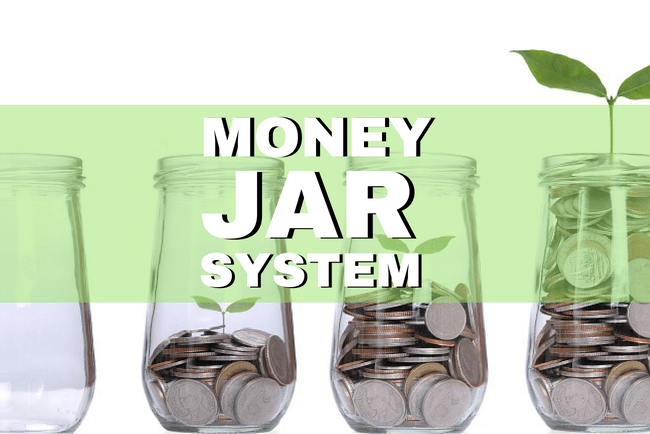
Then we started using the JARS money management system discussed in Secrets of the Millionaire Mind. What are the JARS? The JARS are just that: plastic jars. Here’s a photo of my jars from my home office:

The jars themselves aren’t actually that important. What’s more important is the money management system behind them. We actually bought the JARS as a visual reminder of where to put our money when we manage it. But we manage it from a set of bank accounts.
Managing your money reaps rewards
Once we started to manage our money, I sold the 350Z. After our first year, without any significant change in our income and all expenses being treated equal, our net worth increased by a surprising 45%. When we learned how to apply this system we realized it was very simple and it didn’t require a lot of our time.
Here are the results we produced after using the JARS for 12 months:
- Our net worth increased by 45%.
- We bought our first home for $337,000.
- We created $800/month in passive income by renting out our one-bedroom basement apartment.
- We earned $200 in interest from our savings accounts. We use ING Direct savings accounts, which were clocking at about 3.5% interest at the time.
- We created more peace in our relationship because my wife and I have our own “play” money.
The real trick to managing your money is not what you do — it’s how you do it.
How to use the JARS system
Here are the jars and a short description of each one.
- Necessity account (NEC - 55%): This account is for managing your everyday expenses and bills. This would include things like your rent, mortgage, utilities, bills, taxes, food, clothes, etc. Basically it includes anything that you need to live, the necessities.
- Financial freedom account (FFA - 10%): This is your golden goose. This jar is your ticket to financial freedom. The money that you put into this jar is used for investments and building your passive income streams. You never spend this money. The only time you would spend this money is once you become financially free. Even then you would only spend the returns on your investment. Never spend the principal.
- Education account (EDU - 10%): Money in this jar is meant to further your education and personal growth. An investment in yourself is a great way to use your money. You are your most valuable asset. Never forget this. I have used education money to purchase books, CD’s, courses or anything else that has educational value.
- Long-term saving for spending account (LTSS - 10%): The money in this jar is for the bigger nice to have purchases. My wife and I have used the money from this account to go skiing in The Rockies in Whistler, BC. We also used this money last September for our trip to Italy and Switzerland. The only reason we’ve been able to make this happen is because we’ve accumulated a nice sum each month in our LTSS. A small monthly contribution can go a long way.
- Play account (PLAY - 10%): This is my favorite account. PLAY money is spent every month on purchases you wouldn’t normally make. The purpose of this jar is to nurture yourself. You could purchase an expensive bottle of wine at dinner, get a massage or go on a weekend getaway. Play can be anything your heart desires. My wife and I each receive our own play money, and here’s the best part. We’re not allowed to ask what the other person spends their money on.
- Give Account (GIVE - 5%): The money in this account is for giving away. Trisha and I give money every month to the Sick Kids Hospital Foundation. We also use the money in this jar to give to family and friends on birthdays, special occasions and holidays. You can also give away your time as opposed to giving away money. You could house sit for a neighbor, take a friends dog for a walk or volunteer in your community.
How the JARS work
Here is a sketch of how we use the jars. Actually, we don’t use jars at all. All of our accounts are electronic savings accounts with our necessity (NEC) account being the only exception; it’s a checking account. Trisha and I deposit all of our personal income into our necessity account. The money in our necessity account pays for all of our expenses. The remaining money is distributed into five other accounts.

I learned very early in the process that the jar percentages are not critical. To guarantee your financial success, just start using the system and build the habit. This is the key. It doesn’t have to be perfect when you start.
You could even start by splitting $10 every month into the jars. There’s an inspiring story in Secrets of the Millionaire Mind. One woman started splitting $1 into the jars every month. In her first month, she put 10 cents into her PLAY, 10 cents into her FFA, 10 cents into her LTSS, and so on. Later that month she used her play money to buy a piece of bumble gum. She received a mini comic with the bubble gum package that she bought with her play. She read the comic and got a laugh. Two years later she deposited a $10,000 dollar check into her FFA account. Now who’s laughing?
I highly recommend the JARS system to anyone who wants to make the most out of their money. If you’re looking for a simple way to budget, then start using the JARS system. Remember: Managing money doesn’t restrict freedom — it creates freedom.
You can read more from Martile at his personal-growth blog Freedom Education. He has also written a free e-book entitled The Genius Within YOU.

RSS Feeds
Facebook
Twitter

July 8th, 2009 at 5:29 am
This article reads like a get rich quick scheme.
It sounds like the author (and the author’s wife) already had a decent income and would have likely done well with any budgeting/goals system.
There’s also no mention of “retirement” as one of the jars, not things like an emergency fund. There’s also no savings for emergencies and/or house upkeep, either. It seems that the author’s roof has yet to leak, the house hasn’t needed painting, the furnace hasn’t gone out, the water heater hasn’t failed, etc.
We do use a similar approach at home with cash envelopes, but we also have money going into retirement funds, savings and other finds for long term use.
Some of this comes from having children, but a lot of it comes from knowing that home repairs can be expensive, my car is getting older every day (and will need to be replaced) and so on.
July 8th, 2009 at 6:11 am
“The jars themselves aren’t actually that important. What’s more important is the money management system behind -the them-”
I’m not sure if that was intentional or not. Should it be, “behind them”? I like the idea, but with my low income I just take out 100 or so every two weeks for “play” money, use some to pay bills, and save the rest. No jars needed for those of us with will power.
July 8th, 2009 at 6:18 am
@Jason, I think their FFA jar is intended for retirement.
July 8th, 2009 at 6:26 am
“Now who’s laughing?” Umm…the same woman?
We do something very similar using ING accounts for EF fund, irregular bills, vacation, house, and car savings or repairs.
July 8th, 2009 at 6:36 am
I’m confused. How is this NOT just a “budget?”
And the capitalization of JARS implies it’s an acronym for something, but the article never alludes to that, and instead just refers to them as actual, physical jars. Jars that are never used for anything.
Seriously, this just sounds like an article about one guy’s budget.
July 8th, 2009 at 6:48 am
Jason,
I don’t want to put word’s in Steve’s mouth, but I will give him the benefit of the doubt that if he and his wife have implemented such an intentional savings plan, that retirement likely fits in there somewhere as well, perhaps in a 401k plan that is yanked out of their checks before it ever gets to them.
I just implemented nearly this same system over the weekend except with different savings goals after reading several articles from JD about how great ING the ING accounts are and several articles from Ramit persuading me to automate my finances. I’ve always been a saver, but I’m now at a point where “just saving” isn’t enough. I am now saving for specific goals. Blending their two systems together, I’ll spend a lot less time moving money around manually and will no longer have to maintain a spreadsheet to see where my savings are going.
I love the idea of saving a bit each month to donate. I do this as well and think it is so important, growth wise, to becoming truly financially free. I’ve heard plenty argue that you can’t build wealth by giving your money away, but for me, taking a small amount every month to contribute to something bigger than myself gives me a motivational boost to save even more.
July 8th, 2009 at 6:55 am
I agree with the first commentor.
I checked out the authors website, and find it along the lines of those promoting “the secret”. Not for me.
The only advantage I can see is that such a visual image may help if you’re grouping your expenses. But for all the items I track in my budget this would be more distracting and a create a lot of wasted space.
July 8th, 2009 at 7:19 am
“One woman started splitting $1 into the jars every month. In her first month, she put 10 cents into her PLAY, 10 cents into her FFA, 10 cents into her LTSS, and so on. Later that month she used her play money to buy a piece of bumble gum. She received a mini comic with the bubble gum package that she bought with her play. She read the comic and got a laugh. Two years later she deposited a $10,000 dollar check into her FFA account. Now who’s laughing?”
I think there’s something missing between 10 cents and 10 grand. I think that’s a more interesting story.
I think what’s a better financial post is how to convince suckers, I mean clients, to pay you to be a “life coach.” Wish I had thought of that one. I guess the Genius isn’t in ME.
This post could have stopped at, “paying an $800 car payment each month was a bad idea.”
Really below par guest post here, JD.
July 8th, 2009 at 7:24 am
Maybe I missed it, but where does Retirement savings fit into this plan?
Images are blocked so maybe I’m missing something…
This sounds like what a lot of people are already doing with ING sub accounts.
5% for the give account is too low (for me personally). But I guess the idea is to use the system and adjust to your own lifestyle.
July 8th, 2009 at 7:27 am
Good thoughts…definitely agree w/Jason (#1)in that it’s just a little simplistic. Still have no way of knowing whether to use before or after tax figures. If gross is used, are pre-tax contributions to retirement accounts considered in the 10%?
Three kids in private school takes up a huge chunk considered in the necessity account since the public schools are awful here. And, no, we won’t be moving to a better school district because we generally like our house and our location (Eastern U.S.)
Love the 10% aside for furthering education. That savings would help to eliminate the excuse that I use so often–lack of funds.
July 8th, 2009 at 7:29 am
I like the concept, but this budget breakdown definitely seems to be geared to somebody carrying no debt. I’m still in stage 1 (eliminating debt) and so the idea of 5 separate savings accounts isn’t something I can imagine. I’ve got two - retirement and emergency.
But I appreciate the idea of having “play” and “long term savings” as goals that I could get to once I’ve paid off my debts.
July 8th, 2009 at 7:44 am
Thanks for the feedback, folks. I appreciate it. I’ve actually been considering a change to my guest post policy. So far I’ve been publishing most of the items submitted to me. I think I’m going to exercise a stronger filter in the future. Also, I may move from a variety of guest posts to having a regular “staff writer”, somebody who contributes an article per week. I think if we could find a writer that you (the readers) and I liked, it would be win-win-win for all involved.
Again, thanks for the feedback.
July 8th, 2009 at 7:52 am
Wow… a little surprised @ the general negativity of the comments. Not sure why ppl would have such a critical/negative response to this information. Read it or don’t read it - Implement it or don’t. I don’t see the value in personally attacking the author or trying to find fault in the logic…
If anybody has been reading this newsletter for any length of time you would know that any/all ideas are not purported to be “the secret”. Rather a variety of ideas are proposed to give the reader the opportunity to find what works for them. I personally have never taken any idea lock/stock/barrel, but rather take some as general recommendations & incorporate some version of them in a way that is realistic for me.
July 8th, 2009 at 7:58 am
Boy, some of these comments are pretty harsh! Give the guy a break.
This is an article about a budgeting system the author *read about.* (Note - He didn’t invent it. To get full details about it, you would have to read the book!) It helped him and may help others. It’s filed under “Basics” for a reason - it’s a starting point, a framework. JARS may work for some people; envelopes or sub-accounts may work for others. Anything that helps people wrap their brains around the idea of budgeting is a good thing.
Thanks for the new twist on budgeting Steve. I’ve had a budget for years, but I like to break down what JARS calls the NEC into smaller categories that include long-term savings for home and car reparis, etc. Having one big category for all necessities is a little too vague for me, but I can see how it would be a good starting point for those who would find a detailed budget too overwhelming to start with!
July 8th, 2009 at 8:00 am
I’m all for budgets because otherwise your money will just slip between your fingers. And they are an individual thing too, where each should be designed so that they make sense to you. It’s really important that each dollar is accounted for on paper first, before you spend it, and given a name or category. I agree with some of the other readers, like where is your emergency fund? As part of my budget, I have a car fund, which is not for car repairs, but to save up for another used car down the road, because I plan to always buy a good used car with cash, for the rest of my life. So I’m basically making monthly car payments to myself, that are collecting interest.
It’s terrific that you turned your financial life around! I’m all for that “Play money” category too. That’s like my reward for being on a budget, and the nice thing is knowing that it won’t take me away from all my other financial goals that I have too.
July 8th, 2009 at 8:02 am
@Kate - debt payments could be considered in the “Neccessities” bucket, for example a lease payment or a car loan payment. I personally don’t like having debt, but some people really like having a new car every three or so years and might consider it a necessity.
I really do find this budgeting system to be weak. It includes play money, travel money, giving and education buckets, which are very good ideas to have (my wife and I get a certain cash allowance every month, it works VERY well). The author also does state that the percentages are variable for each individual, and it’s the habit that is important to establish — which is very true. It just seems very out of whack to list things like a “Financial freedom account” and a “Long-term saving for spending account” without one mention of “Retirement funding” or “Emergency account”, with the explicit instructions that you never touch the “Financial freedom account”.
There’s also no analysis of what the “necessities” are, or “priorities”, which are definitely big parts of any budget (business or personal) process that I’ve ever been a part of, since I’ve never been in a situation where I could spend all the money I wanted to. Selling the $800/month car is certainly a step in controlling expenses, but what else might be lurking in the “necessities” account that could also be sold off?
Overall, this is a really weak article. I was half-expecting a solicitation to attend the author’s life coaching seminar (or purchase a DVD set), with discount code XXYYSSHHG for being a Get Rich Slowly reader.
The far more interesting story is likely the lady who deposited that $10K check and how she got there.
July 8th, 2009 at 8:06 am
I thought it was a great article. It is like the balanced money formula but more detailed. I have three questions though:
1. Where would paying off student loans and credit card debt factor into this system? What category would that be under?
2. How does it work having your “Play” money in a savings account? For example, I am out with friends and we decide to go the the movies. I would say that is a “play” activity but I have no way of getting my money out of that account right away.
3. I think having all your expenses in one account is kinda risky. How do I know how much I have to spend on groceries and still keep enough in the account for upcoming bills like mortgage and utilities? It would seem to me you would want to use a separate account for day to day purchases than the one you use for major bills.
July 8th, 2009 at 8:09 am
@JoDi — if you were walking around with something embarrasing (open fly, blouse open, toilet paper on your heel, spinach in your teeth, bird poop in your hair, etc) wouldn’t you want people to tell you?
This article is poorly written, with typos and incomplete ideas. Note the use of “etc..” multiple times, for instance. It has several gaping holes in the basics of money management. In short, it’s not up to the quality level I’ve come to expect from GRS, and for someone (J.D.) who needs to attract readers with interesting articles and keep them coming back for more, quality of articles is key.
July 8th, 2009 at 8:32 am
JD, I wouldn’t throw the baby out with the bathwater on this one. Sometimes the articles are above the individual readers’ ability to grasp (at that time), and sometimes they’re below the readers’ current financial sophistication. Diversity in terms of article complexity simply helps appeal to more people, and help them to understand finances.
If you don’t like this article, smile, take a deep breath, and wait for the next one. The key is to take what you need and leave the rest - you don’t have to pee on what you don’t need.
July 8th, 2009 at 8:49 am
I was relieved to see the first comment here (Jason) reacting pretty much as I did. If you can afford to blow $800/month on a car payment, then of course you’re going to realize huge net worth increases from any tightening of your belt. Duh.
I’d much rather hear from someone who, like most of the readers of this site, has already mastered the basic concept of not blowing huge wads of money frivolously.
July 8th, 2009 at 9:10 am
I have to agree with Jason - there is no mention of home repairs, emergencies, car repairs, etc. In maintaining a simple, frugal lifestyle…which is necessary to ‘getting rich slowly’…. why would I want to clutter my home with a bunch of empty jars taking up space on my desk? Seems quite juvenile and quite unnecessary.
The idea of breaking out your lump sum, monthly income into smaller accounts isn’t new. In fact, I do this with my ING account, and again with my monthly ‘allowance’ which is separated into envelopes at home (entertainment, clothes, sports expense (I’m a runner and it costs money for shoes, races fees, etc), books…).
Sorry, for me, this was not a smart or enlightening article.
July 8th, 2009 at 9:11 am
@ Jason:
Retirement funds go into the FFA. I did say investments but I guess the term is loosely applied. See Bart’s reply above.
@ AD:
Good on you! The JARS process is so simple, but old conditioning usually creates a mental barrier that prevents people from making it a habit.
@ Kevin:
Could be taken that way, no doubt. It is a budgeting system that has made a world of difference in my own life.
@ Tyler Frugally Green:
You said,
“I’m now at a point where “just saving” isn’t enough.”
I’m glad somebody said this, which is why I highly suggest you setup an FFA account. The money in this account could be used for retirement if you’d like. But there are far more lucrative ways to spend your money to get a better return on the cash you invest. Returns as high as 30% ROI; just look at real estate.
Rich people have been doing it for 100’s of years - and I’m not talking about investing in your own home either. A great reference to make money in real estate is: The Road to Wealth, Robert G. Allen.
@ Holly:
All numbers are after tax earnings.
@ Kate:
5% of LTSS is used for paying off debt. I missed that in the original post - my bag.
I used to be in the saver-syndrome, saving every penny I could, then I “self-sabotaged” that savings by going out and purchasing a sportscar, the 350Z. It was like making up for a lack of (spending) time. The PLAY money is really important as it teaches you to appreciate money by spending some on yourself every month.
@ Shanyne:
You totally nailed it. If the ideas works use them, if not toss them.
@ JoDi:
Your most welcome and thank-you.
@ Sandy E.:
I LOVE play money too
Emergency money comes from the LTSS.
@ RC:
In reply to your questions:
1. Where would paying off student loans and credit card debt factor into this system? What category would that be under? (5% of LTSS)
2. How does it work having your “Play” money in a savings account? For example, I am out with friends and we decide to go the the movies. I would say that is a “play” activity but I have no way of getting my money out of that account right away. (my wife takes PLAY cash out at the beginning of every month and I prefer to use a debit card with my own savings account)
3. I think having all your expenses in one account is kinda risky. How do I know how much I have to spend on groceries and still keep enough in the account for upcoming bills like mortgage and utilities? (That’s why we pay all of our necessities first. If we’re short on NEC one month, then we defer the FFA money [for example] till the next month, but ultimately you’ll have to adjust as your income adjusts. That’s what we’ve done and it’s worked very well.
July 8th, 2009 at 9:16 am
This is basically a more granular version of the “All Your Worth” budget, but the “play” budget is way too small.
July 8th, 2009 at 9:28 am
I thought the article was interesting and had some good ideas for an approach to budgeting.
However, Whistler is not in the Rockies - it’s in the Coastal Range.
July 8th, 2009 at 9:47 am
As the saying goes, there are many roads to Dublin. If this budget works for the writer, that’s great! After all, a budget is just a roadmap on how you want to spend your income, right? This budget looks good because it allocates money for immediate, short-term and long-term goals. Does this mimic my budget? Not exactly, but the concept is the same. Everyone needs to pay monthly bills and feed themselves, everyone needs to save a little bit every month for ongoing annual expenses like car insurance, everyone needs to have some “fun” money, and everyone needs to have funds set aside for retirement (or financial freedom or whatever you desire to call it). There are guidelines, of course, but everyone needs to tweak their budget to fit their desired lifestyle. The only “bad” budget is “no” budget.
July 8th, 2009 at 9:54 am
I also went out to his website - and right on there it says that he went to a seminar by T. Harv Eker and due to that seminar he was able to do all these things - including come up with this system.
July 8th, 2009 at 10:00 am
@Jason - I wasn’t referring to your original comment when I referred to some of the harsh comments here. Your points were presented without the ridicule some others included.
Jason wrote:
“This article is poorly written, with typos and incomplete ideas. Note the use of “etc..” multiple times, for instance. It has several gaping holes in the basics of money management.”
I see that as an editorial problem. Perhaps JD cleaned it up before I read it this morning because I don’t see any typos. I see only one “etc.” used in the article (which is the same number you and I each used in our comments.) If the content is incomplete, I expect an editor to return it to the author with a request for revisions.
The point I was making in my comment is that many readers here want *every* article to apply to *their* specific set of circumstances and their view of the topic. I don’t budget the way the author recommends, and I am well beyond the basics, but I can see the value of the information for others who are at the beginning of this journey.
July 8th, 2009 at 10:37 am
@JoDi — thanks for the reply. I definitely see some interesting ideas in here and was trying for constructive criticism. The most salient point that too many people forget (or try not to) budget is the play money, thinking that every cent must be tracked or that it must all go to “responsible” things. That’s just impossible to follow for most people — and if you don’t follow your budget, it’s useless. I like the ideas of broad categories and automation, as well. I have been around the block too many times to ever dream that anyone’s solution will apply to my life story — I just try to take the best ideas and make something that works for me (and my wife and kids)
Play money is very essential for keeping the peace in a marriage, I’ve found. If you don’t have it in place, then it’s very easy to resent the other’s spending on something you consider a waste of money. In my marriage, I tend to like to save up for something that might be a few hundred dollars, and my wife generally likes smaller things like music, coffee, buying lunch, etc. Before putting the “blow money” item into the budget, I felt I could never save for what I wanted, and I couldn’t understand why she “always bought what she wanted”.
@Steve - thanks for the clarification on the retirement savings. However,
“But there are far more lucrative ways to spend your money to get a better return on the cash you invest. Returns as high as 30% ROI; just look at real estate.”
Come on, man. Real estate is taking a absolute bath and will not recover for years. I know some markets are better than others, but any investment with a 30% ROI is either a Ponzi scheme or carries extreme levels of risk. Historically, real estate has been single-digit growth, barely beating inflation. I’m not saying it’s a decent investment or way to make money by any means, but expecting 30% ROI is (IMHO) hopelessly optimistic. 12% in my mind is realistically optimistic, with probably 9-10% being more realistic and 7-8% being where you should likely plan for.
Please note that I’m not saying that one good investment (be it stock, property, etc) will not give you 30% ROI — but that your average return over all types of investments will turn out to be in the ~10% range. Some of those risky investments will just not pay off.
July 8th, 2009 at 10:49 am
Loved the idea of setting aside money for educating yourself. Continually expanding and growing is something we value too little once we reach a certain age.
July 8th, 2009 at 11:03 am
What are the mechanics of removing your money from the PLAY and GIVE ING accounts and spending it? ATM?
July 8th, 2009 at 11:04 am
I also found the math on this system a little suspicious. As an independent contractor, I have to pay self-employment taxes on everything I make. The idea that 55% of my income would cover taxes and all necessary expenses is nuts. I think anyone with student loan debt, a car payment, rent/mortgage and taxes, plus bills, would sail pass the 55% figure pretty quickly.
July 8th, 2009 at 11:18 am
After reading all the comments above, I am compelled to remind people that everyone is different and so is their budget. Everyone’s circumstances are different; what works for JD may not work for me and vice versa.
For example, I’m 28yo and I moved home after I graduated from college. I do not have children or student loans. In other words: my sole responsibility is myself. Based on my situation and my needs, my budget is very different from someone like JD’s because he’s married, and so on. However, I have used the JARS system for years. I use a combination of online money market accounts and CDs to limit access and maximize interest earnings based on the purpose of each “jar”. The labels and purpose of my jars differ from JD’s; it is because we are at different stages of our lives.
JD shared his budget and his system with us; instead of nitpicking, why don’t we take something away from it? The criticism on the $800 car payment is a good example: JD also mentioned that “Once we started to manage our money, [he] sold the 350Z”. For those who recognized that the $800 car payment was a budget-blunder: congratulations, now move on. And for those who didn’t recognize it as such, take note and learn from it.
JD has shared another method of budgeting; take it for what it is. Taking the theory behind this particular system and implementing all or part of it may help one’s financial situation. Whereas getting hung-up over percentages and criticizing a particular label on a jar is going to keep one in the same financial ditch one was already in.
July 8th, 2009 at 11:20 am
This article really doesn’t seem up to the standards I would expect from GRS
***
Our net worth increased by 45%.
We bought our first home for $337,000.
We created $800/month in passive income by renting out our one-bedroom basement apartment.
***
I don’t see how the above is in any way connected to the jar system as presented in the article. It seems highly connected to no longer having an $800 car payment, but that decision wasn’t connected to the jars either.
July 8th, 2009 at 11:21 am
Just to be clear, this post was NOT written by me. It’s a guest post. If it were written by me, it would feature Mini Coopers in the automobile roles.
July 8th, 2009 at 11:24 am
Right now, my “necessary” expenses each month are about 69% of my take home pay. This includes: Rent, Utilities, Car Payment, Insurance, Student Loans and debt snowball.
For my budgeting, I’m never sure what category “fuel” should be in. The basic fuel to get to work is a necessity. But the additional fuel to drive somewhere out of the ordinary over the weekend (or whatever) is more of a “play” item. Regardless, my typical fuel expense each month is over 7% of my take home pay! Ouch.
July 8th, 2009 at 11:30 am
oops, selective reading–my mistake. Please substitute all “JD” with Steve Martile in my previous comment.
July 8th, 2009 at 12:16 pm
“But there are far more lucrative ways to spend your money to get a better return on the cash you invest. Returns as high as 30% ROI; just look at real estate. ”
OK Steve, I just had to jump off your bandwagon right there! Now that Bernie Madoff is going to jail there’s nowhere left to consistently get returns like that!
Anything promising that high a return has to be highly speculative (or illegal), and odds are your losses would offset your gains to the point where your returns would end up being about average or worse.
July 8th, 2009 at 12:17 pm
I use a system of old milk jars to help my kids manage their allowance money (you can see a cute picture of it here: http://childwild.com/2009/06/21/kids-allowances-whats-the-right-approach/).
I’ve contemplated getting more milk jars for adult money to cover cash expenses: groceries, gas, play money. For our savings I do what a lot of folks here seem to and use a set of ING sub-accounts. My particular categories are an emergency fund, a travel account to pay for family trips, and an education account to pay my kids’ education. I also have retirement accounts and an account with JustGive.org to automate donations.
My ideal formula is 50% needs, 20% savings, 10% giving and 20% play money, but we’re still paying off debts, so I’m not saving as much as that.
July 8th, 2009 at 12:42 pm
I went to a couple Harv Eker seminars and used the JARS system to build the foundation of my 10-minute budget (guest post published here on GRS a few months ago.) However, I stand by my statement that anyone who pays Eker $60 for his actual jars is a fool. I also couldn’t believe the number of idiots who paid $12 for the “limited copies” of Eker’s wealth book at the Millionaire Mind Intensive when you can buy it on Amazon for less than $4 shipped.
Wealthy or not, Harv has a way to wring money out of you. In conclusion: Jars system = great. Buying the actual jars from Eker = sheer idiocy and should not be promoted.
-Erica
July 8th, 2009 at 1:35 pm
I’ll stick with Envelopes and automatic withdrawals. Thanks though
July 8th, 2009 at 2:02 pm
Nitpick: “FFA account” is redundant.
July 8th, 2009 at 2:11 pm
I just loved the sentence : Managing money doesn’t restrict freedom — it creates freedom.
If only everyone thought it that way……..
July 8th, 2009 at 2:47 pm
Steve, not to be picky but if you skied Whistler you weren’t in the Rockies, you were in the Coastal Range.
Good post though, I like the concept.
July 8th, 2009 at 2:53 pm
I would like to echo the request for further information: How did the woman profiled go from 10 cents to 10 grand?
I would be much better at dividing my accounts if I had enough money to fill all of them.
July 8th, 2009 at 3:29 pm
Hey Steve,
There seems to be a high level of criticism here. But as always in life, there’s no way you can please everyone! So I hope you keep to your faith and keep doing what you believe in. I know you’re doing some commendable work and I wish you every success in your endeavours!
Cheers~
Mark
July 8th, 2009 at 3:30 pm
The thing that really jumped out at me in this piece was the total lack of detail. The author credits his “system” with increasing their net worth 45%, buying a house, renting part ouf that house out (and incidentally, being a landlord is not passive income–presumably he just hasn’t had a tenant move out without notice, ruin the carpets or break the fridge yet) and saving his marriage. About the only thing a budget can actually do is limit monthly spending and increase savings; everything else is a tertiary effect at best.
The 45% number tells me right away that they just weren’t saving anything before, because the only way I could increase my net worth 45% in a year would be to increase my income (or have a really good year for my investments, but that can’t be attributed to a budget). The only time my net worth went up that much was when I first started saving. I use the Pay Yourself First method, but that’s pretty much irrelevant. Regardless of how you get there, what matters is how much you have left over at the end of the month.
Incidentally, Gail Vaz Oxlade uses jars when she puts people on a budget on Til Debt Do Us Part, so it’s hardly a revolutionary new idea. Fixed expenses like rent, phone and cable are not part of it, though she may try to reduce those. The jars are only for budgeting variable spending like food, transportation and entertainment.
July 8th, 2009 at 4:26 pm
I’ve been using the Jars system for almost a year now. It works wonderfully for me.
I started by using the FFA jar and LTSS jar to build my emergency fund. Now I have 10 times monthly expenses in my emergency fund. Now I am really using the FFA jar to put myself on the road of financial freedom.
I found that my expenses on necessities was less than 50% of my income, so I put the rest of it into FFA jar. I also keep record of all my expenses to the last detail and it helps me to identify where I can save money (as described in the book Your Money or Your Life)
My PLAY jar helps me to enjoy life. I tend to hoard money, but now I let myself to enjoy some luxury that make me feel rich. I want to come from the place of ENOUGH and HAVE instead of NOT ENOUGH.
No, I did not buy the jars during the seminar. That would be a waste of money HAHAHA I made my own at 10% the price that I’d have paid in the seminar.
I like the jar system because it’s very simple to apply. I’ve taught my family, friends and students to use this system and they found it very useful.
Learn and Grow!
July 8th, 2009 at 4:35 pm
I actually thought this was a pretty good article (definitely within “GRS standards”). I think most of the bashing going on here is just sour apples about the author talking about his $800 car payment.
July 8th, 2009 at 5:10 pm
Sounds like one of those plans that people get excited about for about…two months. Automatic withdrawals are much easier and…automatic.
July 8th, 2009 at 7:59 pm
I believe Whistler is near the Canadian Rockies
July 8th, 2009 at 8:05 pm
Overall, I thought this was a good article and explained a budgeting system that helps this individual.
I use a budgeting system that is geared towards my own goals and expenses. There are many budgeting systems out there and finding the perfect one for yourself by trial and error and tweaking various budgets to create a perfect one is the way to go in my opinion.
July 8th, 2009 at 11:38 pm
This is a simple ’starter’ budget and probably most useful to someone just beginning to think about managing their money. If it helps them get started by showing how simple it can be, then it has served its purpose.
July 9th, 2009 at 4:18 am
To all critics:
“Abilities wither under criticism; they blossom under encouragement.
Any fool can criticize, condemn and complain - and most fools do.
But it takes character and self-control to be understanding and forgiving.” – Dale Carnegie
To all supporters:
You’ve earned my respect. You guys rock!
Cheers~
Mark
July 9th, 2009 at 4:50 am
JARS, Envelope, 0 based budget, spending plan/allowance, On-line system or some combination of the above. I think the bottom line is that you have to find a system that works for you and your family. Just having a system means you are way ahead of most people.
We use a spending plan/allowance system. Salary - 401k - short/mid term savings (which includes savings for vacation, travel, house expenses, fun, emergency fund) - recurring bills (mortg., utilities, escrow payments) = allowance. We each get the same amount of allowance which we use for discretionary spending which for us includes gas, dry cleaning, groceries, eating out, personal expenses, etc. (anything without a bill). Our plan allocates the vast majority of our money and then we get to spend our allowance the way we want which some times means we scrape by for gas and groceries.
But most importantly we killed all non-mortgage debt (via the Total Money Makeover plan) in 2007 which means we have a lot more money for the above. No debt besides the mortgage gives you a lot more freedom.
July 9th, 2009 at 8:39 am
I also found the math on this system a little suspicious. As an independent contractor, I have to pay self-employment taxes on everything I make. The idea that 55% of my income would cover taxes and all necessary expenses is nuts. I think anyone with student loan debt, a car payment, rent/mortgage and taxes, plus bills, would sail pass the 55% figure pretty quickly.
Yeah, a “system” to help people who are already rich stay rich is maybe useful for some, but I think most people need to spend more than %55 of their income on needs.
July 9th, 2009 at 9:45 am
@ JoDi:
“OK Steve, I just had to jump off your bandwagon right there! Now that Bernie Madoff is going to jail there’s nowhere left to consistently get returns like that! ;-)”
I’m not sure where you do your shopping, but there are still investments today that are doing well over 30% ROI over the last 100 years and my guess will continue that way in the future for the next 20 years - all real estate investments where you would be the primary investor, not the second or third party.
Investment properties with rental income will kill the 30% ROI and even do better than that. You just got to look for them. And you can do it with none of your own personal money. Lot’s of people are doing it today including myself. See the book I mentioned from Robert Allen above and also check Early to Rise for more information: http://www.earlytorise.com/
The ETR newsletter is fantastic!
If you don’t believe me JoDi that’s ok, but it does confirm to me why only 4% of the population are ultra rich - they know how to achieve a 30% ROI and then go out and do it.
The masses on the other hand are ignorant. You have a choice to stick with the masses or just be your true self - that part of you that knows intuitively that there is some truth to what I’m saying.
@ Mark Foo:
Pleasure to meet you man and thank-you.
July 9th, 2009 at 10:32 am
Hey look, it’s the envelope system! Really, is there more to it?
July 9th, 2009 at 12:53 pm
the fact that this guy believes he can get consistent 30% returns makes me question anything he writes. if he could do that he should be starting a hedge fund and making a heck of a lot more than he probably makes blogging.
July 9th, 2009 at 12:55 pm
@Steve:
No worries, mate. I’m also an ETR newsletter subscriber.
Cheers~
Mark
July 9th, 2009 at 1:14 pm
This was not a helpful or well-written article. Not up to your usual standard, JD.
July 10th, 2009 at 9:02 am
I don’t think the Jars system is achievable for people just out of school. My husband and I both have student loans and nearly all of our money goes into loan payment, rent and food. It’d be nice to have all of our necessities be covered by 55% of our income, but as is, that’s impossible.
July 10th, 2009 at 11:22 am
The 55% assumption made me sad…and then it made me stop reading. Because if the only way for me to have any kind of financial freedom is to get my necessities down to 55% of my income–one income, for four people–then I might as well go find myself that bankruptcy attorney today.
July 12th, 2009 at 10:31 pm
Nice post! A system is better than no system . . . whatever works!
July 15th, 2009 at 7:26 am
I guess a picture of the jars should be enough rather than real jars. If I find people use real jars for this, time to invest in plastic jar futures !
July 28th, 2009 at 4:42 am
Very similar to 60% Solution Budget (http://www.getrichslowly.org/blog/2008/04/14/building-your-first-budget/).