10 Career Lessons from Julia Child
Published on - September 27th, 2011 (Modified on - May 24th, 2012) (by April Dykman) This post is from staff writer April Dykman, who believes lavender, chocolate, and honey are the stuff that dreams are made of.

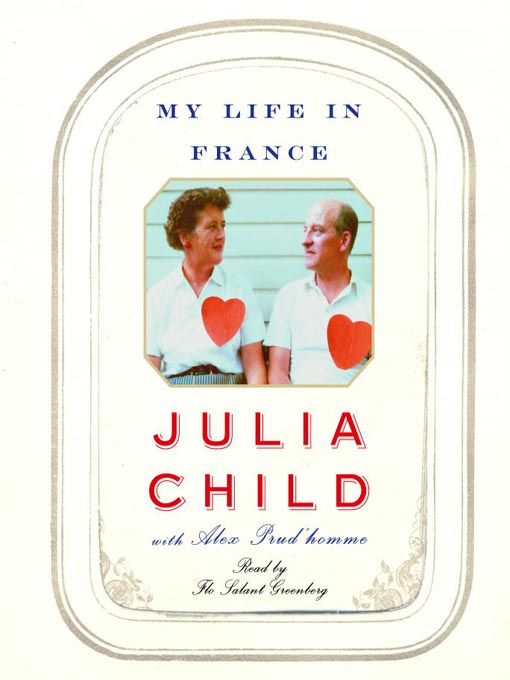
Readers, I hope you’ll forgive me for writing another culinary-themed post here at Get Rich Slowly. Last week I wrote about the expense of healthy food cooked at home, and this week I can’t help but to talk about something that’s been on my mind as I’ve read My Life In France by Julia Child and Alex Prud’Homme.
My Life in France chronicles Julia Child’s life from the year she arrived in France in 1948, knowing nothing about the French culture or language, nor the cuisine she would so famously present to to America in her ground-breaking cookbook, Mastering the Art of French Cooking, and her television show, The French Chef.
What does any of that have to do with career lessons? One of the things that stood out about Julia as she progressed from culinary disaster to American icon was her business sense. (When they were still dating, her husband, Paul Child, was kind about her early attempts in the kitchen because he wanted to marry her.)
Of course she didn’t specifically set out to achieve all that she did the day she arrived in France, or even the day she took her first cooking class. But her passion and dogged persistence made her a great chef, as well as a household name.
Without further ado, here are the top 10 career lessons you can learn from Julia Child:
- Invest in yourself. Julia didn’t speak French when she arrived in France. In fact, she says her French seemed to get worse the more she tried to use it and she was surprised the French could understand her at all. “…my inability to communicate was hugely frustrating,” she wrote. One night after a party of mostly French speakers, she’d had it. She declared she was going to learn to speak the language no matter what it took and signed up for a language class that met for six hours each week, plus homework.
- Follow your passion. Julia’s friends, both French and American, thought her early interest in cooking was a little nutty. It wasn’t a middle-class hobby, in fact, far from it: they didn’t understand how she could enjoy shopping, cooking, and serving food all by herself. But Julia, encouraged by Paul, ignored them and pursued her passion.
- You’re never to old to learn something new. Julia was 36 years old when she started learning a new language. She didn’t enroll in culinary school until age 37. Julia had a constant thirst for knowledge and didn’t rest until she’d mastered or learned whatever it was that piqued her curiosity.
- Cultivate enthusiasm. Julia’s words about food and learning to cook practically jump off the pages. While reading it, I couldn’t decide if I wanted to keep reading or go cook something. Her passion is infectious, and it was something she purposefully cultivated while observing her cooking professor, Chef Bugnard. “It was a remarkable lesson,” she wrote. “No dish, not even the humble scrambled egg, was too much trouble for him…I was delighted by Bugnard’s enthusiasm and thoughtfulness. And I began to internalize it.”
- Accept that doing anything well requires hard work. Julia wasn’t satisfied to take culinary classes or write recipes off-the-cuff — her kitchen was her laboratory. While in culinary school, she’d come home from class and spend hours working out the hows and whys of what she’d learned that day. When writing recipes, she’d test every ingredient and measurement, experimenting with mayonnaise until she was certain no one could possibly have written more on the subject than she had. “I had never taken anything so seriously in my life — husband and cat excepted — and I could hardly bear to be away from the kitchen,” she wrote.
- Nix the self-deprecating scripts. When a recipe fell flat, Julia didn’t excuse it with self-deprecating comments. “I don’t believe in twisting yourself into knots of excuses and explanations…” she wrote. These types of admissions only draw attention to your shortcomings (or your perceived shortcomings). Usually you’re better than you think you are, and if something really goes wrong, Julia would advise you to suck it up and learn from your mistakes.
- Solicit feedback from your audience. Julia was big on soliciting feedback. Paul was her main go-to, but while developing her recipes, she’d also send them to trusted friends and family members in America for testing. Did they have the ingredients at their local grocery? Were her instructions clear? Did they like her vocabulary? Julia wanted to bring French cooking to American audiences; she knew it wasn’t about her. She made sure her audience would be able to follow her recipes — and actually cared about French cooking.
- Expand your skill set. Julia was passionate about teaching others to cook. But to do it well, she couldn’t just be a good cook — she had to learn how to be a good teacher. “I decided that, though the cooking we’d done was fine, my presentation had not been very clear…I felt I’d have to teach at least a hundred classes before I really knew what I was doing,” she wrote. Learning how to teach was helpful throughout her career, both for writing recipes and as the host of her own cooking show.
- Subject beliefs to “the operational proof.” In France, wrote Julia, cooking is a major art, which brings with it a certain dogmatism. But she wasn’t satisfied to accept things at face value. She preferred to view everything as a theory until she’d tested it for herself. She checked her recipe on the page and in the oven, and she’d investigate the old wives’ tales too. As you can imagine, it took a lot of time to perfect even one recipe. “I felt we should strive to show our readers how to make everything top-notch, and explain, if possible, why things work one way but not another,” she wrote.
- Know your worth. Publishing Mastering the Art of French Cooking wasn’t easy. Julia’s co-authors wanted to stay with an agent who hadn’t replied to their communications in months, but thanks to a little networking, Julia secured a much better publishing company for their project. She knew its worth long before it was completed, writing, “Competition in this field is stiff, but we feel this may well be a major work on French cooking…and could continue to sell for years.”
Julia’s career savvy isn’t what she’s famous for, but it is what made her famous and allowed her to accomplish her life goal: bringing French food to American dinner tables and sharing her passion with the world.
Which of these lessons can you use to make a positive change in your career or business? What can you do today to take the first step?
GRS is committed to helping our readers save and achieve your financial goals.Savings interest rates may be low, but that’s all the more reason to shop for the best rate.Find the highest savings interest rate from Ally Bank, Capital One 360, Everbank, and more.
This article is about Career
Disclaimer: This content is not provided or commissioned by American Express. Opinions expressed here are author's alone, not those of American Express, and have not been reviewed, approved or otherwise endorsed by American Express. This site may be compensated through American Express Affiliate Program.
Discover is a paid advertiser of this site. Reasonable efforts are made to maintain accurate information. See the Discover online credit card application for full terms and conditions on offers and rewards.
SEARCH FOR RECENT ARTICLES


Great post, April
Julia Child has always been a hero of mine because she bucked the trends — she married and founded her career in her thirties.
One of the points I like best here is Child’s willingness to master the art of teaching. I’ve a lot of people who have expertise to share aren’t willing to master the crafts of writing and teaching. (I guess that’s why ghost writing can be a lucrative career!)
loading....
You forgot “become a spy.”
I’m working on the “cultivate enthusiasm” part. I’m really not particularly interested in what I do (I swear, I watch paint dry. Literally), but I’m trying to learn from those who are.
loading....
What in the world is your job??
loading....
I’m a coatings chemist. We make the binder for paints (think eggs in a cake). One of the things we have to look for with new binders is “does it dry and how long does it take?” Can’t know unless you watch it. :p
loading....
To be honest, my first experience with Julia Child came from the movie Julie and Julia. While not the most fantastic movie, I did earn a respect for Julia Child.
It is inspiring to see the hard work and dedication she gave to following her passion, and to creating something that she believed in. Passive investing and smart personal finance both require similar passion and dedication.
loading....
I would say always accept free education. My company is in the IT field and I work as an analyst. Though I don’t know if my future is in the industry, my company opted to train me on SAS (a widely used programming language). I actually found it interesting and since it’s widely used, it’s a transferable skill I can bring with me where ever I go. Always accept free education.
loading....
Julia Child is one of my heroes. One other thing to note: she was 50 when Mastering the Art of French Cooking was published and 51 when the first episode of The French Chef aired. She didn’t become THE Julia Child until in her 50s! It’s never, ever too late.
loading....
Investing in yourself can be one of the most rewarding things you do. If you follow a career path that you enjoy instead of one motivated by money, I find you will be much happier.
loading....
Julia Child could have been a case in Working Identity, the book I am reading on career transitions. Passion for your work is the most important part of successful transition.
I take umbrage at your surprise that someone as old as 37(!) can embark on a career transition. One is never too old to start something new, and 37 is not that old. (Says someone old enough to have watched episodes of the French Chef on their original air dates.)
loading....
These days I wouldn’t see it as much of a surprise, but in Child’s generation women having a job at all wasn’t all that common, let alone starting a career at an age where women were considered to be past their prime.
I think Child in her own way helped pave the way for the rest of us.
loading....
During “the war”, nearly all women worked. Many, including Child and my mother and my grandmother, continued to work after the war was over. Nearly every woman I know of that was alive in the 30′s and 40′s worked. Maybe the lives of my families are not as nice as a TV family!
loading....
And how many of those women still had jobs — let alone careers — when the war was over and the men returned? Career opportunities for women were there, but were pretty limited.
My grandmother was a secretary until she got married. Then her job was raising kids and keeping house. She was always amazed at the opportunities I had to pursue my dreams that her generation didn’t.
loading....
@29 and Holding — since writing the above, I wonder if we’re talking about the same country here. I’m in Canada, so I can only speak to the experience of women here. I wonder how many women worked at jobs that were their passion though?
loading....
Working Identity is a great career book.
loading....
This is one of my absolute favorite books. I really loved how she just decided she wanted to do something and she did it. I can only hope to be so focused and accomplish so much of what I want to do.
loading....
It is one of my favorite book too.
One more lesson I learned ( it is already there in different forms in your post, just not explicitly) – know your strengths and weakness. If she didn’t accept her weaknesses and decide to work on them without her ego clashing, she would have never succeeded. A lot of us need that first step of soul searching and acceptance.
loading....
My wife and I still love to watch the reruns of the PBS series with Julia and Jacques Pepin. It’s great TV, and you can still see a very nice enthusiasm for her craft, although by that time she had been doing it for many years.
37 is young to start! I’m 48 and thinking of new ways to start things constantly. And I think I’m young
loading....
Here’s one to add:
Enter the market at the right time.
Some people might wanna kill me for this, but please read before jumping. I’m not trying to diss anybody’s idol.
I was never too impressed by Julia Child. First time I really watched her was with Jacques Pepin and he blew her out of the water– they were cooking peas, and while Pepin was focused on the flavor, she worried about hers “looking better” (after a wash with cold water they turned bright green–who cares?). Afterwards I’ve seen some of her old shows and, again, while she was charming, I was not impressed with her cooking.
However– she came into the scene at a time when American cooking included canned mushroom soup and rice chex and jell-o (I’ve seen the 50s cookbooks– see this for example: http://www.cookbkjj.com/college/joy.htm ).
I imagine that Child’s first appearance on TV must have been like a comet through the night sky. Regardless of how she practiced, what she preached was revolutionary: pleasure! Sensualism! And in the 60′s, on the wave of post-war prosperity, America was ripe for it just like it was ripe for other delights and its accompanying excesses.
The Joy of Cooking came out much earlier, but I’d guess too early– during the Depression– and had no TV show. After the depression came WW2 rationing. Can you imagine? The book’s new edition came out right after Child’s though. See: http://www.cookbkjj.com/college/joy.htm
The 60′s saw the first TV-President (Kennedy) and the first TV chef (Child). Thanks to the TV age, Julia Child was a pioneer in American culture, but she did not arrive to the scene so early that she needed to be rediscovered.
If she was starting today the was she did before, she’d be trampled by the competition of celebrity chefs and people who train since age 7. There’s a glut of TV chefs on the market. And yes, there are niches to be filled, but the competition is brutal these days.
Personal traits like passion and enthusiasm and persistence are essential in life. However— catering to unmet needs and getting there early but not too early seems to be a decisive key to business success in every field (hello, Microsoft).
loading....
oh, crap, the lack of editing! the 50s recipes are here:
http://www.masterstech-home.com/the_kitchen/recipes/reminiscent_recipes/recipesfromthe50s.html
(the horror)
anyway, more errors to come i’m sure.
loading....
Agreed! But I think a better way of phrasing it would be “address a need in the market”. You’re exactly right about Child being a pioneer and how things would be different if she was entering the market today.
I think the same thing can be said for the rest of us. If you try to start a business in a field where there is also a lot of competition, you have to be smarter, better and cheaper than the rest. However, if you can find needs that aren’t being met and address those, you’re in a much better position.
loading....
Yes… yes and no.
I agree with you that when seeking to build a business you need to address a market need and you research that and then build your mouse trap or what not.
However, I don’t think Julia Child was looking for wild success and celebrity. I think (maybe it’s wishful thinking) she was just following her passion. And she was lucky that the timing of her passion coincided with a market need.
The life choice seems to be: do you follow your passion and trust your luck to the stars? Or do you pursue success by addressing market needs?
I think artist types lean towards the first path–happy with what they are doing regardless of external success (of course, we all like to eat). Then there are the entrepreneurs and business people who seek profit where they may find it. And this is how we get the unholy marriage of artists and impresarios, for example.
Anyway, all generalizations are wrong, including this one, as I think most of us have a bit of the artist and a bit of the entrepreneur, but I just wanted to characterize different approaches to career. Some love doing for its own sake, some love doing for the rewards.
And I think that Child was not pursuing success, but doing what she loved, and she just got lucky. 20 years earlier or 20 years later she would have loved cooking the same way, but she wouldn’t have been so successful on TV and as an author. The same thing can be said for a lot of people–not everybody wins the lottery.
loading....
I know a lot of people who tried to follow their passions and can’t pay their bills because being an outdoor educator or a museum curator or a chef or a baseball player actually aren’t particularly marketable skills most of the time, *unless you are exceptionally good and get lucky on top of that*.
I don’t know any doctors or engineers or accountants with the same problem, though.
loading....
Of course! We should all be doctors and engineers and accountants! Problem solved.
loading....
Sorry, I couldn’t resist. You wouldn’t want me as your doctor, engineer or accountant. That’s not where my strengths lie.
I know plenty of people who did pursue their passions and have good paying jobs. However, I don’t imagine my social circle is particularly representative of the job market at large.
loading....
I know a lot of lawyers and accountants who chose their career for the salary and are miserable, or were miserable and moved on to something else.
The lady who runs the French bakery I frequent used to be an engineer.
loading....
We can’t all be doctors and engineers, but there are a lot more job openings for doctors and engineers and accountants and mechanics and roofers than there are “passion” positions like celebrity chef or professional football player or novelist. It’s naive not to temper your career choices with a bit of reality.
loading....
@Tyler — I love that you include roofers and mechanics there
For some people, those jobs are their “passion position”, and more power to them!
I think you’re right that we have to temper our passions with realistic choices. A lot of people start with a day job and transition into another business or career without having to take a huge leap of faith. Some people can go “all in” and make a big sacrifice. I think it has to do with risk tolerance as much as talent.
loading....
Yeah I’m following my passions and I’ve had to make economic “adjustments” because I don’t see a lot of money from it. I’m fine with it however– I had a doctor who killed himself– go figure. I’d love to have more money but I’m not willing to give up the way I live just for a bigger paycheck– when I did that, I’d be drinking off my paycheck come Thursday. Maybe the suicide doctor did the same. Anyway…
The thing is that people have to make that conscious choice– do I do what I love in spite of the risks? Am I willing to pay the price? Because success is not guaranteed anywhere in spite of one’s efforts. Even as a doctor or engineer, you might kill yourself.
Whatever you do, if you’re lucky, great, if you’re not lucky, it doesn’t mean you’re a failure. I’m sure Julia Child would have kept cooking happily even if her book sold just 200 copies and nobody ever saw her on TV.
My problem I guess is with the definition of success and with there being just one kind of success. I’ve never been attracted enough to that particular lure.
loading....
@ El Nerdo — I find it easier to work in a lower-paying field and do what I enjoy because some of my family and most of my social circle aren’t into fashion, big houses, expensive cars, yearly vacations, gourmet dinners, etc. For me, it’s easier to be happy in my career because my lifestyle expectations aren’t so high. I can afford to save for retirement, have an emergency fund, have no consumer debt and can afford to help others. That’s not everyone’s definition of success, but that’s the one I hold myself too. I think we all have to figure out what our version of success is.
loading....
“If she was starting today the was she did before, she’d be trampled by the competition of celebrity chefs and people who train since age 7.”
I don’t agree with you on this point–how do you explain the enormous success of Rachael Ray? I’m not saying I’m a fan, but the woman has built an empire–she’s not even a chef and she didn’t start a cooking career at age 7. She’s a personality with a fan base.
loading....
That is the case with every celebrity. It is not the case with the 1000 people each who wanted to be a celebrity, but failed, and as such you have never heard of them. He is making the argument that in today’s environment, Julia Child would fall into the (gigantically larger) second group.
loading....
My point is that there are a lot of niches out there–Julia was very methodical about identifying a need, defining her niche, and testing her market, and I see no reason why that hard work and dedication (not luck) wouldn’t have paid off today.
Just because there are a lot of people doing something doesn’t mean there isn’t room for someone doing it really well–be better that your competition and stand out from the glut of cooks on cable TV.
loading....
I don’t think that means people should stop trying though. Yes, people need to be realistic as to what’s going on out there — and have a back-up plan, but where would we be if people didn’t take a risk now and then?
As for the doctors, engineers, accountants, etc… I’d be curious to see how many people didn’t get into medical school or law school, or didn’t get accepted to an engineering program — or who flunked out. I have no doubt these professionals have skill set that are in demand, but how many people failed along the way?
loading....
Ah, Rachael Ray– I used to have a bit of a crush on her back when she was doing the “$40 a day”– she was like a cute, fun-loving road-trip accomplice. Then something happened to her and was transformed into… eh, let’s just say my crush was crushed.
Personality aside, her cooking is vile. VILE. I don’t know about her daytime TV audience– if I did, I’d be a TV executive. Therefore I can’t explain her success– like I can’t explain Oprah or Dr. Phil. I can explain Jerry Springer, but he’s off topic.
What I can explain however is that PBS chefs that followed after Child (Jacques Pepin or Lidia Bastianich or that Spanish dude that owns Café Atlántico) haven’t reached cultural icon status and never will, in spit of being better cooks, because they arrived when the market had already been sold in parcels. Yes they are successful, and I am (benevolently) jealous of their lifestyles, but they won’t go down in history the same way as Julia Child.
To make it big now you not only have to be a real trained pro but also have the Murdochs as producers, like Gordon Ramsey and his 5,000 different TV shows (the British ones are actually quite nice, he appears human).
Anyway, I’ve been trying to make an Outliers kind of argument all along– personal traits are essential of course, but luck and environment play a huge part in success. That can be turned on its head of course when you get someone who is great at reading the environment and meeting unmet needs just slightly ahead of the curve, like Steve Jobs, and you have the formula for repeated success… though Jobs of course is a case study in Outliers (and here the serpent bites its tail).
loading....
Oh, for the record, I’m not saying that Julia Child made it impossible for everybody else to be successful. On the contrary! She made it possible for a lot of people to find fulfilling careers in food-related work in the USA, from farming to cooking to publishing to (of course) TV. It’s just that wild success in a new field comes to the one that arrives second (yes, second).
loading....
Thanks for the great post!
And thanks for your post last week on cooking healthy foods at home. This Sunday in the NYTimes, Mark Bittman had an interesting piece on a similar subject, “Is Junk Food Really Cheaper.” In his article he talked about how cooking is defined as a chore and that fast food has become a crutch. He also talked about how Americans have lost the skill to put a quick, easy, in-expensive home-cooked meal of real food on the table; and how a cultural change is needed in order to change things. Really interesting article, and relates to your last post.
http://www.nytimes.com/2011/09/25/opinion/sunday/is-junk-food-really-cheaper.html?_r=1&partner=rss&emc=rss
loading....
I am quite tired of these articles that present a premise as true without showing any evidence at all that it actually is. The premise is, “cooking at home is healthier than fast food.” This guy compares a roast chicken to a meal of McDonald’s hamburgers, says nothing about the health-affecting qualities of either, and then concludes that the chicken is healthier. Even if that is true (which he hasn’t shown), does he not realize that KFC will sell you a roast chicken? Or that you could make hamburgers at home? His argument is based entirely on elitism — it is “better” to cook at home, regardless of any measurable improvements in anything, because it lets you feel smug about how superior you are to those other people that eat fast food.
He then spends the rest of the article positing about what poor people should do instead of eating fast food, without ever talking to or interacting with any of these people at all in any way.
Anyone who wants to say “obviously the premise presented about home-cooked food is true” should scroll up and read item 9 in the post above.
loading....
I agree. I would have more respect for some of these chefs if they actually went into the home of a poor family (or single mother with kids), worked with her during the time she had off in showing her how to cook, and got an idea of what her real resources are. It might be eye opening for both of them.
loading....
If you liked that book, try “As Always, Julia.” It’s an edited version of her letters to Simone Beck, the American woman who helped get her manuscript published. It shows Child’s tenacity, the way she manages her household, and her passion. It’s a great read.
loading....
Thank you for this post! The lessons learned can be extended to all sorts of fields and careers. I’m a writer, and I think these same principles can be applied to my own pursuits and goals.
I think I’ll pick up that book, it sounds like an inspiring read.
loading....
Excellent article! One of the bests posts I’ve read.
loading....
I’m a huge fan of Julia Child. I think follow your passion and cultivate enthusiasm are the two that I need to start with. I’m working in a cubicle and it is neither my passion or enthusiastic…. I’m working on an exit plan though.
loading....
That fired me up (and redeemed my time from what I thought was a terrible book – I didn’t enjoy it at all! We heard it on audio during a long drive from Savannah to northwest Georgia). I don’t think I’ll ever look at a book in the same way again!
loading....
Wonderful article! I’ve just begun an entrepreneurial journey at our family business, and I found much to be inspired by here. As a former English teacher and current stay-at-home mom, I’m entering the business world as a complete novice, which may actually turn out to be a blessing in disguise. Beginner’s Mind is a wonderful thing, and it is allowing me to think creatively and dream big about our company, Theta Plate. Thank you for added inspiration!
loading....
What an inspiring story. I never thought of Julia Child having lessons to teach me about career planning. (The book is going on my Amazon Wish List.)
I’m a homemaker who stopped work for several years to raise children and am now looking to start a new career. I’m in my early 50s and am encouraged by your post.
Thank you.
loading....
“3. You’re never to old to learn something new” – how true!
The below are living examples that we all can continue to learn into their 60’s and 70’s and even 80’s.
- Martha Stewart, 70
- Warren Buffet, 81
- David McCullough, 78
- Barbara Walters, 81
- Clint Eastwood, 81
- Supreme Court: 6 of the 9 members are over 60 years of age.
loading....
Wonderful article. I loved “Julie and Julia” and this blog post leaves me feeling inspired. Julia Child was atypical in many ways, but instead of feeling awkward or lacking confidence, she blazed forward. Her example is one we can all learn something from.
loading....
Love this post and the lessons – especially #3. I’ve adored Julia Child since the first episodes of her show aired and I watched them in black-and-white. My own 85 yr old mom figured out how to find my blog online and comment on it – can’t have a better role model for #3 than that!
loading....
My Life In France is a WONDERFUL book. Julie and Julia is a much better book than movie, though I did enjoy the movie. I found My Life In France very inspiring.
Another wonderful book about Julia Child, her husband and others is called Covert Affair, which is about Julia and Paul’s work for the government when the org they worked for later because the CIA. VERY interesting stuff. It’s funny to think where she started and where she ended up. =)
loading....
I hate to say it, but if you only have 2 examples for 10 points, just skip the examples and do the points.
I like the points BTW, it’s just hard to relate EVERYTHING to cooking and french
loading....
In reading through the comments here, I think too many people confuse the words “passion” and “career”, and because of this they come to the erroneous conclusion that, more often than not, it just isn’t feasible to eek out an acceptable living based on passions. As an example: my career is that of Administrative Assistant. My passions, on the other hand, are helping others, teaching and mentoring others, leading and speaking, and working in collaborative partnership with others. If I had focused only on my passions, well, the likelihood of making a good or even reliable income from them alone truly is not strongly feasible. And yet, I have been able to incorporate ALL of my passions in my Administrative Assistant career, and am paid comfortably for it! So the trick is in understanding the true nature of your passions, and then proactively seeking careers that employ and value those passions! And if need be, then by all means have the vision and courage to reinvent existing careers so that they DO embrace and value your passions! Isn’t that what Steve Jobs was always urging?
loading....