I was audited by the IRS! (and the red flags to avoid an IRS audit)


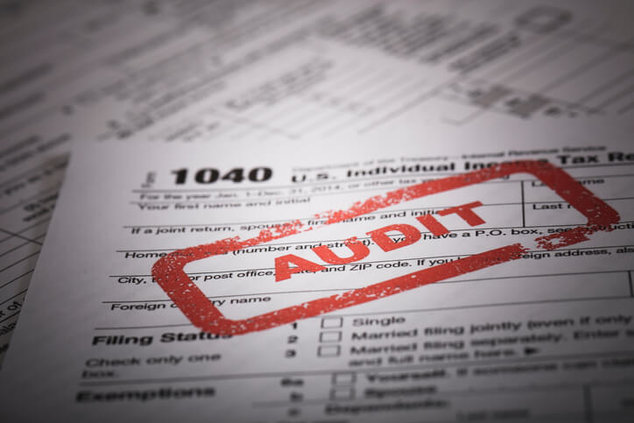
When I was young, my father got audited by the IRS. I can't remember the details — I was young, and my father died long ago — but I do remember how he fumed and fussed for weeks as he tried to gather the paperwork and make his case to the auditor. The IRS audit experience made an impression on me. I vowed that when I got older, I wouldn't be as messy and disorganized as he'd been, and that I'd always do a good job of documenting my taxes.
For the most part, I've stuck to that. I've tried to save every scrap of paper related to my personal finances and, especially, my business finances. I've always tried to be meticulous about respecting the wall between business and personal accounts. And since I started this blog eight years ago, I've tried to pay attention to the red flags that lead to IRS audits (which is one reason I've never attempted to deduct a home office expense, even though there are times — like now — when I could).
My decades of being a pack rat paid off recently. In early April, I got a letter from the IRS. The government wanted to audit my 2011 taxes, and they were particularly interested in my Schedule C (“Profit or Loss from Business”).
“No worries,” I thought. “That's why I saved those documents all these years!” Turns out my archiving techniques left something to be desired.
The Documentation
Because 2011 was the last full year we were married, my first step was to contact Kris. “Do we have anything to worry about?” she asked.
“I don't think so,” I said. “We never did anything wrong. At least not intentionally. We might have made some mistakes somewhere, but I doubt there's anything major. You just pull together your paperwork, and I'll pull together mine.”
Kris had gathered all of her info within a week, but I was completely consumed with preparing the Get Rich Slowly course. It wasn't until the end of April that I began to gather my statements and receipts and the other information the IRS had requested.
I found most of the paperwork stuffed in a shoebox (literally!) in the back of my storage unit. Because there was zero organization, I spent an entire Saturday afternoon stacking statements and receipts in chronological order. “I guess that's my first lesson,” I thought. “I ought to be more systematic about how I archive my financial records.”
After sorting the physical documents, I went online to retrieve digital statements. I was frustrated to find that many banks and credit card companies don't allow users to access digital documents after a year or two. After a certain time elapses, you have to file a request to have the documents mailed to you — and that can take days or weeks. (It took over a month to receive one statement I requested!)
I was able to gather almost everything I needed. I hoped that the auditor wouldn't worry about the few small gaps.
The Interview
On a drizzly morning in early May, I drove to my accountant's office for the audit interview. “You don't seem too stressed,” Sabino said.
“You know, I'm not,” I said. “I haven't done anything wrong, at least not that I know of. So, this seems like more of an adventure than anything. Maybe I can write about it for the blog!”
Sabino looked through my paperwork. “You won't need these,” he said, setting aside some extra financial statements I'd printed. “As a rule, you only want to provide the info that the IRS requests. You may think you're being helpful, but every extra piece of information gives them another chance to expand the audit.”
“What do you mean?” I asked.
“Well, the IRS won't go digging for dirt on other years. But if you accidentally give them reason to suspect there might be something to find in 2010 or 2012, then they can expand the audit beyond 2011. So, we never give them more than what they ask for.”
“Okay,” I said.
“That same thing is true during the interview. You can be friendly, and you should answer the questions fully and truthfully. But don't be chatty. Don't volunteer stuff. Even a casual conversation can give the auditor reason to expand the examination.”
We gathered the paperwork and headed to the meeting room. The auditor already had stacks of documents regarding our case.
“Wow!” I said. “You're not messing around.”
The auditor laughed. “You know the government,” she said. “We love our paperwork!”
She started the interview by reading questions from a pre-prepared script. “Have you reported all of your income?” “Do you keep business and personal accounts separate?” And so on.
Eventually the questions moved off-script as the auditor tried to get a handle on my business. “You make money blogging? How does that work?” “This conference in Denver was with other bloggers? Did that lead to more business?”
After 20 or 30 minutes, we were finished. “I think I have all I need,” the auditor said. “I'll get this wrapped up and then let you know my decision.”
Related >> How to Audit Your Own Investments
The Outcome
I expected a decision on my audit within just a day or two, but that didn't happen. Instead, the auditor continued to request information and clarification. Why did my checking accounts showed more money deposited than my W2s? What was this World Domination Summit thing?
As the weeks passed, we discovered I had made a few errors. I paid for certain business expenses out of my personal account, a mistake that actually hurts me. Plus, I'd made a personal loan but hadn't been recording the interest income on my taxes. But it seemed to me that the mistakes against me were balanced by the errors in my favor.
The auditor must have agreed because today I finally received word: The audit will come back “no change,” meaning I won't owe anything extra (other than the $1,500 I paid my accountant to coach me through the process!). The auditor did ask my account to scold me, though: “Please remind John that he needs to document the business purpose for an expense and make sure that the expense makes sense for his blogging business.” That's a change I've already made to the way I track my expenses!
Here are some of the key things I learned during this process:
- Don't file a tax return during an audit. If you do, the audit could expand to include the new information. In my case, I received notice of the audit in early April, just before filing my 2013 return. My accountant immediately applied for an extension.
- Get organized. As soon as you receive the audit notice, gather the requested information. Don't wait. Even if you're organized, this will take time. If you're like me, you'll discover some pieces are missing. It can take weeks to receive duplicate statements from your bank or broker, so start right away.
- Get help. Hire a tax professional to represent you. He'll have a much better understanding of tax law and the audit process, and can coach you on what to say and do.
- Be courteous. You may hate the IRS and resent the audit process, but don't take it out on the auditor. She's just doing her job. Be polite and professional. Imagine that you're at a job interview and act accordingly.
- Change your habits. It's easier to be organized now than to create it from scratch under duress. After my audit, I adopted a new, embarrassingly simple step: I labeled a file folder “2014 Taxes” and I've been placing all the year's financial documents here. I even print electronic documents too, since I learned the hard way that many financial institutions only keep statements online for a few months.
I'm glad that my audit story has a happy ending. Many don't. If you're concerned about being audited, let's look at common aduit flags so you can avoid them.
Red Flags that Lead to IRS Audits
First, it is helpful to know what an audit flag is. Most tax returns are processed by IRS computers. The computers are programmed to watch for anything out of the ordinary, anything that strays too far from statistical norms. An item that falls outside the norm may be “flagged,” increasing the likelihood that a return will be audited. A flagged return will be manually reviewed by an IRS employee to determine if there actually is a need for an audit. Audit flags don't guarantee you will be audited, but they do mean that the IRS will probably take a closer look at your return.
Personal Taxes
Here are 10 of the most common ways to bring your personal return to the attention of the Internal Revenue Service:
- Incomplete or sloppy returns — Math errors and missing information prompt scrutiny, as you would expect. If the IRS computer can't make sense of what you've filed, a human has to check to find the mistake. This is one reason to file electronically: Computers help to catch bonehead errors.
- Unreported income — This is a no-brainer. If you file a return but fail to report income received, you are heading for trouble. All of your interest, dividends, and miscellaneous income must be reported. Remember: Everyone who sends you a 1099 is also sending one to the IRS.
- Suspiciously low income — If you are making much less than others in the same profession, that raises a flag.
- Having a high income — Though fewer than 1 percent of taxpayers are audited each year, those making over $100,000 are five times more likely to come under scrutiny. “Higher income earners are more likely to be audited because there is more tax money at stake,” says Eric Tyson, an author of several Taxes for Dummies books. “The IRS is a business, they have employees and they do not have time to let them audit people if they are only going to earn $2 worth of tax.”
- Drastic changes in income — Unexplained fluctuations in income can indicate that something was under-reported somewhere. Most people don't have income that swings wildly up and down, and the IRS knows it.
- Round numbers — It is unlikely that your investment returns were exactly $500, or that your mortgage-interest deduction was $10,000. Too many round numbers on a return are a symptom that something fishy may be going on.
- Too many charitable contributions — Charity is good, but too much charity can raise a red flag. If the average person in your income bracket donates about $1,000 to charity and you claim you donated $5,000, you are going to increase the odds of an audit. Be sure to save your receipts!
- Participating in tax scams — The IRS is trained to deal with common evasion attempts and tax scams.
- High itemized deductions — Again, anything too far from the averages is likely to bring your return to the attention of the IRS. There is nothing wrong with claiming all of the deductions to which you are entitled; but be aware that if you have a lot of itemizations, you are more likely to be audited.
- Disagreements between state and federal returns — This is another example of how sloppiness can hurt you. Be sure that your information matches on both your state and federal returns.
Small Business Taxes
Having a small business is itself a flag of sorts. Some people use small businesses as a tax dodge, a way to write off expenses, and so the IRS keeps a close eye on small-business owners.
- Being self-employed — Filing a Schedule C isn't a guarantee that you will be audited. But, as my accountant told me the other day, the IRS doesn't like to see “a small Schedule C that you continue to show losses on while you have a regular job.” For more information, check out this IRS page: Is your hobby a for-profit endeavor?
- Home offices — There have been several articles on major sites recently touting the tax advantages of a home office, but you've got to be careful. This is a huge red flag. For more information, here are some home-office-deduction reminders from the IRS website.
- Family members on the payroll — One common tax dodge is to “hire” a family member in order to take more money out of a business. There's nothing wrong with employing family members as long as they are actually working.
- Unlikely business deductions — It can be tempting for small-business owners to claim new toys as business deductions. That Nintendo Wii? Not a business expense unless you are reviewing games with the intention to make a profit. That trip to New York? Not a business expense unless it serves a legitimate purpose. Don't try to play it cute.
- Excessive entertainment deductions — This is one that has me worried. I've only just recently begun to take people out to lunch with my business card. I am careful to only use this card if we are actually discussing something related to writing or blogging, but even so I wonder if I ought not just pay out of personal funds.
Audit flags do not necessarily lead to actual audits. They don't even mean there is something wrong with the return. They simply indicate that a tax return is more likely to be checked by an actual human being and, therefore, be more likely to get audited than another return. (And remember: The IRS always selects a certain number of people to audit completely at random.)
Most of these red flags aren't an issue for the average wage-earner who is filing an honest return. Some — like the home-office deduction — may trigger an audit even if legitimate. But if you've played fair with the government, you don't need to worry. The New York State Society of CPAs writes:
Don't hesitate to take deductions you can substantiate. CPAs emphasize that these precautions should not suggest that taxpayers avoid claiming legitimate deductions. On the contrary, you should take every deduction you are legally entitled to take, as long as you retain supporting documentation.
The best defense against an audit is to be honest. Report all of your income. Don't try to fudge things. Use tax preparation software or an accountant if you are nervous about getting things right. But even if you have a professional prepare your return, check it for obvious errors. Be sure the numbers make sense. Save your receipts.
Have you ever been audited? (Or do you know somebody who has?) What was the experience like? How difficult was it for you to pull together the requested documentation? Any advice you'd give others so that they can better cope with an audit in the future? (Or to avoid one altogether?)

Become A Money Boss And Join 15,000 Others
Subscribe to the GRS Insider (FREE) and we’ll give you a copy of the Money Boss Manifesto (also FREE)
