Where Can I Invest My Money to Realize at Least a 10% Return?
Published on - June 3rd, 2007 (by J.D. Roth) In a forum thread called “Why do so many people hate on Dave Ramsey?“, Rush complained that Ramsey’s advice is too conservative. Squished18 replied by saying: “You’re advising me to invest my $100K ‘at 10%’. Where am I going to invest my money? There are ZERO investments that will guarantee me a 10% return.” The following was Rush’s response.
You asked the million-dollar question: “Where am I going to invest my money [to realize at least 10%]?” Obviously no one can answer that question. What we can do is try and then measure the results. If the results indicate that 10% were achieved, then you’ve answered your question. It seems that most people who talk about “investing” and returns automatically develop visions of the stock market, mutual funds, CDs, and the like. In reality there are many opportunities around us that will return much more than a paltry 10%. Unfortunately, there is no “canned” answer. I can give you examples.
Everything about earning returns boils down to buying low and selling high. To realize a return, one must first spend cash and then one must redeem for cash. If you buy a stock, you spend $1,000 and wait a certain amount of time and then sell the stock. Same with mutual funds. Same with any other type of investment you can imagine. The “stock market” requires very little participation on your part. You make the purchase and pretty much wait. However, if you think outside the market, you’ll find plenty of scenarios in which you can buy low and sell high and you’ll be directly responsible for the return.
What you buy low and sell high depends greatly on you and your life experiences. For example:
- Joe Blow has a niece with a 2000 Ford Taurus she wants to sell for $4,000. Joe also know someone at his church who is looking for a good car for their son. Joe buys the Taurus for $4,000 and sells it to his friend for $4,600. That investment activity took 3 days and returned 1,500% APY. That’s one-thousand-five-hundred percent interest. Joe knows cars and he had a good idea that the Taurus would make a good investment. Yes, there was a risk involved, but Joe is a car guy which minimized the risk. I’m not a car guy and don’t mess with flipping cars because I don’t have the needed knowledge and experience with cars. I have my own niches.
- Plenty of folks can buy a $100,000 house at a sheriff’s sale and sell it the following month for $107,000 – it happens daily. This scenario yields an 84% return. EIGHTY FOUR PERCENT RETURN!!!
- I know pinball machines. When I see one at a garage sale or listed in the paper, I know what price I need to buy it at to sell at a great return. My friend is an antique aficionado and he goes to estate sales and grabs up stuff throughout the house that I wouldn’t touch. He’ll drop $5,000 on a Friday morning and after a week on eBay he’ll have $10,000. A nice little 5,200% APY.
- A friend goes to Dunkin’ Donuts every morning.
The clerk there knows my friend by name and they regularly visit when it’s not too busy. One morning the clerk was telling my friend that their dough mixer was on it’s last leg. My friend found a suitable mixer for $6,000 and sold it to the owner of the doughnut shop for $9,000 and even included a 60 day warranty. That was nice 18,250% APY deal and all he did was eat some doughnuts each morning. - How about renting residential real estate? Take $20,000 as a down payment and buy a $100,000 duplex. For merely $20,000 you’ll own all the income, deductions, appreciation, and other intangibles that $100,000 generates. That $20,000 can often easily kick off $2,000 per year in cash (10% APY), but you also get to lower your tax bill (let’s say $600 or 3% APY), get appreciation of the property (15% APY against your $20k), and you get the equity accumulation as your tenants pay off the mortgage (2% APY which grows yearly). One can easily realize a 30% APY in cash and cash equivalents by diving into landlording.
- Another friend works for a big company. That company buys 1,000 Dell laptop computers every two years. Normally the retired laptops were sold to a laptop broker. My friend now buys them every two years and pays more for them than the broker did. He makes more than a years salary flipping laptops on eBay. All because he works where he does and took the initiative (and risk) to make a sweeter deal for his employer.
- There was a convenience store in a small town that was owned by a husband and wife team. Their marriage went bad and a judge forced them to work different shifts. He would steal money, she would steal money. Soon they could no longer afford to put gasoline in the tanks. The store inventory dwindled. The store soon become filthy and local residents learned to hate the place. A look at the county records told the whole story. A call to the attorneys handling the divorce revealed that the store was in receivership and ordered sold by a third attorney. A call to the third attorney revealed the store could be had at a great price. The deal was made. The store was remodeled, renamed, and reopened to incredible fanfare and profits. Being a local resident and watching the couple’s purchase and subsequent demise and dilapidation of the store set the wheels in motion for a great investment.
You see, there are plenty of opportunities around us outside of our regular jobs. Telling you how to make these fantastic returns is not possible because I don’t know your skills, knowledge, geography, financial situation, or even your daily routine. Joe knows cars. Steve knows antiques. I know pinball machines. Someone else simply eats doughnuts. Jack knows his employer sells 1,000 laptops every couple of years. What is certain is that if you look for these opportunities and act on them you can easily beat the 10% expected market return.
Notice that in none of my scenarios do you have to quit your day job nor do you have to spend an inordinate amount of time to achieve these results. Most people will not act on these opportunities for fear of failure. I suppose their risk tolerance is too low. But if you load up on retirement mutual funds and put the rest of your money into paying off your home mortgage, you won’t be in a position to seize a deal when it does come up.
Rush isn’t saying that you shouldn’t invest in mutual funds or pay down your mortgage; he’s advising that you keep some of your money liquid so that you can seize opportunities. In essence, he’s encouraging diversification. His ideas aren’t “get rich quick” schemes. They’re examples of the creative thinking that can lead to extra income.
GRS is committed to helping our readers save and achieve your financial goals.Savings interest rates may be low, but that’s all the more reason to shop for the best rate.Find the highest savings interest rate from Ally Bank, Capital One 360, Everbank, and more.
This article is about Entrepreneurship, Real-Life
Disclaimer: This content is not provided or commissioned by American Express. Opinions expressed here are author's alone, not those of American Express, and have not been reviewed, approved or otherwise endorsed by American Express. This site may be compensated through American Express Affiliate Program.
Discover is a paid advertiser of this site. Reasonable efforts are made to maintain accurate information. See the Discover online credit card application for full terms and conditions on offers and rewards.
SEARCH FOR RECENT ARTICLES


Your math is wrong. Flipping a $100k house for $107k is a 7% return. You can’t equate that with an 84% annual rate of return since it’s a one-time event. Personally I’d suspect that flip would come out to far less than 7% after fees and taxes.
loading....
Actually, there is nothing wrong with his math here. The purchase of a $100,000 home that is sold in a at $107k is a return of 7% in a single month. He is simply extrapolating that into an annual yeild of 84% (assuming the action is reproducable every month). And its largely an example. I don’t think the moral of the story is you should pour all your money into buyin houses at auction.
loading....
Nope.
A $100K place would require 20% down.
This then yields $7k which at first glance appears to be a 35% or 120% annually!
Still wrong – closing costs of 3-5% put the friction costs of about $3500 each way, plus the month where you pay the mortgage (lets say $500).
So $107 sales price minus 7500 in friction costs means I risk $20K and lost $500.
Seems to me it would be better to actually add value (rather than just skim) and fix the place up and sell it for $120.
loading....
Another approach is to invest in items and improvements that reduce your supposedly “fixed” costs. Investing in energy efficiency is a classic example: you get much better than 10 percent return on most energy efficiency investments. Lawrence Berkeley Laboratory did an analysis some years back comparing investments in energy efficiency against conventional investments in stocks and bonds. The results are impressive (note that this was done about 10 years ago so the average stock market return is different now). The 10 energy efficiency upgrades they studied provide an average rate of return of 16 percent; some of them provide 40 percent. If you then take the money you save every month in reduced energy costs and put it into traditional investments, the return is even higher.
loading....
Great article. It really made me think about what I could do differently to “invest” my money to get a better return. Thanks!
loading....
Another approach is to make investments that reduce your supposedly “fixed” costs. A classic example is investing in energy efficient appliances and home improvements (such as upgrading insulation). Lawrence Berkeley Laboratory did an analysis about 10 years ago in which they compared the return on investment from energy efficiency upgrades to those from conventional investments in stocks and bonds. The results are impressive. Note that their comparison was done in 1997 so the average return from stocks has changed since then. But still, an average rate of return of 16 percent for 10 energy efficiency upgrades, some of which have returns as high as 40 percent, is very good. And if you take the money you save in energy bills each month and put it into conventional investments, the total return is even higher.
loading....
None of the scenarios listed above are comparable to investing in securities, because all require significantly more time (and yes, risk) than investing in stocks or mutual funds. Furthermore, some of them won’t scale at all — how many naive pinball machine owners do you run into during the course of a year?
Actually, there is something seriously wrong with each of your examples, starting with Joe Blow ripping his own niece (!!!) and fellow church-goer (!!!!!) off for $600. And don’t get me started about the rental market — until quite recently, the only landlords in my city that were cash positive each month were slumlords.
So, we see that we were talking about two different things — passive investing versus starting a side business. So, the question is unanswered — where can you make a guaranteed (or even reasonably expected) return of 10% of passive income?
Answer: Nowhere.
loading....
I totally disagree with the comment that you have to be a “slumlord” to have a reasonable income on investments.
I live in Florida in a town that has better schools than those my children went to in Virginia (Fairfax county specifically). I left VA to buy houses in blue collar neighborhoods for under $50K. I rent them out for a 20% return.
I would be happy to guarantee you 10% on your money! Your investment would allow me to accelerate my current goals for acquiring houses.
loading....
So, how’s your Florida rental doing now?
06.01.2012
loading....
I am actually glad that you asked about how my rentals are doing now. Look into any reputable Real estate office in central or south FL and you will find that rents have increased at a much higher percentage rate than the price of houses. This makes perfect sense since many people who are underemployed in FL can still afford to rent but do not have the credit or capitol to buy. Many others, who got burned in the real estate bust are simply not interested in purchasing any more. When you consider that it is becoming very very expensive to purchase insurance for beach side property in FL and the taxes are equally uncomfortable, it makes sense to buy 2 or 3 houses (for $50 to $100K) on the mainland and have the rents PAY for your retirement rental on the beach side – added bonus – you, the investor and beach side retiree, do not have to pay the never – ending upkeep on beach side property that you are renting. Keep investing in stocks? – when Italy leaves the Euro Zone (the world’s 8th largest economy) the stock market will see a sustained 25% loss – and since the discount window at the FED is open through some channels to the European economies – the US will feel the effects just as hard as the European countries.
loading....
One question this article raises is what is an investment. I invest in mutual funds and I own rental properties. Because of leverage, my “return” on rental properties is much higher than my return on mutual funds. Does that make it a better investment? Not necessarily. My rental properties are more like a second job, not a passive investment. Of course, I could hire somebody to manage the properties, but my returns would suffer. Second, owning rental properties involves far my risk. With mutual funds, my risk is loss of capital. With rental properties, I’m liable for the mortgage and must assume the risks of other losses, such as home repairs (having just replaced a roof and air conditioner on one property, I know first hand the differences between rental properties and mutual funds) or personal injury claims. We have insurance to guard against some of these losses, but even insurance has limits.
loading....
I think Jeff makes a great point. Most of the highest ROI investments require a significant time investment. Flipping a house is a great example. The couple made $7,000 from flipping the house from the sheriff sale, but how many hours did they invest in closings, improvements, and finding a buyer?
So, it’s a trade-off. Personally, I calculate not only the ROI, but also the dollars per hour from time invested. If I’m making a 100% ROI but it’s only five dollars per hour, then it’s a horrible investment. On the other hand, if I’m making a 12% ROI and $400 an hour, then it’s worth looking into.
However, I disagree that it’s impossible to earn 10% of passive income. You just have to invest upfront, rather than over the long term. For example, I’ve spent the last four years learning everything about the real estate market in my city. Several of the major investors offer a 15% return per year, secured by real estate, to private investors. Since I’ve invested the time up front to track the market and these investors, I could lend them money for several years without worrying about it.
Is it completely passive? No, but I don’t think anything is. If you spend 30 seconds thinking about it, then it’s not totally passive. On the other hand, making 15% per year from spending about two hours a month watching the market is a pretty good return on time. If I were working a job or wanted to retire for a few years, it’s what I’d do.
But of course, I’m 24 years old and I’m full of ambition, so I’d rather invest into things with higher time requirements and higher returns. Over the last four years, it’s paid off handsomely, much higher than 10% per year.
In any case, I like seeing stuff like this. Thanks for posting, J. D.
loading....
On flipping the house, did he need a broker to sell the house? At 6%, that’s $6420. Kinda cuts into the $7k ‘profit’? Some areas charge a fee if you sell before 2 years. Called a ‘flip tax’.
It’s not as easy as you think. More like ‘getting poor slowly’.
There are no quick fix schemes.
And I also agree about the uncle ripping off his niece for $600. If it were me, I would have told my niece I could get her $600 more for the car, but could we split the extra profit 50/50, with her permission. Niece gets extra $300 and so do I. Niece would not deny me the extra bucks.
loading....
I think you folks are making some great points regarding the nature of “passive income”. I don’t have much to contribute other than an anecdote. When I first started GRS last year and it occurred to me to put ads on the site, I really, truly thought that this would be a source of “passive income”. I thought of this as my “passive income stream”.
HAHAHAHAHHAHAHAHAHAHAHAHAHHA
I love this site, and I’m happy to be sharing what I learn with you folks, but this is not passive income. Anything but.
loading....
We love you, JD. Keep doing what you’re doing. Especially since what income you’re getting doesn’t come from our pocket.
I think the larger idea of Rush’s post is sound–there are all kinds of opportunities for entrepreneurship, and each person’s situation/opportunities are unique.
However, I too think Rush paints too simplistic a picture. And I had the same concerns that Jeff voices about screwing over a family member and a fellow congregationlist. Nice “family values” there.
On returns: It looks to me like his “APY”, or annual percentage yield values, are figured as = (dollar profits)/(time of turnover). This is specious.
Take the house flipping example. Mathematically 7K/1 month is equivalent to $84K/12 months or $84K/year. But unless you’re making that $7K of profit *every month* on your initial $100K investment, you will NOT end up with an “84% APY” at the same time next year.
It’d also keep you pretty damn busy.
This post grew out of the Dave Ramsey conversation, where Rush made the good point that DR’s advice is perfectly suited for people in dire straits who don’t have and can’t handle money. Rush clearly isn’t in this demographic. In fact I take his writings as a further example of how “it takes money to make money”–and for people in that position, yes, it is a lot easier to get good yields.
Drawing on the rental house example–I don’t know where in the US of A it’s possible to buy a duplex for $100K, but sure as shooting it’s not in major urban areas, at least on the coasts. Housing prices are far higher *and* generally median income is much higher as well in these areas. So, wherever it is that housing is so affordable, presumably the household income of Jane and Joe Sixpack is pretty low as well. Accruing $20K to invest might well represent 80% or better of yearly income–a very high hurdle for anyone to achieve.
For someone who is already quite well off with respect to the same community, accruing $20K to invest wouldn’t be as difficult and the returns he cites seem be easier to get. For the average Jane and Joe–generally, Dave Ramsey’s audience, who have to be browbeat to accrue $1K for emergency savings…totally unrealistic. “Fear of failure” or of quitting a day job or whatever doesn’t even enter the picture.
loading....
Yeah, I have issues when one takes an event and projects it for a whole year.
JD, your point to, when possible, have money around for opportunities, is an excellent one. For example, any extra money that I don’t spend off my after-tax budget each month goes into a high-yield savings account. After that, I can choose to use it for any number of things.
loading....
I really appreciate your website, but do us all a favor. Double check the math and don’t imply that one time events, such as selling a friends car, automatically convert to a yearly gain.
loading....
@MooCow: This article is not JD (author of this blog) speaking. It is from the forum. Read before commenting…
Okay, so the numbers aren’t perfect. What Rush is saying is there is opportunity all around us – literally. Keep your eyes open.
In the end it is all about finding your niche, becoming an expert, and profiting from it.
loading....
Last year I started investing at Vanguard. My retirement and 529 schooling accounts are both gaining about 12% since I started them last year and are continuing on that path (both are 80% stocks/20% bonds and will tailor down as each account matures). I don’t even know what I’m doing and I didn’t hand pick my funds, I just picked general ones that sounded good and I’m doing amazingly well.
It beats the hell out of my simple money market checking account I also keep some savings in and instead of leaving money there I’m going to be investing in shorter term stuff at Vanguard in the future.
loading....
It’s not about calling doubt upon the plausibility of any specific scenario, attempting to disprove a certain anecdote, or proclaiming that the math is wrong – even if you win your argument, you don’t change the validity of the concept.
Those who have argued specific points about the article have seemingly missed the point. There are literally thousands of ways to grow your money outside of the market. The specific way to grow YOUR money was not listed in this article – only you can find the way to do it because you are unique in your experience, geography, network, lifestyle, skillset, and knowledge.
loading....
Due respect, Rush: Yes, your concept is valid. Your examples are even interesting, and they make for a great blog post. But it’s not news that hobbies can generate profits or that life is filled with opportunity. You said that when most people discuss “investing,” they immediately think about stocks and mutual funds — and you’re exactly right. That is what they’re talking about. Criticizing those suggestions by saying, “But you could be flipping a house or building a business” misses the point.
We already have jobs and kids and errands and hobbies and not much spare time afterward. When most of us talk about investing, we want set-it-and-forget-it options like CDs and index funds. Your ideas are great, but as Jeff says, they belong in a different conversation.
loading....
[...] Where Can I Invest My Money to Realize at Least a 10% Return?: It’s the million dollar question – literally if you are looking at compounding interest over many years – unfortunately, you won’t like the answer since it isn’t an easy follow step 1, 2 and 3. But it is very true and why much of my investments are in Japanese antiques. It’s an area I know well and where returns are much better (and safer in my opinion) than most other investments. [...]
loading....
[...] better investment. The subject came up in a round about way at Get Rich Slowly, which you can read here. The comments are interesting, so make sure to check them out. Real Estate Mega Book addressed the [...]
loading....
[...] Where Can I Invest My Money to Realize at Least a 10% Return?: It’s the million dollar question – literally if you are looking at compounding interest over many years – unfortunately, you won’t like the answer since it isn’t an easy follow step 1, 2 and 3. But it is very true and why much of my investments are in Japanese antiques. It’s an area I know well and where returns are much better (and safer in my opinion) than most other investments. [...]
loading....
I invested a ten thousand dollar inheritance in the Disney Company in 1983. I had never purchased a stock before, but the broker was kind enough to tell me to invest what I know. From having a savings account, I understood the principle of compound interest and had my dividends reinvested. I haven’t touched the account in twenty four years.
My return: 3000%
loading....
That’s awesome SP.
Too bad I invested my inheritance in Enron and not Disney. Ok, that’s a lie. But hindsight is definitely 20/20, eh?
None of this sounds like particularly sound financial advice and you can understand why someone like Ramsey wouldn’t tell people to “keep some money around in case something good comes up”. How many of his followers are in trouble from doing something they thought they could get rich from? JD and Rush’s examples aren’t “get rich quick” schemes by any means, but they’re not sound advice for someone without much financial literacy and even less common sense.
loading....
Ryan describes SP success with Disney with “That’s awesome SP”.
It is a good, solid rate of return. However, I’d like to point out that it isn’t a miracle. Adjusting for splits, Disney was $1.57 a share in June 1983 and is $35.40 today. That gives an annual return of 13.46%. Not bad at all!
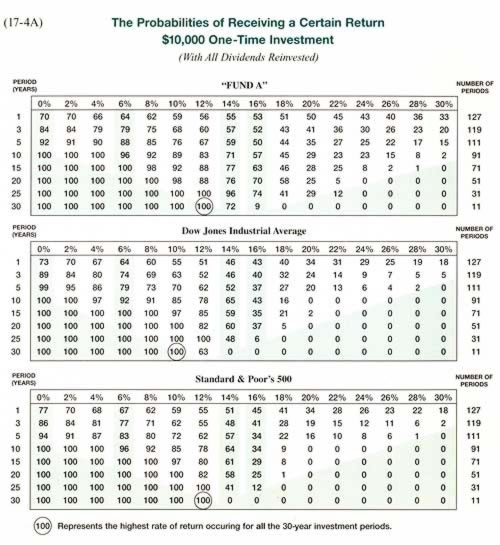
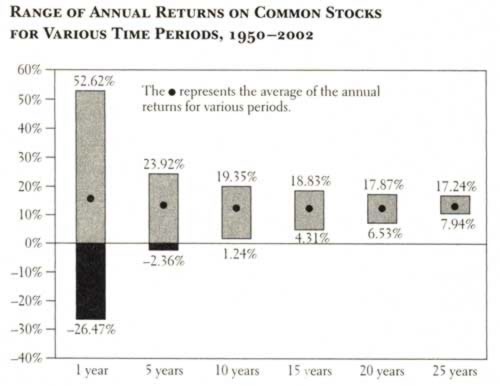
However, while SP *did* beat the average historical performance of the market, it’s not actually by that much. The overall market performance since back in the twenties runs an average of about 12%. So you can generally expect to do as well as SP by investing in a good index fund.
loading....
I just wanted to say that this article was extremely valuable to me. The APY comparisons are completely valid, as he states up front that he is comparing them to mutual funds, CDs, etc. Given the same amount of time, this is the correct rate.
Getting lists of examples is extremely useful for me, because it brings the vague assertions to reality. This doesn’t focus on turning a hobby into money, it focuses on seizing opportunities. I would love to see more entries along these lines.
And JD, I would also like to see a review of your Incredible Secret Money Making Machine book with some more of these examples, as I can’t find it anywhere.
loading....
I would just invest in Vanguard for now,and save the crazy ideas for when the stock market is not returning 10% plus, like it is now.
VTSMX is up more than 10% per year for the past few years.
You could start a small “crazy ideas” funds for when the market takes a dip. it would at least give you time to figure out how to monetize your hobbies. that’s why passive investing is a good thing – it doesn’t take that much thought or time to pick a fund and mail a check.
loading....
Whenever real estate investing is brought up, the mythical duplex is always mentioned as an example of a good rental property.
It’s not clear from this example, but usually “the duplex” is mentioned as a way to control 2 units ( either getting 2 units for 1 price and earning 2 rents or living in 1 and renting out the other side). Wherever I have lived, such a thing does not exist. We have duplexes, but they are 2 separate properties, usually owned by different people. I lived in 1 and almost bought it ( it would have been much lower than $100,000- that can be done outside of urban areas, but for half a building) but it would have been 1/2 a house basically. To truly own a full duplex, I would have had to buy the other half from someone else- i guess like buying 2 adjacent condos or townhouses. Now we do have Apartment Buildings in 2-4 units. They start around half a mil, and are usually for seasonal rentals. Even when people are paying $1000 a week to rent those, I think they are still cash negative. This like anything else in real estate is highly location specific.
I have never invested in rental property. I have done a lot of reading on the subject. Most of my ideas are based on those who appear to actually own and manage properties and not those just sell books to MLM members. Those who appear to actually invest make it seem like only 50-55% of rent is actually net of expenses ( BEFORE the mortgage) and almost no rental properties are cashflow positive. In most cases your rent would have to be twice your mortgage to just break even.
People I do know in real life who make money on rental property either bought old houses at huge discounts ( The first house I rented in college cost me about $700/mo and had been bought for about 20 grand a couple years earlier. My landlord had about 30-40 similar units in town and it was run as a side business out of his insurance office) and/or own property that was purchased many years earlier and they had upgraded or inherited,etc.
Otherwise there is a reason slumlords are the ones seen as making money- because in most markets it’s almost impossible to buy market priced property and make any money renting it out.
loading....
Let’s see: seller ‘A’ wants $4,000 for a car, which buyer ‘A’ pays. Whether he can sell it or not, the car is now his. Buyer ‘A’ locates buyer ‘B’ and buyer ‘B’ agrees to pay $4,600.
Personally, I don’t see where buyer ‘A’ did anything unethical.
If buyer ‘A’ badgered either the niece or the co-congregant, shame on him … if he didn’t, good on him for facilitating the transfer of a good car at a good price from a person who no longer wanted it to a person who did.
That is not the first time a used car has increased in value as it passed between owners … a fact used-car lots rely upon.
loading....
BillinDetroit Says:
“Personally, I don’t see where buyer ‘A’ did anything unethical.”
Perhaps, technically.
But I think many people believe, as I do, that facilitating a direct deal between the niece and the fellow church member, and thus foregoing the personal profit in order to help members of your immediate community is the more “ethical” thing to do. It is this kind of giving that helps bind communities together..and will likely be paid back in time.
loading....
I’ve enjoyed your blog for the last few months, but found this post disappointing. Your interlocutors have all made good points. You’ve fallen into the trap of “get rich quickly.”
loading....
@Kevin: I know this is a little belated, but I think you misinterpret. I meant that he COULD get similar returns with much less risk with diversified stock investment (like an index fund).
@BillinDetroit and Kathryn: I agree with Kathryn. Sure, used car lots rely on increasing the value to make money, but they’re a business (and generally thought of as extremely shady anyway). Ie, ff I made that deal, had a guilty conscience about it, there’s no way someone could assuage my guilt by saying, “No sweat Ryan. That’s what used car lots do!” Haha.
loading....
Great post!
a lot of the people who complain are the same people who don’t do anything after you give them advice.
I told several of my friends to invest in Everbank’s Foreign currency CDs, yielding 4-6%. Only 1 of them did. He’s made 11% in the past 8 months.
The rest are still complaining.
loading....
ok, there is one place you can get a guaranteed 10%. of course you need to join the military and be deployed in a tax exclusion zone, but those are small details. guaranteed 10% on up to $10k in SDP.
loading....
[...] better investment. The subject came up in a round about way at Get Rich Slowly, which you can read here. The comments are interesting, so make sure to check them out. Real Estate Mega Book addressed the [...]
loading....
[...] Many personal finance gurus make assumptions about how much money you can accumulate if you invest X number of dollars a year for so many years and earn, say, a 10% annual return. The obvious question that many then ask is where can I earn 10% consistently? [...]
loading....
I have been lending my funds, privately, to be used as vault cash for ATM’s in Canada for the past three years. My return on investment has been 25% per year for each $6,000.00 loaned.
Your return is sent to you monthly and you can have your principal returned to you with 60 days wriiten notice.
The locations are insured, the ATM is insured against fire / theft and are bolted to the floor. My funds are never at risk as the money is simply being recycled for a fee.
This opportunity is still available.
loading....
HOW MUCH SHOULD I INVEST IN A CD FOR MY TWO TEENS
loading....
My return on investment is 22.7% per year on 5 years for a minimum investment of €650.00 (about US$845)and my funds are used for a environmental project in Paris France of which i get a detailed report regarding overall development. Which grants me a comfortable a non risky €5,600.00 (about US$7,250.00) when issued. Just what i need as i don’t have much time to get into those complicated speculations stuff.
& still available as well…
loading....
I need financial advise on investing. I am 21, I have always been in poverty, I take care of my mother and brothers and sisters, I am good at saving the small ammounts of money I do have. I have never invested but I would like to start. Please give me info on where to learn and get started tips, thanks
loading....
your ideas may be good, but most of your math is way off
loading....
this is how i paid my way through college.i got a loan from my bank for £2500.the interest they charged was at student rates but i had to provide collateral or a guarantor who owned a house.it was difficult for a lot of students to get such loans so i decided to lend some of my money to them.some needed money for groceries or bills or to buy things like a TV or video games but could not wait for month end when they got paid.i charged a fee of £10 a month for every £100 borrowed.it did not require any complicated processes.put up a notice on the students’ library notice board to advertise my services.i was cheaper than all the banks and you got your money from me,a fellow student.i sold my iphone and bought a cheap phone and loaned out the money.i sold my £600 car and loaned out the money.i moved from my rented £400 a month flat and rented a £40 room in a shared house.i raised £5000 all together and loaned it all out.i got £500 back and added it to the £5000.i got £550 back and added it to £5550.making £6100.guess how much i made by end of the year, do the math.u can do it as well.i now have a job and no longer do loans anymore,i am trying to get my little sister to follow my footsteps,she starts uni in september.anyway,during my spare time,i go to supermarkets and corner shops and get them to sell my fruits and veg which i grow on my small piece of farm land which i bought when i finished university.i make about £70 a week per shop and i currently sell at 7 shops.(they sell on my behalf).my plan is to grow to 20 shops by next year.£1400 a week will not be bad at all,for part time work.think deep long and hard,you can do it too.
loading....
Hi, I just want to know. How could you trust them? did y’all sign an agreement, as in a legal agreement or something? and how much time did you give them to pay up?
loading....