This guest post from my wife is yet another installment in her ongoing quest to grow and preserve food for our household.
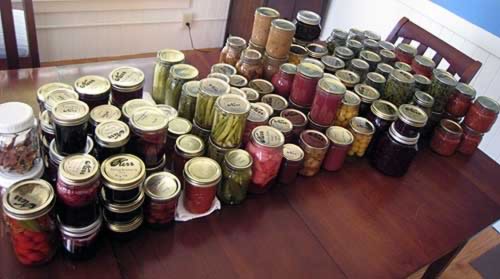
Making jam makes me happy. Okay, that’s only partly true. I’m also happy making jelly, preserves, and syrups — and I’m pretty darn pleased with conserves, marmalades, and most things pickled. No matter that I could never eat everything I make — even with J.D.’s help — the mere process is somehow satisfying to me. So, I madly preserve whatever I can lay my hands on each summer, then spend hours inventorying and organizing the jars, finally doling them out like precious jewels on special occasions to friends and family.
Competitive canning
Last year, I steeled my courage and submitted a few jars for judging at the county fair. I was pleased as punch when my gingered dilly beans won a blue ribbon, and vowed to enter more preserves this year. As I made my batches this summer, I put jars aside for the fair. In the end, I had to leave out some of my favorites, since you’re only allowed one entry per category.
I turned the jars in last Sunday morning, and then bit my fingernails until our trip down to the fair yesterday. I was a bit apprehensive, since this has been my summer to do most of my canning without boxes of commercial pectin. Instead, I’ve been putting my chemistry degree to use, combining high-pectin fruits with low-pectin fruits and using pectin I extracted from unripe June-drop apples from neighborhood trees. Despite my chemistry skills, I’m a novice at using home-made pectin, so it was sometimes a challenge to get a nice firm gel instead of a runny syrup.
The county fair’s judging process for preserved foods is a bit of a mystery. But what I do know is that it’s based 50% on appearance and 50% on “product quality”. If they don’t rate the appearance highly enough, they won’t even open the jar for the remainder of the judging, so the jams and jellies have to look good!
This year, my entries included some standards (like Concord Grape Jelly) and some that were pretty unusual. Here’s how they did:
- Smooth (seedless) Raspberry Jam — no ribbon
- Raspberry-Red Currant Jam — no ribbon
- Wild Oregon-Grape (Mahonia) Preserve — no ribbon (and unopened because the judges didn’t like its appearance) but it’s delicious!
- Old-Fashioned Strawberry Preserves — 2nd prize for Strawberry Jam/Preserves
- Golden Plum Syrup infused with Vanilla and Rosemary — 2nd prize for Berry or Other Syrup
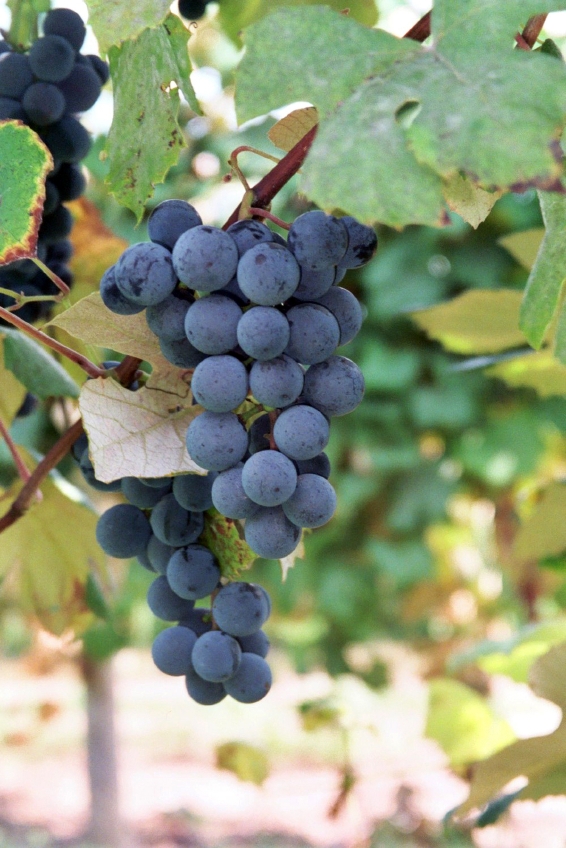
- Concord Grape Jelly — 1st prize for Grape Jelly
- Lemon-Summer Squash Marmalade with Lemon Balm — 1st prize for Orange or Other Marmalade
- Triple Berry Jelly — 1st prize for Jellies: Two or more fruits
I’m especially proud that my Triple Berry Jelly won Class Champion for jellies. In other words, it was judged the best jelly entered in the fair! Woohoo! As much as I relish (no pun intended) the results of my canning projects for their own merits, it’s a thrill to get a little outside validation as well; my chest swells with pride.

Kris’ prize-winning triple-berry jelly
I believe one reason my jellies did well is that I collect the fruit juice with a steam juicer so that it’s very clear. I’d share the recipe for the Triple Berry, but it calls for a steam juicer, red currants, and homemade apple pectin, so I doubt it’d get many takers. Instead, here’s a wonderful soft spread I’ve made before. Maybe apricots are still in season where you live….
(Makes 2-3 pints)
- 3 pounds apricots, pitted and chopped (about 24)
- 1/2 cup canned apricot nectar
- 1/2 teaspoon unsalted butter
- 3 cups sugar
- 2 tablespoons fresh or bottled lemon juice
Puree the pitted fruit in a food processor. In a non-aluminum 8-quart pot, combine fruit, nectar, and butter. Bring to a boil over medium heat.
Reduce heat and stir until apricots are softened, about 10 minutes, stirring
frequently. Stir in the sugar and lemon juice. Bring to a simmer and stir until the sugar is dissolved.
Reduce to a slow simmer and cook until it is thick enough to mound on a
spoon, about 30-40 minutes.
Stir frequently. (Remember, it will firm
more as it cools—you can put some on a chilled plate to gauge how thick it is.
Ladle into clean pint or half-pint jars, leaving 1/4-inch headspace. Wipe the
rims clean with a damp paper towel and add lids and screwbands. Process in a boiling water canner for 10 minutes. When cool, check the seals. If sealed, remove the bands and store in a cool, dark place. If it didn’t seal, you can either re-process it or store it in the fridge for up to a month.
Getting started with home canning
In an agricultural region like Clackamas County (where we live), many people still grow and preserve their own food. Nationally, the trend seems to be on fire as well. I recently read that Jarden Home Brands (maker of both Ball and Kerr canning jars) saw a 30% increase in sales over the last year (according to the Philadelphia Daily News). That’s good news!
High-acid foods like jams, jellies, pickles, and some salsas are an easy way to start preserving your own food without stressing about botulism; recipes and instructions abound on the internet. My favorite canning blog (yes, they exist) is Food in Jars by former Portlander Marisa McClellan. Her enthusiasm is infectious, and she’s a pro at creating small batches in an evening hour or two. If you’ve tucked fruit into the freezer this summer for later use, check around for a canning recipe for a mid-winter day’s work.
I especially like that glass canning jars are reusable year after year and don’t need giftwrap when given away. They are welcome homemade gifts that won’t turn into clutter (unless you’re my Dad, who has an entire cupboard packed with food I’ve made for him over the last five years — long story). And I was excited to find a source for BPA-free reusable canning lids through the magic of the internet. I split an order with two friends and used them for the first time (easy!) on a batch of dill pickles the other night. One more step toward self-sufficiency; now if I could just grow and refine my own sugarcane…
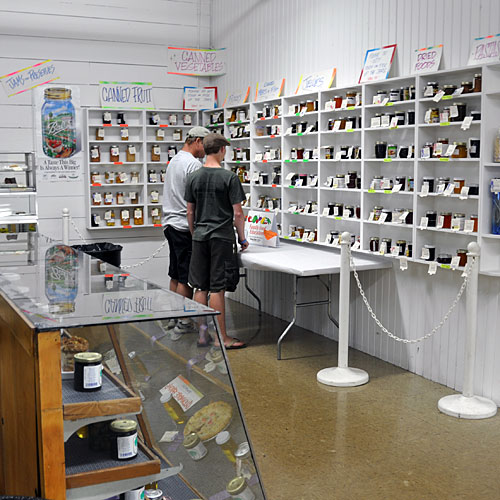
The jams and jellies section at the county fair
A word of caution: You’ll still find recipes that tell you to seal canning jars by turning the jars upside down or by simply packing them with very hot food and closing them immediately. USDA recommendations call for a boiling water bath — usually between 5 and 25 minutes — for safe canning. Without the boiling water bath, your jars may seal, but they won’t be sterile and could develop mold. It’s worth the effort to do the boiling water bath step.
In fact, preserving local food using whole ingredients is now being called an “eco-craft” in our post-Martha Stewart, revival-of-the-home-arts, make-the-most-of-your-money kind of world. No matter what it’s called, I like it. And that purple Class Champion ribbon will look great in my kitchen!
GRS is committed to helping our readers save and achieve your financial goals.Savings interest rates may be low, but that’s all the more reason to shop for the best rate.Find the highest savings interest rate from Ally Bank, Capital One 360, Everbank, and more.
This article is about DIY, Food, Frugality
Disclaimer: This content is not provided or commissioned by American Express. Opinions expressed here are author's alone, not those of American Express, and have not been reviewed, approved or otherwise endorsed by American Express. This site may be compensated through American Express Affiliate Program.
Discover is a paid advertiser of this site. Reasonable efforts are made to maintain accurate information. See the Discover online credit card application for full terms and conditions on offers and rewards.
SEARCH FOR RECENT ARTICLES


Congrats on your wonderful canning! Our county fair doesn’t even have an open class to exhibit canning, needlework and crafts etc. any more. I miss looking thru all of the goodies and getting inspiration. BTW..the hottest selling items in our local yard sales is “used canning jars”. Put that in your ad and they line up for an hour before you open, to be the first to grab some!
loading....
Amazing post! And great work and beautiful pictures. Congratulations! I’m jealous that JD gets to eat the fruits of your labor.
My DH has tried a couple of freezer jams and hopes to do more but we haven’t moved to full canning. We’re stuck buying local preserves instead for our homemade fix.
loading....
Congratulations, Kris! Thanks for the post, and the link to the jar lids. I’ve been pickling for a couple of years but have just started making jam this year…So far so good. Experimenting with no pectin, pomona’s pectin fruit juice-sweetened, and traditional recipes. Making my own pectin is, as of reading your post, on my list in the coming months…Thanks!
I’m happy to see the trend in canning, as well, though I dislike the competition at yard sales sewingirl describes (half kidding).
Also, I share your love of Food in Jars…It’s a great blog.
loading....
Well congratulations on your success at the fair. I am so impressed with your variety of jams & jellies!
My 6 yo son and I have only managed to master freezer jam here, but are anxious to try some veggies in the coming days.
It is great to see more people keeping up the tradition of preserving their own foods.
loading....
Congratulations on your blue ribbon!
loading....
Congratulations!!! That is so great! Top prize is good, but also the fact that you had so many amazing looking (and probably amazing tasting) entries. That, in itself, is no small feat.
Also, thank you for another great article about canning– I’m going to tell my mom about the reusable lids today!
loading....
Great article! Enjoyed your fresh, easy style as much as your canning.
I’ve never thought I’d have the time and energy, but my mom used to help my grandmother can a cellar-full of fruit.
loading....
Congratulations! I personally love feedback on whatever I do, and now you know you do great work!
I liked your article on dehydrated foods too.
Thanks for the different perspective into your lives! Keep canning
loading....
Great post, Love it!! I’m wondering about home made barbecue sauce. Right now we’re canning it but putting it in the fridge until we get it-obviously its not lasting very long. I suppose it should be bathed as well. I have a canner. Also, I’m wondering if Chris would share how much expertise she believes necessary before one moves on to a pressure canner, if ever.
loading....
Congrats! I am interested in learning to preserve/can, but am fearful of botulism. Can you recommend a good basic book or blog. I would probably do more canned vegetables, fruits, and sauces.
loading....
Congratulations on your ribbons…especially the best jelly award. That’s wonderful. I’ve been working on homemade baby food this year, and freezing our garden vegetables this summer. Would love to try making jams and jellies but I’m leery of all the sugar that I see in the recipes. I buy no-sugar-added jam at the grocery store. On the other hand, I buy plenty of ice cream and other treats so I don’t know why the sugar called for in the recipes bothers me so much. Thanks for sharing and again…congratulations.
loading....
Congratulations to you Kris. Wow, best jelly award! Both of my grandmothers canned their preserves. Can I say YUMMY!
loading....
Congratulations! I am finding the process a bit addicting myself–last night’s batch was gooseberry jam. My grandmother always had a pantry full of canned food–fruit, vegetables, pickles, tomato products, but I wasn’t old enough to learn how to do it from her before she died. My mom never canned so I’m figuring it out on my own as an adult!
loading....
Congratulations on the prize-winning jelly! The only jelly-making I’ve ever done is freezer jam. I’m intrigued by the home-made pectin, though.
loading....
You could try growing sugar beets, but the processing would probably be formidable for the yield. In Michigan, that’s how sugar is made.
More practically, you could have honey bees.
I don’t think you have enough room for enough sugar maples. Probably doesn’t have the right climate for a good sugar season there anyway. Too warm.
loading....
Congratulations!
(now, off to google a ‘steam juicer.’)
loading....
I second d(#10)’s request – would love some good resource recommendations for the very first steps to get started with canning and (nearly) fool proof methods to ensure I won’t endanger anyone’s health! Thanks for the article and congrats!
loading....
My husband started canning this summer. We’ve had great pickles but the peach preserves he made the other night are runny and very sweet.
I’m handing over your apricot essence recipe to him right now!
I just read “Putting Food By”, by Janet Greene- it’s a great how-to on preserving food for beginners.
loading....
I can my own food as well – everything from jam/jelly that makes great gifts, to pickles from the garden (beans, zucchini, cucumber, beets), to salsa, diced tomatoes, and pasta sauce from August’s tomatoes.
In addition to saving money it makes me feel less dependent on the machine of capitalism for my daily sustenance. And more secure – I’ve got a good 6 months’ worth of food in the pantry most of the time.
loading....
Congratulations Kris on winning the ribbons! I have a steam juicer that I use for many things throughout the fall although it’s main job is to make grape juice for us!
I’ve been married 21 years and we’ve never bought a jar of jam! I make about 40 pints of different freezer jams each summer and it is all gone or almost gone by the following summer. Of course, it makes a difference that I am making pb&j sandwiches for school lunches all year long!
I’ve never made my own pectin and I dont suppose I will ever try. It sounds lovely though! And speaking of used lids, Gwen, uses flats 6 or seven times or more! This is the first year that I used lids off of last years jars and I was pleasantly surprised to find that every one sealed! I’ll be doing that more often!
Looking forward to seeing you guys today!
loading....
To people asking how to get started, I really liked this book:
http://www.amazon.com/Homemade-Living-Canning-Preserving-Chutneys/dp/1600594913/ref=sr_1_1?ie=UTF8&s=books&qid=1282407234&sr=8-1
It was the first one I bought, and has recipes as well as really good instructions for people who know nothing about canning. I also use the Ball Blue Book occasionally (the recipes are pretty boring, but tried-and-true.
And then there are two amazing, really thorough recipe books (they won’t teach you how to can), one on jam and one on pickles:
http://www.amazon.com/Joy-Pickling-Revised-Flavor-Packed-Vegetables/dp/1558323759/ref=sr_1_1?s=books&ie=UTF8&qid=1282407324&sr=1-1
http://www.amazon.com/Jams-Jellies-Other-Sweet-Preserves/dp/1558324062/ref=pd_bxgy_b_img_b
None of the recipes in these books require boxed pectin, and she has recipes for lots of weird things that you can grow in your garden like ground cherries and sunberries.
loading....
If you are a beginning preserver, a wonderful all-around book is: Complete Book of Home Preserver (Ball) I have the 2006 edition, and it contains detailed instructions for every type of canning. http://www.amazon.com/Ball-Complete-Book-Home-Preserving/dp/0778801314 Check your library. Follow modern canning recipes to be safest.
Pressure canning (which you’d need for low-acid foods like green beans, corn, soups, and meats) is no joke. My first time, I went to a friend’s mom’s house to get a hands-on lesson. I only do it about every three years when I do things in huge batches. You’d need to find a place to have your pressure gauge checked (try your local extension office for info) and replace your canner’s seals if they’re not in good condition. But really, there is SO MUCH you can do without a pressure canner, even without one you can cultivate your preserving skills.
For those interested in the unripe apple pectin, I learned from the instructions here: http://tigressinajam.blogspot.com/2010/07/apple-pectin-confiture-de-vieux-garcon.html and http://www.wildflowers-and-weeds.com/The_Forager/pectin.htm
You can can!
loading....
Great article. Appreciate the tip on the canning lids. I’ll definitely check those out.
Congratulations on all your wins!
Are you willing to share your plum sauce recipe? We have a tree full of nearly ripe plums and would love to make a tried and true recipe that doesn’t use a lot of sugar.
loading....
Kris, Congratulations!! You’re indeed braver than I am. I’ve been canning for a few years and recnetly I’m on a kick to get all of the chemicals out of my food supply. The Ball lids are made with BPA and can leach into the food when the lids are heated or even off gas. We picked pounds of peaches, nectarines, plums today but I can’t get to work on them until I find replacement lids and seals that don’t have BPA in them. I found this brand Tattler online, but don’t know how to use the rubber seals. Is BPA a concern to you? Have you tried other canning supply companies besides Ball or have any of the readers?
loading....
indio, I use Weck jars – they’re expensive (I got them as a gift) but all the parts are reusable and it’s all glass so no BPA. If you’re up for making an investment they’re really beautiful.
loading....
OK, I know I’m in the minority here, and will probably get booed, so I’ll start off by saying i love GRS and JD. But this is like the 4th article on canning in the last 2 months. I admire the passion, and don’t mind the occasional side post, but let’s stick to finances…
loading....
Seems like when I was a kid, farmers wives made jam using any old glass jar and covered it with little cellophane circles…..you had to put the cellophane sheets into water to soften and then they were put on the sterilised and filled jar. the cellophane then got tight as it dried and was held on with a rubber band. Other people would seal the jam with melted wax. This was growing up in New Zealand…..40 plus years ago. Anybody remember stuff like that in the USA?
Congratulations on canning and blue ribbons.
Enjoyed the change of viewpoint on the blog.
loading....
You mentioned steam juicer, which I have seen. do you know how these differ from the results of the grinder type, nutritionally? (how is that for convoluted prose?) I am sort of in the dark as to how the steam models work but wondered how they treated the nutritional elements of fruits, etc. Off subject but curious. Thank you.
Charles
loading....
Kris, I’m delighted to hear about your county fair wins! How cool!
loading....
@Steven (#26)
Your complaint is noted, but is something of an exaggeration!
This is the first canning article in 2010, though Kris did do a guest post on food dehydrators last month. (That’s the only other food preservation article in 2010.)
I don’t run these often, but they’re very appropriate for the summer. You’ll probably see a couple more next year, too!
loading....
I made a lg batch of spaghetti sauce, used jars so no bpa freezing in plastic bags… Do I have to do the boiling process and actually can or is it ok to just freeze?
loading....
Congratulations on winning all those ribbons! I’m amazed at the variety of your preserves. I usually just stick blueberry and strawberry jams in the freezer and pat myself on the back
loading....
Congratulations Kris! I made quince jelly last year for the first time, it requires no pectin at all because of the amount of natural pectin in the fruit. It was really good. An elderly women up here in the Gulf Islands, BC Canada (pacific northwest) told me to help myself to her quince tree because she didn’t use them anymore. Hope to ask her for more this year. Wonder if you could use quince pectin for canning?
loading....
A little joke:
Q: Why do I eat so much home made jelly?
A: Because I CAN!!!
haha.
My wife and I have our eyes trained on the free section of Craigslist and on Freecycle this time of year watching for people trying to clean up their fruit trees. This year we’ve already scored 42 quarts of applesauce just by picking up apples from someone’s yard.
Thanks for the link to the reusable lids. I’m afraid we would have to use some single-use metal lids and some reusable lids since we give away so much of what we can. Do you give away your reusables, or do you only share with people you’re sure you’ll get them back from?
Also, I really like seeing these articles. They add character and a human touch to the blog, which helps differentiate it from other pf blogs.
loading....
My husband and I went to the Columbia County fair and after looking at all the preserves, the thought of entering my own creations has definitely crossed my mind.
If you haven’t already, try pickled cherries. I don’t process the jars, because they get eaten so quickly.
loading....
@Amanda – yes it’s okay to freeze tomato suaces. They dont need anything special done to them. If you freeze something you dont need to first can it. Some vegetables need parboiled first or blanched but other than that the freezing process is sufficient.
loading....
fetu (#27) I didn’t come from a canning family so I don’t have any personal experience with old canning methods like the ones you describe. What I have read, though, is that the likelihood of spoilage was higher with older methods. I don’t want a single jar to go to waste, and the boiling water method with vacuum lids is fairly fail-proof.
anne (#33) I’m envious of your quince supply! Yes, quince is a great pectin source. I bet you’d have success extracting it with a process similar to that for apple pectin. Please report back if you try it and let me know how it worked out.
loading....
I have been canning a little at a time for the past couple of years and have been really enjoying it. Great job on winning so many ribbons!
One thing about the BPA and the reusable lids: It would be awesome if they just went to all stainless steel lids and there was no BPA, but I looked up the plastic polymer MSDS sheet for the Tattler lids and they are just as bad or worse than BPA. Canning still exposes you to less chemicals than commercial food because the food sits in glass, not in a fully-lined can. Maybe a petition can go around to BAll to get them to remove the BPA entirely.
For those who think preserving food has nothing to do with finances, you are incorrect! I made 13 jars of Tomato Basil pasta sauce last week. Everything was fresh with no added chemicals of course. Including the jars, it cost me ~$1.40 per jar. Good quality sauce where I am even on sale is never less than $2.50/jar. Next year, it will cost even less as I can re-use the jars. Pickles and jam are even cheaper.
loading....
While there is some disinformation out there – there is also a equal and opposite tendency (especially in government-issued guides) to go overboard in the Quest For Sterility.
This can be rather off-putting to the beginner.
I learned jam and jelly making from educated-but-relaxed Europeans who sealed jam jars with paraffin and used Euro-style canning jars – both of which have worked for centuries, but are now frowned upon by the Prissy Canning Police.
There are easier, more laid-back ways to get started in canning. And if you buy European style jars you do not have to worry about replacing lids every year.
loading....
Wow, I had no idea you could make jam with Mahonia – might you be willing to share your recipe?
loading....
My dad sometimes grew sugarcane when I was growing up in Florida, and our neighbors in LA grew it in the alley between our buildings. So it’s very easy to grow, but maybe not so far north as Oregon? After you grow it, you have to press the juice out and boil it down to get cane syrup. It takes A LOT of boiling, even just to get it to the cane syrup point. The unprocessed juice is delicious, though, and we used to love chewing on the stalks as kids. Like GayleRN says above- you probably really could do honeybees. That seems to be the easiest way to get sugar.
loading....
One thing that wasn’t mentioned in this article is that some county fairs will pay you money if you win ribbons etc. Not a lot, but even at our little county fair you can win cash prizes depending on how your item places. like $2, $3, $4. But I know people who save and enter their kid’s artwork in the county fair in various art categories just so they can try to win money (and ribbons for the kids).
Speaking of canning jars and yardsales – I once heard a yardsale horror story about yardsale seller who was giving away free jars of her homemade jelly since she made too much. One rude yardsale buyer came along, opened a jar – dumped out the contents on the lawn just because they wanted a free jar!
loading....
I’m with Tracy- I need NEED to know the recipe for Oregon Grape jam!
For those of you who aren’t in the Pacific Northwest, Oregon Grapes (Mahonia) are everywhere, but they are incredibly tart. I love the idea of gathering all the berries my neighbors and friends have in their landscape and making jam for them. (I do this with my best friend’s berries, and both of our families love it!)
So excited about your ribbons!
loading....
extension.oregonstate.edu/…/sp_50-536_wild_berries_and_fuits2009.pdf
I hope that link gets you to a place where you can download the recipe from the OSU extension service. If not, google Oregon State University extension service Wild Berries pdf.
I used the steam juicer on the Oregon Grape berries instead of the jelly bag. Yummmmm!
To Michael Moore #34: yes, I’ll probably do some canning with metal lids and some with the reusable– not everyone is dedicated about returning supplies and I treat them accordingly! But I’ve long ago lost my shyness about asking for jars to come back to me from people who won’t use them for canning.
loading....
Wow. J.D is very lucky to have you. What a great thing it is to do this canning of all those yummy jellies. They look delicious.
loading....
Congratulations on the jelly win!
I’m so glad so many people are picking up canning. Over the years, a lot of older people have given me their canning supplies (or i’ve picked them up out of the trash – seems like when Grandma dies the people who clean out her house don’t value her tools at all.) and given away hot water bath kits to several people.
For people who want to can low-acid stuff and don’t want to shell out for the pressure canner, it’s worth asking around for one to borrow/inherit and refurb(like it is for the dehydrators); a lot of people buy canners and don’t use them much. Presto sells parts for every canner they ever made, as far as I can tell.
loading....
Great work, congratulations! They look really delicious. I like that you’re shunning commercial pectin and taking the natural approach, too. I would love to take the extra time to make jam someday – maybe if I get a food blog up, which I’ve been wanting to, that would be additional incentive!
loading....
Kris –
I would love your marmalade recipe, the lemon/summer squash combination sounds fantastic!
Kristina
loading....
Canning is probably a great method for homesteaders, but I find it hard to believe the extra time spent really saves anything in the end. How much money does canning really save when you factor in the cost of supplies, energy and the produce to put in the jars?
loading....
Just got back from picking up my jars/ribbons. Total loot: $13 cash, 12oz. of marionberry preserves, a new potholder and a pound of local honey. Not bad for something I love to do!
Kristina #48, you can find the marmalade recipe I used here:
http://tigressinajam.blogspot.com/2010/07/lemon-squash-jam.html
loading....