Your credit score is like a pet monster under the bed. Feed it and care for it, and it will do your bidding. But if you neglect it, it will turn against you. But beware! Taking good care of it can bring you dangerously close to its sharp teeth.
Your credit score determines the types of credit you can obtain, and how much you will be charged in interest. Last year I described the anatomy of a credit score, explaining that it’s a single number derived from various pieces of information contained in your credit report.

CNNMoney has a presentation that describes six situations that can to turn your credit score from a friendly monster into a raging beast. If you want to keep the beast happy, avoid:
- Using too much credit — One expert estimates that your credit score declines one point for each percentage of your total credit that you utilize. (In other words, if you have $2,000 debt on $10,000 total credit, your credit score is docked 20 points.) Don’t carry debt!
- Making late payments — The same expert estimates that an average late payment can subtract 60 points from your score. Even residual delinquencies can hurt your score. Pay on time!
- Limiting your credit — In order to have a credit score, you have to use credit. If you avoid certain types of credit, your score will be lower. Real-life example: I do not have a personal credit card. My credit score is docked because of this, and I know it.
- Getting too much credit too soon — The afore-mentioned expert believes that each time you apply for credit, your score gets dinged five points. The credit monster gets a belly-ache when you feed it too much at once; it prefers small portions.
- Closing unused accounts — Because of the way credit scores are calculated, closing unused credit accounts actually hurts your rating. The longer you’ve had an account, the more weight it carries. It soothes the credit monster when you leave accounts open, unused. Real-life example: Before I knew this, I closed a bunch of unused credit card accounts. My credit score dropped.
- Failing to keep tabs on your credit report — Even if you do everything right, you can take a credit hit from identity theft and other forms of fraud. Even simple errors can hurt your score. It is imperative that you check your credit report regularly.
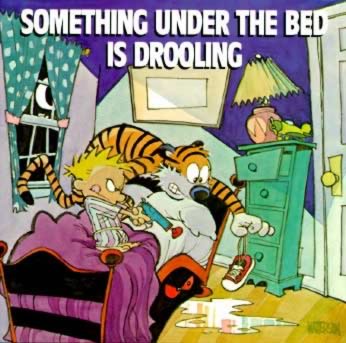
As with caring for any monster, keeping your credit score happy requires some choices that may seem a little dangerous. Limiting your credit might make the most sense from a rational standpoint, especially if you’re trying to get out of debt, but it makes your credit monster cranky. It’s hungry for more. You should do what works for you. In my case, I opt not to carry a personal credit card despite the ding to my score. This is best for my situation.
Remember to obtain your free credit report regularly. The Fair Credit Reporting Act requires each of the nationwide consumer reporting companies to provide you with a free copy of your credit report, at your request, once every 12 months.
The easiest way to check your credit is through AnnualCreditReport.com, an official, government-approved site. If you’d like, you can obtain reports from all three credit reporting agencies at once. Or, you can stagger your requests, possibly requesting one report every four months from a different agency.
Be good to your credit and it will be good to you!
[CNNMoney: 6 ways to kill your credit score]
This article is about Basics, Debt, Money Hacks Friday, 25th May 2007 (by J.D. Roth)


RSS Feeds
Facebook
GRS Twitter


May 25th, 2007 at 7:34 am
Remember, the FICO score is a “I love to borrow money” score. If you pay for everything in cash and don’t borrow money for any reason, your score will be poor or nonexistent, depending on the last time you had a debt.
It is not actually required to get a mortgage for a house. Find a mortgage company that does manual underwriting, and they’ll look at your bigger financial picture, rather than just the FICO score.
May 25th, 2007 at 8:21 am
If you live in Canada, note that you can obtain your credit reports for free. However, you must make the request in writing, using a form. If you go to the Equifax or Transunion websites, note that they do what they can to trick you into paying for your report. You want the forms for your FREE credit report.
I also closed an account I wasn’t using. I’d had it since I was 18, but I wasn’t using it and saw no point to keeping it. Duh.
May 25th, 2007 at 8:34 am
Proper Care And Feeding Of Your Credit Score…
The topic of what helps or hurts your credit is a hot one around these parts, but Get Rich Slowly is stepping into the fire with some info about what makes up a credit score and how to properly take……
May 25th, 2007 at 8:37 am
closing unused accounts -
i think this could hurt your score since the debt to credit available ratio changes after you cancel an account or two
as for myself.. i had about 8 credit cards when i first started building my credit.. i didn’t use any of them except for one or two.. and i always paid them on time.. not sure why i had so many.. but after a while i decided to keep 2 of the cards that had i had the longest history with (over 3 years).. and cancelled the rest
MY CREDIT SCORE DID NOT CHANGE
May 25th, 2007 at 8:39 am
Hmmm. I don’t actually know that closing the account hurt my score. I didn’t have any debt to start with.
May 25th, 2007 at 8:41 am
You know what drives me crazy? Recently some credit card companies will close your account if you don’t use it for a certain period of time. This is bad for your credit score, and yet there isn’t much you can do about it other than know the time limit and make sure you use the card now and then.
For example, my longest history card was from Mervyn’s. I had it for over 10 years, which was a great amount of history for my score. But, I don’t use it. So, the other day when we needed clothes I went to use it because they were having discounts for card holders. Surprise! It’s been closed, but guess what, “you can apply for a new one”! Then they told me that if you don’t use it for 6 months they close your account.
So, be careful. Know the terms for your cards and watch them to be sure they aren’t getting closed without your knowledge.
May 25th, 2007 at 8:43 am
MY CREDIT SCORE DID NOT CHANGE
Kick_push brings up an important point. When the CNN article mentions that an expert “estimates” how much various actions will hurt your score, that’s exactly what he’s doing: estimating. The truth is nobody knows for sure how how FICO scores are calculated. They’re able to make educated guesses, but they’re still guesses.
May 25th, 2007 at 8:43 am
Interesting and thanks for the link to the free credit report. It looks like all my accounts are in good standing.
It did list one account as having a $6k limit but the limit is actually on $500… I even called the card company to check. I’ll need to clear that up.
May 25th, 2007 at 9:10 am
Wow. This post is right on time. It wasn’t until January of this year that I gave any attention to my credit score (no house, no car, no plans to purchase either in the near future). I got a credit report from Experian in Jan. of this year, and just out of curiosity paid a little extra to get, what I thought, was my FICO score. Instead, it was my “VantageScore.” A product developed by the “big three” instituations to score risk that is more consistent since the number is based on information from all three agencies, not just one. Has anyone every used this? What are your thoughts on it? It seems to make sense to me, however I still don’t know what my FICO score is. When I get another $50, I guess I can find out. :::eyeroll:::
May 25th, 2007 at 9:24 am
More important than “care and feeding” is making sure what’s reported to the credit agencies is actually correct. More to the point, making sure what future lenders will see when they actually request the score. Case in point, I have a score of 740+ with both Experian and Equifax, but my TransUnion score is literally 250 lower that my highest score. I’ve been working for 2 months getting two complete misprints on the report taken off, but it’s been a huge hassle. It’s not enough to just do the right things anymore, you apparently need to make sure they aren’t making mistakes, and then the burden is still on you…
May 25th, 2007 at 9:35 am
Rather than closing accounts, does it help or hurt your score to ask the cc company to reduce your credit limit down to say a $250 limit or something? (so that it doesn’t appear as though you have too much open revolving credit)
Dying to know.
May 25th, 2007 at 9:47 am
If you’re trying to get out of debt and want to limit your credit… couldn’t you just cut up the credit cards but not close the account? Remove the temptation to use the card, but let the credit bureaus see you as having credit lines available to you.
Wouldn’t that work?
May 25th, 2007 at 9:56 am
This is actually a counter-intuitive one. Since one of the elements of your credit score is the percentage of your available credit that you’re utilizing, asking for lower credit limits is likely to hurt your score rather than help it. On the other hand, this is another case where each person has to make a decision: what’s more important, having a good credit score or not running the risk of debt?
May 25th, 2007 at 9:58 am
@ joshuat
FICO is “I love debt” score. I don’t know why these cc companies purposely gives people 5K and 10K limits that only teases the consumer to accumulate debt. They want you to rack up as much as you can so they can have you trapped.
I say use debit that way you do not have to worry about a limit or dinging your score.
It is sad that you have to finance something constantly and keep paying it to keep a good score.
May 25th, 2007 at 10:14 am
Thanks for the post and the link! I new about the ads for free credit reports, but never knew how that worked. This was very informational, thanks again!
May 25th, 2007 at 10:15 am
As joshuat and Moneymonk have stated, FICO score is not a measure of wealth. It’s a measure of debt, and it’s typically used to leverage yourself into greater debt. One of the greatest opponents of FICO and Vantage is Dave Ramsey, who implores his readers and listeners to become totally debt free and not wrap themselves up in an arbitrary score. I second that.
May 25th, 2007 at 10:56 am
[...] came across this really Get Rich Slowly article today on the “proper care and feeding of your credit score.” Much to my surprise, I [...]
May 25th, 2007 at 11:20 am
I recently obtained my FICO and the analysis said I was docked for having too many open accounts. I somehow ended up with two open Macy’s cards that I hadn’t seen or used for well over 10 years, among others that I knew I’d attempted to close before.
There’s a balance to be had. My strategy is to keep the credit card account I’ve had open the longest open along with a few that have the highest credit line (to help the debt/credit ratio) and close others I’m not using.
May 25th, 2007 at 11:26 am
In response to Shaz’s question about the Vantage score…
The three national credit reporting agencies have grown tired of building credit scores that they can’t sell to lenders because lenders use the industry-standard FICO score.
To summarize…there isn’t a new score for consumers…just a joint marketing campaign to promote one to lenders.
If it doesn’t say “FICO” it isn’t worth crap.
May 25th, 2007 at 2:16 pm
Proper Care and Feeding of Your Credit Score…
May 25th, 2007 at 9:13 pm
I had a WAMU card that gives me a free update on my FICO score and it says one of the things “hurting” my score is not having a long credit history.
But one of my credit cards that I have with my credit union, that is open but no balance, is almost 11 years old. How can that not be a long credit history?
May 25th, 2007 at 10:56 pm
Well, perhaps you’re not showing any recent use of the credit available to you.
May 26th, 2007 at 10:38 am
Just a note on department store cards, from my parents’ experience - they were told that having too many of them hurt their credit score. So they cancelled them (some quite old) and sure enough saw their credit score go up.
YMMV.
May 26th, 2007 at 10:56 am
The only way “too much credit” hurts your score, assuming you don’t owe anything on any of your credit accounts, is if the percentage of credit compared to your income is too high. If you only make $40,000 a year, but have $200,000 in available credit, then others are afraid that you might tap that credit and go belly up. It this case, carefully closing some accounts may help your score. But generally, what hurts your score most is: Late or default on payments, high balance to credit limit ratios, recent credit acceptance, and to some extent, the number of recent applications for credit
In many cases, closing unused credit can HURT your credit score by lowering your available credit and raising your credit to debt ratio.
Because some things go on and some things go off a credit report every day, your score constantly changes. You can have one thing go off your report one day and something else added 7 days later that balance each other. Even though both affected your score, together they might cancel each other out.
May 26th, 2007 at 6:29 pm
The “expert” opion that “for each percentage point of debt that you use, your FICO score will drop by one point” is a pretty poor estimate. For starters, the debt-to-limit ratio contributes about 150 points of your FICO score. As I wrote in one of the first posts on my blog, this is NOT a linear thing. I don’t have hard and fast rules, but if I were to estimate, I’d say that this is what it looks like:
0-25%: 0-10 points
25-50%: 10-50 points
50-75%: 50-100 points
75-100%: 100-150 points
In other words, the higher the percentage, the more each percentage point is worth. Carrying below 25% of your limit ratio will barely affect your score at all. This is where I recommend to keep your debt ratio whenever possible. Of course, 0% is best
Hitting the 50% threshold will have a noticeable impact on your score, and getting in the 80-90% range will really kill your score.
May 26th, 2007 at 8:16 pm
The reason codes listed under your credit score are the top factors explaining why you do not have a perfect score, even if you have never had any negative marks on your credit report.Even people who have 800+ scores will have these reason codes listed under their scores.
May 27th, 2007 at 5:52 am
Credit scoring, scored as to one who is willing to borrow and pay it back. Been there, done that. Much better to have a cash cushion then a credit card.
May 27th, 2007 at 9:20 am
In America, you can also get a “Free Annual Credit Report”, it’s just a little trickier because there are some sites pretend that they are that free site, when in fact they try to re-direct you to paid services.
To order your free credit report, the three nationwide consumer reporting companies (Equifax, Experian and Trans Union) have set up one website, a toll-free telephone number and a mailing address for you to use. The toll free number is (877) 322-8228 and the website is http://www.annualcreditreport.com. You can also complete the Annual Credit Report Request Form (available at http://www.ftc.gov/credit) and send it to: Annual Credit Report Request Service, P.O. Box 105281, Atlanta, Georgia 30348-5281.
As stated in the FCRA, you have the right to dispute information that you feel is being reported incorrectly on your Equifax Credit Report™. You are able to initiate an online investigation immediately or you can contact our dispute center at the toll-free number listed at the top of your Equifax Credit Report™. You must have a current copy of your Equifax Credit Report™ and your nine-digit confirmation number to complete this process online, which is found at the top of your Equifax Credit Report™.
Additionally, you can dispute inaccuracies via US mail by writing to:
Equifax Information Services, LLC
P.O. Box 740256
Atlanta, GA 30374
Equifax 1-800-685-1111
Experian 1-888-397-3742
TransUnion 1-800-916-8800
Great comments BTW about FICO being centered around credit use, but remember that buying a house is the grand-daddy of credit use, so most underwriters will use this quick and easy (for them) tool.
May 27th, 2007 at 3:53 pm
The FICO score in my opinion is one of the slimiest things to come out of the whole credit industry.
At least credit cards, which everyone sees as the devil here, have the guts to put exactly what they think of you right on your bill.
And if you don’t agree with what they think of you, you can close the card and eventually pay it off, and never deal with them again.
FICO, on the other hand, you have to pay to get your score, and they arbitarilly move the formula around all the time, because it’s really not that good of a predictor of potential debts, so you have no real idea how to improve it and get the top score. There is also no real substitute, though hopefully the Vantage score will be used more and more in the future.
Then finally, the FICO has a fairly wide scale, but the interest rate you are given is first based on the prime rate plus X, and though if you have really bad credit, that “plus X” can be HUGE, if you have really good credit, that “plus X” doesn’t get that much smaller, and almost never goes negative. So FICO gives you limited upside, nearly unlimited downside, and the score is arbitrary. What a wonderful service!
May 28th, 2007 at 11:43 am
[...] your credit score with the solid advice in this post at the Get Rich Slowly blog. Step one is to get a free copy of your report from the major reporting [...]
May 28th, 2007 at 2:14 pm
There are many different “score cards.” Any particular action will not affect everyone the same. Closing a card ( especially a card with age and low utilization) may likely lower score, but not always. Just as an inquiry does not have a point value. I have read things claiming each inquiry will cost “2/3/5/6/etc points” but this really varies. On some files a couple inquiries may cause a drop of several points, while others might not change at all. Just like with card closings and many other things.
I would also note that having a high FICO does not require being in debt ( and I personally think the Ramseyian “FICO Debt Score” parroting is…..), racking up, or revolving debt.
For many, credit is more a thing of convenience/productivity rather than a tool for piling up debt
On the other side, it is important to note that for FICO purposes one can be maxed out even if he pays everything monthly. The utilization ( current owes) is usually based on the statement. Lets say you put $1000 of your bills on a card that only has a $2000 limit. Even if you pay all $1000 when the bill comes, it will still show as 50% used. Of course, having many backup cards and going for credit limit increases can help with that.
As far as paying for the evil FICO score, at least you have the option of paying for it these days. It used to be secret to consumers and only known by the decision makers.
Credit scoring has been going on for a long time and has been used in decisions that go way beyond mortgages and credit cards. I know when my mother worked for the phone company ( 15-10 years or more ago) she setup new accounts and the deposits were based on Beacon scores. Similar can be said for most utilities, cell phones, etc. I like not paying deposits for that kind of stuff. I would hate to be someone who advocates that poor people with money trouble purposely pay extra for things like basic utilities. Or pay extra for manual underwriting, etc.
May 28th, 2007 at 2:17 pm
Also, income has NOTHING to do with credit scoring. It might affect manual underwriting though.
In other words, your score is independent of income but a manual reviewer might not like something about your credit ( high credit limits) and ask you to close something down. Though it is rare.
May 28th, 2007 at 7:08 pm
I have a few things on my credit report that are not errors so much as miscommunications. I know how shady that sounds - basically, I was monitoring accounts online during a time when I wasn’t receiving mail, and the online statements didn’t jibe with what I actually owed. Will it hurt my credit score if I contest this and if the credit company proves a better case than I? The original failure to pay is already on there.
June 2nd, 2007 at 2:42 am
Aren’t long years of good credit standing helps in the high credit score? Because I know that some banks took me in consideration because I missed paying my bills about 1-4 times within a 4 year period out of all of my credit cards.
June 13th, 2007 at 10:12 pm
[...] it will hit your credit score: Proper Care and Feeding of Your Credit Score ? Get Rich Slowly # Closing unused accounts — Because of the way credit scores are calculated, closing unused [...]
June 24th, 2007 at 9:12 am
can anyone tell me how i can check and monitor all three credit agencies on line.
ia m in Canada an all the ones that I have found are in the usa.
thanks.
July 2nd, 2007 at 5:53 pm
FICO is a rip.. I have a 2500.00 limit and never used more than 500.00 on it. I pay it off every month. My credit score recently dropped 40 points from 710 to 670 for NO apparent reason. The balance was ZERO and I make sure to use the card each month. The reasons or excuses they gave were lame since I follow those automatically. I was going to work my way up to 800 but at this rate I get penalyzed for NOTHING!! I don’t know what to do now…there has to be a way to get around this FICO circus.
July 23rd, 2007 at 10:47 pm
In June 2007 my credit score was 732 and in july it dropped 51 points…I can’t figure it out how in the world it could of dropped so much…i pay every month on time but with the exception that i carried a high balance. So carrying a high balance will drop ur score that much???? Please let me noe
September 5th, 2007 at 5:08 pm
[...] came across this really informative Get Rich Slowly article today on the “proper care and feeding of your credit score.” Much to my surprise, I [...]
September 8th, 2007 at 11:49 am
[...]J.D. over at Get Rich Slowly has a good post on care and feeding of your credit score. And [...]
October 14th, 2007 at 1:17 pm
Don’t know if anyone will read this so many months after publication, but if so . . . Does anyone know which is a better move: applying for a 0% balance transfer card (with no fee) and getting the ding on my credit score, or just losing out on the finance charges for my credit card debt but keeping my credit score where it is by not applying for a new card?
I’m not sure how much that one application might affect my credit, and we will likely be looking for a new place to rent, and thus I do want to make sure I have a good score when we do so. Thank you!
October 14th, 2007 at 1:32 pm
m,
I really think it depends on your ability to obtain a 0% deal. If you are pretty confident you can obtain one with 1 inquiry, the interest saved could well be worth an inquiry.
The ding will probably be temporary, and as long as you keep your cards open, your score will probably increase as your utilization % decreases, and you would have less cards maxed out.
credit score impact is relative to your specific situation. Without knowing, it’s all speculation. The amount an inquiry and new credit will help or hurt depends.
For most people utilization is a big factor. I know people with perfect payment history but low scores because they are maxed out. For this situation obtaining new accounts and requesting credit limit increases can help scores greatly.
Let’s say you have a card maxed out. Then you open a new card with the same or higher limit and a 0% offer. If you transfer the balance and leave the old card open, you will have saved $$ in interest but also you are now using a lot less of your total credit limits. I have seen utilization help or hurt someone by over 100 points whereas an inquiry might ding 3-6 points or not at all.
Depending on the rate you are paying now, a 0% offer could make it much easier to pay down. I think regardless of score, saving the money is probably the way to go.
One of the catches is, it’s usually a lot easier to get a 0% offer if you don’t need it. If you are currently maxed out it may be affecting your scores enough to keep your score down too low to qualify for the best offers.
When I am thinking of applying for credit, I usually take a look at the Credit Pulls Database over as Creditboards ( dotcom). There you can see what cards others applied for with what scores, the results, what bureau was pulled in your state,etc.
October 15th, 2007 at 1:28 pm
Thanks Greg, your advice was very thorough and helpful. Thanks so much!
December 11th, 2007 at 7:04 pm
I AM WORRIED ABOUT DEBTS. I HAVE A GOOD SCORE: AVERAGE OF 729, BUT I WANT TO CLOSE THE CARD WITH THE HIGHEST INTEREST(11.99apr) AND I HAVE ONLY HAD IT FOR ONE YEAR. WILL MY SCORE GO DOWN?
I HAVE ANOTHER CARD THAT HAD A LIMIT OF 2000, WENT UP TO 6000, AND AS I APPROACHED THE 2000 LINE, THEY LOWERED IT TO 2400, WILL IT NEGATIVELY AFFECT MY SCORE?
PS.- ALL OF THIS INFO CONTRADICTS ITSELF, SO IT DID NOT HELP MUCH