The sunk-cost fallacy: Throwing good money after bad
My mother spent three weeks in the hospital in August. Her extended stay affected me in lots of little ways I couldn’t anticipate. To escape my daily worries, I went searching for a little solace — I re-activated my World of Warcraft account.
World of Warcraft is a subscription-based online computer game. As a player, you become immersed in a virtual fantasy world, interacting with thousands of other players from around the globe. It’s great fun. Enjoyed in moderation, World of Warcraft (or any other computer game) can be a fantastic pastime.
Unfortunately, I’m not so good with enjoying things in moderation. I had quit the game cold turkey several years ago because it was consuming my life. This time, I made an effort to keep my play under control. For the first week, I limited myself to an hour a day. By last week, however, I was playing at least four hours every day, and other areas of my life — my fitness, my mental health, my relationships — were beginning to suffer.
“But I can’t quit,” I thought. “I paid $77.94 for a six-month subscription. Plus I’ve already invested 80 hours into the game. I should keep going.” This line of thinking was dumb, and I knew it. The money had already been spent, as had the time. It was gone. Chasing it with additional money and additional time wouldn’t make things better. I was engaging in the sunk-cost fallacy.
The Sunk-Cost Fallacy
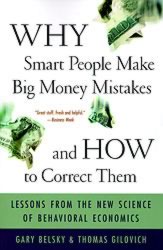
The sunk-cost fallacy describes our tendency to throw good money after bad. Just because you’ve already spent money on something doesn’t mean you should continue spending money on it. Sometimes the opposite is true. Psychologically, the more you spend on something, the less you’re willing to let it go. In Why Smart People Make Big Money Mistakes (and How to Correct Them), the authors write:
Once your money is spent, it’s gone. It has no relevance. To the extent you can incorporate that notion into your financial decisions, you’ll be that much better off for trying. If you’re debating the sale of an investment (or a home), for example, remember that your goal is to maximize your wealth and your enjoyment. The goal is not to justify your decision to buy the investment at whatever price you originally paid for it. Who cares? What counts, in terms of getting where you want to be tomorrow, is what that investment is worth today.
It’s important not to consider past costs when making financial decisions, but to make decisions based on future costs and benefits.
Often we succumb to the sunk-cost fallacy because we don’t want to feel wasteful or to admit we made a mistake. All that Stuff I’m trying to get out of my life is nothing more than a manifestation of this: I know how much money I’ve spent for the things I own, and so am reluctant to let them go. What I need to realize is that it’s not what these things were worth to me in the past that’s important, but how much they’re worth to me now. If I do not value them, and they’re just taking up space, then they’re better off out of the house.
Learning to Walk Away
We all make financial mistakes. When you realize you’ve done something wrong, try not to think about the money (and time and emotion) you’ve already spent. Instead, decide what to do based on the future. From Why Smart People Make Big Money Mistakes:
Imagine that you’ve got a ten-year-old minivan that needs a new transmission. The sunk cost fallacy tells us that you’re more likely to plunk down the money for the new transmission if you’ve recently sunk hundreds or thousands on repairs into your clunker before that. So ask yourself: If someone gave you that minivan as a gift yesterday, would you spend the money today to get it running? If the answer is “no” — because that large an investment is not worth it on its merit — then it’s probably time to think about buying a new car.
Similarly, it is relevant only to your ego that your Amalgamated Thingamabobs stock, for which you paid $100 a share, is now selling for $25 a share. If you believe that lower price is a bargain, hold on and maybe even buy more shares. But if it is not — if, given the chance, you would pass on the opportunity to buy the same shares at any price today — then it is time to sell.
When Kris and I were young and stupid, we paid $1200 to join a “consumers club”, through which we could purchase furniture and housewares for reduced prices. Though the sales pitch had been convincing, it quickly became clear that this was a bad deal for us. We had to drive half an hour to reach the club, and when we got there, they never really had what we wanted. Yet we remained members for many years, dutifully paying the $75 annual fee. “We’ve already spent so much,” we’d say. “It doesn’t make sense to quit.”
Eventually we wised up. Just because we’d already spent a ton of money, that didn’t justify continuing to do so.
Similarly, I’ve come to my senses about World of Warcraft. I’ve decided to say good-bye to Jahdu, my level 42 Orcish hunter. It hurts to think of the $77.94 I paid for a six-month subscription “going to waste” — not to mention all the time I spent over the past few weeks — but I know that it’s better not to pine after sunk costs, and will instead look to the future.
I’ll get better value from my time if I spend it reading and writing about personal finance!
Another Real-Life Example of Sunk-Costs
Last March, I decided to tackle my physical fitness by setting some big goals for myself. One of those was to go from couch-potato to marathon runner in about six months. To goad myself into action, I paid about $100 (non-refundable, non-transferable) to sign up for the Portland Marathon (which is being run at this very moment).
For a while, this seemed like a brilliant idea. Having paid for the marathon in advance, I was motivated to train so that my money didn’t go to waste. I began to run with a group. I lost weight. I felt great.
At the end of May, however, I hurt myself. I took some time off. I didn’t worry too much, because there were still four months left before the marathon. But when I tried to return to running, the pain persisted. I went to see a physical therapist. June turned to July turned to August. Eventually I decided that maybe I could walk the marathon. I’d paid $100 for it, dammit, and I wasn’t going to let that money go to waste!
Over the last couple months, however, I’ve come to realize that I’m engaging in the sunk-cost fallacy again. The fact that I’ve already spent $100 for the marathon is meaningless. It’s a sunk cost. It’s not recoverable. What matters is the future cost in time and money. And, as it turns out, health.
I could have continued to push myself to prepare for the marathon, but the most likely result would have been additional doctor bills and physical therapy visits. I would be spending future money attempting to make past money “good” again.
Instead, I’ve changed my focus.
I’ve begun to prepare for the 2009 Portland Marathon. I’m running short distances (three miles) a couple times a week. I’m lifting weights to build my leg strength. Meanwhile, I’ve learned a lesson. In the future, I won’t sign up for the marathon until later in the summer, when I’m sure that I’m physically ready to go.
One More…
In late June, I laid out plans for a five-week trip to England (and beyond). I was going to hike Hadrian’s Wall, take in an Everton football match (or two), visit Bath and Wells, and — best of all — spend time with GRS readers all across Great Britain. (And possibly in France and/or The Netherlands, as well.) On July 4th, I bought a one-way ticket to London, and was looking forward to having a series of small adventures.
That’s my dream world.
In the Real World, things didn’t go as planned:
- Mom got sick. My family is still wrestling with her situation. It looks like she’ll move from the “memory care unit” to a regular apartment in the assisted-living facility, but she’s not happy about being there. Plus, her finances are a mess. Of the family members, I’m the most logical person (and the only one with time) to untangle things.
- Meanwhile, my own house has problems. The roof is leaking. In most places, this isn’t an issue during the summer, but I live in Oregon. We’ve had some heavy rainstorms, and these have revealed a leak coming into the guest room upstairs. So, we’re trying to hire a roofer to begin work soon. Trying is the key word here. All of the roofers are flooded with work because it took so long for the rain to let up this year.
- I’ve received a jury summons for early September, right when I’d hoped to be in France and/or The Netherlands.
- Kris, who had thought she was okay with me being gone, isn’t quite ready for me travel on my own for an extended period. This may sound unimportant, but it isn’t. She needs to be comfortable with this too before I take off on my grand adventures. By delaying a couple of months, it gives her time to get adjusted to the idea.
There are other smaller problems, too. Taken together, these factors have forced me to admit that now is not a good time to make a solo trip to England. My adventures will have to wait.
Sunk Costs
What does this all have to do with money? Well, I’m about to present an object lesson in sunk costs.
Kris and I talked long and hard about the decision. She was actually more in favor of me going than I was. “You’ve already bought the ticket,” she told me. “You shouldn’t let that go to waste.”
“I don’t want to waste it,” I said. “But it’s a sunk cost. It’s not a factor in the decision. That money has already been spent whether I go or not.”
I’ve tried to write about sunk costs twice before but without much success. (Here’s the first time and the second.) And whenever I mention sunk costs in passing, people misinterpret my meaning. For some reason, the popular (and incorrect) definition of “sunk cost” equates to something like “dumb spending” or “spending you shouldn’t have done”. But that’s not what the term means.Sunk costs are simply costs that have already been incurred and cannot be recovered.
Sunk costs are neither good nor bad. They just are. There’s no value associated with them at all. (In fact, it’s when we assign values to sunk costs that we make poor decisions.) Thus, sunk costs shouldn’t be considered when making a decision.
In my case, I tried to recover my costs. I contacted my friend Chris Guillebeau for his help. He explained how plane tickets work. “It’s all about the terms and conditions,” he told me. “If your ticket is refundable, you’re good. Even if it’s not, you can usually reschedule or get some sort of flight credit.”
So, I called around to see if I could get a refund or somehow reschedule my flight. For once, though, my frugal habits worked against me. I bought my one-way ticket to London for $900, a full $500 less than any other ticket I could find for the same itinerary. But one of the reasons my ticket was so cheap was that it was fixed — I couldn’t change anything about it. (I’ve never had to change a ticket before in my life, and I didn’t expect I’d have to change this one.)
Bottom line: I spent $900 on a plane ticket that had to be used or lost.
Last week, when it came time to decide whether I was actually going to London, I didn’t even consider the cost of the ticket. If I flew to England, I was out the $900. But if I stayed home, I was out the $900 too. This is the purest example of a sunk cost I can imagine! As a result, I was able to make my decision based solely on the pros and cons of each option.
Staying Home
Leaving aside the money I spent to buy the ticket, it makes more sense for me to stay home. I hate doing it — I want to travel! — but it’s the best choice for my mother, my wife, and my house.
I don’t feel bad, though. I know there’s lots of travel in my future. It took days for me to decide to skip my trip to England, and during that time, Kris and I had some long talks. During these discussions, we agreed that in exchange for staying home now, my trip to Latin America in October is a sure thing. Nothing will stop that. I’m plotting other trips too, including a possible trip to Antarctica with Chris Guillebeau where I hope to make Your Money: The Missing Manual the second-best selling book on the continent.
Plus, by waiting eight weeks, I’ll have more time to tackle some other projects. I’ll be able to get my diet and fitness back on track. (They’ve taken a hit over the past month!) I’ll have an extra eight weeks to learn Spanish. (I’ve been taking classes for a couple of months now. Me gusta es mucho.) And, perhaps best of all, I’ll have extra time to purge the Stuff that’s been causing me so much consternation around here.
And you know what? Now, I’ll have more time to write here at Get Rich Slowly! Even though it feels like I’m wasting $900 by skipping my trip to London, I know it’s the smart decision.

Become A Money Boss And Join 15,000 Others
Subscribe to the GRS Insider (FREE) and we’ll give you a copy of the Money Boss Manifesto (also FREE)
