Reader Story: How I Ruined My Credit Score, and How It Didn’t Ruin My Life
Published on - March 14th, 2010 (Modified on - December 20th, 2012) (by J.D. Roth) This guest post from the redoubtable Tyler K is part of the new “reader stories” feature here at Get Rich Slowly. Some reader stories contain general “how I did X” advice, and others will be examples of how a GRS reader achieved financial success — or failure. Tyler is an active commenter at GRS, and never afraid to share his opinion!
Like J.D., I once had a big problem with debt. Unlike J.D., I didn’t dig myself out from under that problem gracefully.
About eight years ago, I was a college student, living in an apartment near campus, and working full time while going to school. I felt like I was on top of the world. Here I was, seeing all my friends making $6 or $8 an hour, while I was making about $17. That seemed like a lot of money. It was about $35,000 a year — not just a college student’s salary, but a real salary. I felt like I deserved to be living it up a bit, especially considering all the work I was doing with a full-time job and a full time class load.
I went overboard. I spent well beyond the $35,000/year I was making (it wasn’t as much money as it felt like). I bought a Mustang, and modified it into an amateur race car.

I had the latest laptop and a desktop computer with a flat screen display (in 2001). My $35k/year salary was enough to live on, but it wasn’t enough to support spending $1500 on a laptop computer and on a desktop computer and on high-performance cylinder heads, but that’s what I did.
I bought all of them, and more.
This kept up for a year or two. I kept justifying these purchases to myself, and my credit card balances slowly rose along with my required minimum payments. A bout of bad luck exacerbated the problem. I was mugged outside my apartment, and having no medical insurance, ran up an emergency room bill. My race car was stolen, and being 21 and owning a race car, I couldn’t afford comprehensive car insurance, I had liability only. I bought another car to replace it, again with borrowed money.
Things fall apart
Eventually, I realized I was in over my head. I was gasping for air. I couldn’t make my credit card payments and also pay my rent and buy groceries. I was driven to the edge, and I gave up. I stopped paying all my credit card bills, and they went into collections. I voluntarily surrendered my car to be repossessed. I figured if I was going to ruin my credit score, I might as well go all out — I even hired a bankruptcy attorney. She managed to stop the incessant flood of phone calls from creditors, but I found I couldn’t afford even to pay for the bankruptcy proceedings, and so that process stopped shortly thereafter.
At this point, I owed approximately $30,000 on about four different credit cards, the medical bill, and the car loan, all of these in collections. My credit had been destroyed, but my creditors had been silenced by the bankruptcy attorney. I decided to get my life in order and worry about paying back the debts I owed later. It was easy to justify — I could barely put food on the table and the credit card company was still bringing in billions every year. They didn’t need an extra few thousand dollars as desperately as I did. So I let my debts ride, and worked on running my life in a sustainable way.
Turning things around
The first thing I did was give up credit cards entirely.
I decided to only spend money I actually had, and so my purchases of toys slowed dramatically. My extravagances in life dropped to going out to eat with my roommate a couple times a week, and not at particularly fancy places. I got into bicycling as a hobby, on a used, mid-range road bike — not a brand new, high-end model like I would have bought before. And there I sat, content with the computer I already had, my modest bicycle, and the occasional trip out for dinner. I was living quite comfortably on my salary with my new outlook on life. For the first time in years, I felt comfortable with myself. I actually managed to save a few dollars from paycheck to paycheck instead of spending them!
I did decide that I needed a car, though. I hadn’t enough money to pay cash for one, and I doubted anyone would give me a loan, so still being young and in school, I asked my parents to help. This time though, I was much more conservative.
I borrowed about $5,000 from my parents and created a definite plan for paying them back. I bought a nine-year-old but well-maintained Honda Accord, and I stuck to the payments religiously. This time if I were to fall behind, not only would I give up my newfound peace I’d made with myself financially, but I’d be letting my parents down instead of faceless mega-corporations.
No credit needed
Shortly thereafter, I finished school, and took a software engineering job in San Francisco. Rents were higher in the city, but my salary doubled. My brother needed a car, and I worked out a deal with my parents to give him mine, along with the rest of the payments on the loan. I wanted to get a brand new one.
I went down to the car dealership with my pay stubs from my new job, and my ruined credit score, and a pre-approval I’d gotten online for a loan of up to $26,000. I was determined to make something work. As it turned out, this was easier than I’d anticipated. Car dealerships will do anything to sell cars, and that includes selling cars to people with horrible credit and a repossessed car on their credit report. I bought this car with no money down, which in retrospect, is the stupidest financial decision I’ve made since I began my financial recovery.
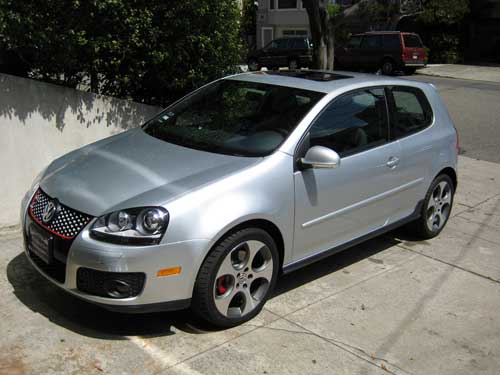
Still, it wasn’t a horrible decision — I now made a salary that could justify a car like this. Sure, I got a crappy 12% interest rate on the loan, but I eventually refinanced the loan to 10%, and a shorter term, and then I paid the loan off early, about two-and-a-half years after I first bought the car. When I called the bank to pay off the first loan (when I refinanced), they were practically begging me to take a credit card from them, seeing as I’d overpaid my car loan every single month, on time, for the life of the loan. But still, I wouldn’t break my ‘no credit cards’ rule, and I refused.
Renting an apartment was another thing I was scared to do with bad credit, but it turned out easier than I thought, as well. I got my first new apartment with my ruined credit when I moved to San Francisco. I decided to share a place with a friend of a friend. We found a two-bedroom place listed on Craigslist, and went to see it. It was a four unit building, quite common in San Francisco, owned by a little old Chinese lady. She didn’t care to even run a credit check. Two well-dressed young men showed up, with pay stubs indicating an above-average combined annual salary, and job titles of ‘Software Engineer’ and ‘Accountant’. She was more than happy to rent the place to us for $1800/month.
I continued my life living the way I had since I’d given up on my debt a few years ago, but now on a much larger post-college salary. I bought few toys, aside from the car and some furniture. I’d go out to eat with friends sometimes, or I’d go out for drinks occasionally with my new coworkers. I actually found money piling up in my checking account because I was making it faster than I even wanted to spend it. I had nothing I needed to buy.
After a year, my roommate took a promotion that had him moving from San Francisco to Denver. I decided that I wanted to get my own place, but $1800/month was too much for me to spend by myself. The little old lady who’d been our landlord actually asked if we’d reconsider staying, and if I could find another roommate, as we’d been such good tenants, but I told her I had to leave.
I was questioning my ability to get lucky with finding an apartment a second time, but figured I’d done it before, and I could do it again. I looked at one place I like, and decided to take it, but was turned down by the rental agency due to my bad credit. I found another place a few blocks away that actually ended up being nicer — It was an old Victorian house divided into two units, one upstairs and one downstairs. The family that owned the place lived upstairs and rented out the downstairs.
Wary because of my bad credit and previous rejection, I wrote down my story, and gave the owners my bank statement showing the money I’d accumulated in the last year I’d spent living below my means, and the phone number of the landlord that’d asked me to stay in San Francisco. In light of this information, they rented to me regardless of my credit score, and they too ended up extremely happy with me as a renter.
The road to recovery
Several years after I’d given up on my credit card bills, I was finally contacted again by one of my creditors (or really, the collection agency to which they’d sold my debt). They demanded, in a rude and threatening manner, payment in full of an outstanding debt over $10,000.
My girlfriend (now my wife), who worked at a law firm, asked a co-worker of hers to help me out. He was an attorney who had previously worked in this specific area, representing clients being sued by creditors, and had no sympathy for a threatening collection agency. With a single phone call on my behalf, he had the collection agency offering a settlement of about half their initial demand. I paid it in full from the surplus I’d been accumulating.
Slowly, over the course of several years, my other creditors would contact me, and we’d agree on a settlement like this. Eventually, the statute of limitations for them to collect on the debt through legal channels expired. After that, all I needed to mention to creditors was that I knew it was too late for anyone to sue me, and I’d have a reduced settlement offer.
Now, at the beginning of 2010, it’s been nearly seven years since this whole mess started, and these old marks are due to start dropping from my credit report soon. Surprisingly, I’ve found in the intervening time that I haven’t been impacted much at all by my poor credit — certainly not as much as you would have thought, given the emphasis the financial media puts on credit score.
- I paid maybe 5% more than market value for the car I financed, not a huge deal.
- I was turned down for one apartment rental.
I’ve since rented one other place, where I live now, in a manner similar to the second — it’s a privately-owned little house with landlords that live next door.
I told them my story, showed them my bank statements and pay stubs, and they were happy to rent to me, and I love it here. Aside from the lousy car interest rate and a single apartment rejection, I haven’t even noticed my poor credit score. Employers haven’t cared. Cell phone companies haven’t cared. The electric company hasn’t cared. For the most part, nobody but myself has even looked at my credit score for the past six years.
While all this has been happening, my life otherwise has been going fantastically. My career has progressed well, I make roughly four times what I did when the story started. I got married. I moved back to my hometown, which I love. I’ve been traveling a bit, to five other countries and various places in the US. My life is going as well as I could hope.
Strangely enough, I’m not sure that any of this would have happened if I hadn’t given up on those debts years ago. That began a change in lifestyle — a focus on experiences instead of things, on making do with what you have instead of needing the latest and greatest. Those lessons have shaped my life since then, and I don’t know if I would have learned them as well without going through that experience.
Final words
I was originally hesitant about sharing this story. I was afraid of being judged for the method I used to pay off my debts. I’m not proud about having done this, but at the same time, I don’t feel bad about it.
These credit card companies were willing to do everything in their power to make a profit off me. They had teams of actuaries calculating the exact interest rates and credit limits that would maximize profits from their customers, and they had the legal system at their disposal if they thought it would have been beneficial. I used the same tactics. I was never sued and in the end, I came to mutual agreements with my creditors that satisfied both parties.
Was it an ideal solution for either party? No, but once I was in in over my head, there wasn’t a realistic ‘ideal solution’. The situation was eventually salvaged, and now, years down the line, it’s water under the bridge.
Reminder: This is a story from one of your fellow readers. Please be nice. After nearly a decade of blogging, I have a thick skin, but it can be scary to put your story out in public for the first time. Remember that this guest author isn’t a professional writer, and is just learning about money like you are.
GRS is committed to helping our readers save and achieve your financial goals.Savings interest rates may be low, but that’s all the more reason to shop for the best rate.Find the highest savings interest rate from Ally Bank, Capital One 360, Everbank, and more.
This article is about Debt, Reader Stories
Disclaimer: This content is not provided or commissioned by American Express. Opinions expressed here are author's alone, not those of American Express, and have not been reviewed, approved or otherwise endorsed by American Express. This site may be compensated through American Express Affiliate Program.
Discover is a paid advertiser of this site. Reasonable efforts are made to maintain accurate information. See the Discover online credit card application for full terms and conditions on offers and rewards.
SEARCH FOR RECENT ARTICLES


Good Morning, GRS Universe! Well-written post, I found myself anxiously hitting the “down” arrow to get to the end. Tyler illustrated an important point – you do not have to have a glowing fantastic credit score to live a satisfying life. The sky is not going to fall. You won’t be forced to live under a bridge like a troll and wave to the passersby in their cars living a normal life. Even if you get an uncompetitive rate on something like a car loan, you can still refinance to get more favorable terms and/or aggressively overpay to rid yourself of the loan. Lives should not be planned around a FICO score. There are a lot of things I love about Suze Orman, but she is too credit score oriented in my view. I think it’s a mistake to push youngsters into getting credit prematurely to “build” their credit. I like the ideas of other financial gurus, living with no credit cards, having enough cash and other assets to be self-insured – credit does not always have to be a middle class household’s lifeline or emergency fund.
There is clearly life after repossession, bankruptcy, or just a tough time with bills. I personally don’t have a problem with the way you settled your accounts. Businesses leverage their bargaining positions all the time. I do think that judgment invites judgment – and Tyler’s commentary on several different posts is often perceived as excessively harsh or brutally honest-but always interesting. Anyway, congrats to freeing yourself from the shackles of consumer debt!
loading....
Bravo!
A positive net worth, zero debt and a positive cash flow are the first steps toward financial independence. Get a good investment program going and you should do OK.
I do think you should feel a little guilty about how you liquidated your debt, though.
The credit card companies are just bean counters. They pass losses from customers like you onto other consumers. Ultimately you haven’t hurt the credit card companies but your friends and neighbors.
I’m not suggesting that you go back and settle your remaining debt, that’s water under the bridge. I am just asking that you recognize your predatory borrowing is as much to blame as their predatory lending for the general destruction of wealth that resulted.
Thank you for sharing your story, and get that investment program going.
loading....
Tyler,
Thank you for sharing your story. I find it very inspiring, and your honesty is appreciated.
loading....
I declared personal bankruptcy in 1996 and it didn’t have much effect on my life either. It was a stupid thing to do but that is the past. I still have credit cards but never carry a balance. I have no doubts about being able to use credit responsibly now.
Also, I love your rental house.
loading....
Inspiring story. I think that a lot of people have been there and are unsure what to do in regards to turning around their life. Way to go.
loading....
I think this article demonstrates that a bad credit score doesn’t necessarily mean you can’t get a loan or buy a car, etc.
There is nothing wrong with a 12% loan for a new car when you are $30k in debt (wait a minute, what, this is crazy). How about there is nothing wrong wit ha 12% loan if you are going to pay it off early.
I recognize that the credit cards, and other creditors, will settle for much less .50 on the dollar or less once you default or go into bamkrutcy, but I’m troubled by this system since it raises the costs for borrowing for all of us. Especially in a situation where the person has the means to pay off the debt and simply chooses not to or uses that money for new cars, travel, etc.
It sounds like the OP eventually learned his lesson and changed his ways, but this is the type of story is similar as to what was trotted out when the bankruptcy laws were changed to make it harder for people to discharge debts (which ignored the fact that most people end up in bankruptcy due to medical bills).
loading....
I was slightly less inspired by your story. Just because they are “faceless mega corporations” doesn’t mean you shouldn’t pay them back. By getting a credit card, you assume responsibility. Now you’re bragging about how easy it was and how little consequence you faced blowing those responsibilities off. I think it’s unfortunate that people think the way you do. That credit card debt is not worth paying off. The statute of limitations is not something you should be proud to use as a defense. I’m sorry if I don’t think that you cheating credit card companies was “inspiring”.
loading....
Wow thank you for telling your story. Unfortunetly I think that a lot of young people are in a similar mindset at that age. Personally I would have gone with a cheaper vehicle, but I’m used to compact cheap cars, not mustang quality race cars(which I bet was amazing!)
loading....
Your article was well written. I think one of the keys here is that you were young and could write it off as a learning experience. I will share it with my nephew who is going through a similar thing. I would not show it to my 40 year old niece with a family. We are, instead, helping her out of her hole with Dave Ramsey. One can “afford” to make this type of mistake (bad ideas in college-future career with much more money) the other cannot (bad ideas in college while married/future career with not much money).
I understand your idea with the creditor (which are ultimately the people who are reading this blog- since “we” are the bank who loaned you the money). One idea my father had for those he counseled through bankruptcy is the “debt to society” issue. He asked people who went bankrupt to go ahead and choose a charity and put in some hours….Just a thought.
loading....
The ideal solution is to be a highly educated highly paid professional. Credit doesn’t hurt as much then. The only time I’ve ever had a credit check run on me was to get credit cards and to buy/refinance our house. Heck, I know someone with a McArthur genius grant who destroyed his credit just by forgetting to pay the bills (the stereotypical absent-minded genius)… hasn’t hurt his life much either (nor that of his equally absent-minded Phd roommate).
It reminds me of how I could get away with telling teachers they were uninspiring in front of the entire class but a lower income kid who wasn’t “academically talented” got suspended for 3 days for writing “For a good time call Mr. Hammerberg, 555-NUTS” on a sheet of paper.
In DH’s family one of his cousins has horrible credit. That means: They have a 10% mortgage on their house that they cannot refinance ever. They have an insane interest rate on their cars. They don’t have credit cards. And worst of all, when she got laid off, she couldn’t even get even a minimum wage job anywhere in town because they all run credit checks now. Which meant she couldn’t keep payments on her car, which destroyed the credit they were rebuilding. Bad credit when you do not have education beyond high school can destroy your life. Some of that is bad choices they continue to make (they shouldn’t have gotten such an expensive second car in this economy), but even if they hadn’t gotten that car she still would be unable to get a job.
loading....
I think that a lot of people use the “but it will lower my credit score!” as a way to justify keeping any open cards they own active.
Unless you are planning to buy a house in the next year, and if your credit is already all jacked-up anyhow, getting rid of your cards to keep yourself from using them anymore is definitely the way to go.
BUT – I do think that just walking away from your debt and waiting for the statute of limitations to pass wouldn’t work for everyone. Plus, isn’t just walking away from all that illegal?
loading....
Bad things happen, it’s definitely a great learning experience for you and for all of us reading. As much as everyone is telling you to have excellent credit score and that you will have a terrible life if your score is ruined, this post certainly shows that there’s always a way out. The light at the end of the tunnel won’t be always out.
Do you want to get your score ruined? No of course. But if you did, like Tyler, it’s not the end of the day. Tyler you seem to be doing relatively well right now, congratulations man!
In fact, I think it could be a blessing in disguise because it happened back in college times, when you were still young. It definitely gave you more time to recover, and people are also generally forgiving of young people who managed to turn over a new leaf.
Full speed ahead!
loading....
There but for the Grace of God … …
I too did many stupid stupid things on credit and credit cards.
I read the story. Twice.
The only observation / criticism is that the author did “steal” from the credit card companies. Some one had to “pay” for that.
I’d like to believe I’d have made good if I was in that position.
Karma?
loading....
I work for a debt settlement company, and I see people’s credit reports all the time. I’m always amazed at how much “old debt” they can be carrying around and how few of these creditors actually take anyone to court. I guess it must not be cost effective to do that, or they would. Still, you always run the risk that someone will get a judgement against you and possibly garnish your wages (it does happen), but it seems more likely that it won’t. As for people not paying their debts, while it is easy to argue that everyone should be responsible and pay what they owe, I can’t judge people for doing what they think is best for themselves. It is also easy to argue that we pay more for goods and services because some people shoplift, but that’s just the way the world works. Sometimes I get frustrated that my husband and I are paying all our obligations while some simply walk away from them, but we could choose the same path if we wanted to. Still, I admire the writer for stating what I have always known, that it is possible to live your life with a less than stellar credit score, except for when you get ready to buy a house. I lived credit free for many years after my bankruptcy, but we were only able to buy a home because of my husband’s good credit.
loading....
All I can say Tyler is good for you.
I’m glad things worked out as well as they did for you – we all make mistakes when we’re young and even when we’re older – thank you for sharing your story.
loading....
Thanks for sharing your story.
What bothers me about stories where people accumulate debt and then don’t pay it back is that someone somewhere paid for it somehow… and it trickles down to bite other consumers like me who live within our means and don’t expect others to indirectly pick up our tab when we overextend ourselves. Do we really think that debtors settling for pennies on the dollar with a big corp doesn’t impact all the rest of us? The big corp is not going to just absorb the debt, they are going to spread it around, and that impacts the burden on all of us.
Getting out of debt is inspiring… but doing it in a way that leaves the debt mess for others to clean up is not.
loading....
This was an excellent post-I hate posts where someone does everything perfectly blah blah blah. I have made a lot of mistakes and it’s refreshing to know others have-and how they fixed them!
loading....
I love this post. Agree with Autumn (#17) that it’s nice to see someone make personal finance mistakes and recover from them.
Keep up the good work.
loading....
I would think it’s not cost effective for creditors to take someone to court, because if you just don’t have the money, you don’t have the money. A court order to pay it doesn’t change anything if all you have is $50 left to your name.
This may have not been pretty, but the poster did not continue to make the same old mistakes. That is the biggest personal victory.
loading....
Great writing Tyler.
I’m not sure about choosing not to pay off debt that you clearly had money to pay off. It seems as this old debt laid there your income was increasing tremendously. It seems your decision was more about “sticking it to the man,” rather than an inability to pay for your outstanding debt. Oh well they probably milked two weeks worth of income from someone on social security so I guess it all equals out.
Regarding “passing on the cost,” or “spreading out the expenses:” Do you really believe credit card companies would be conservative in their interest rates and lending practices if everyone paid off their debt? The only reason credit card companies have as much restraint as they do (which isn’t saying much) is because of the government. Once the government loosened up restrictions to the credit card industry in the 1970′s and again in the 80′s the credit card companies had a hay day with interest rates and fees. I don’t think they chose to be greedy bastards because we pushed them to it.
loading....
Thank you for the post. I had to make a painful decision to save my house or pay on 2 credit cards. The company I worked for was 8 mo behind in paying me my earned commissions. I tried to negotiate with the credit card companies and they were in a non-negotiable mode. I had no choice but to go into default. Eventually the debt was sold and resold with each collection agency being just as nasty and unscrupulous as the last. They are in the business of making money but telling me that a warrant for my arrest was in route is a bit over the top.
I’ve written to my Congressman and Senators about each collection agency’s ability to change the account # and ping my credit report making it look like I had 5 or 6 bad debts when in fact it was 2. I was able to get most removed but it took letter after letter to the credit bureaus and lots of time.
Eventually like the poster I was able to save enough to begin negotiations to settle the accounts. Not for the faint of heart as they want you to believe they are attorney’s acting on behalf of a “client” so they try to use legal type tactics. Don’t buy into it. If they ask to verify where you work, address etc. don’t. They don’t need it. They don’t need to know where you are getting the money as they claim. They only need to know you have some and are willing to negotiate. If they don’t negotiate to the level you can, don’t agree to payments. Just tell them you’ll save more and call back. If they do negotiate make sure you get a letter right then stating the terms and when it will be removed from your credit report. This is a must.
Unlike the poster, I found the credit score DID affect me. Most employers are running them now for jobs. I had to write 2 letters of explanation for my job. Don’t try and hide, be up front and disclose from the beginning.
The cost of everything is higher but this experience has taught me that the credit score game is just that a game. I believe the rules are written by the credit card companies and they change depending on how smart we consumers get to the rules. (Not long ago having too many open accounts hurt the score. Consumers like me started closing accounts and the companies saw the trend so the rules changed; now not having several open accounts hurts your score.)
I had 47 accounts in good standing on my credit report but those 2 (less than $8,000)did hurt me. It was embarassing and it meant that for a few years I had to pay cash for everthing. This limits even short getaways, emergencies, etc.
I’ve recovered and it didn’t take me long to see light at the end of the tunnel but it did have a negative impact on the business side of things and my self esteem. If you are sinking in debt sit down and look honestly at your outflow. Honestly.
I got myself onto a wealth building system that will work if there is only $50 a month of discretionary income. Best move I ever made. I’ve learned much including yes, you can recover. My goal now is to be completely debt free and the system I use has me on track to have my mortgage and student loans paid in 1/3 of the time.
loading....
Very interesting. I agree with Mike, Autumn and others who think it is good to read about other people not doing everything perfectly. I was in my 40′s before I woke up to being financially responsible. I may not have much time left and I am very happy that I don’t live it in fear of creditor phone calls or the fear of something breaking that I can’t afford to replace. There may not be trips to exotic places in my future but I won’t have to live in fear either.
loading....
Awesome story. Thanks for sharing it – that took guts.
I think a lot of people feel entitled because of all the garbage TV shows that promote consumerism all the time. The media machine makes people aspire for more stuff, more toys and so on. Then you have the goofs who will show you how to make tons of money by flipping houses. Then a system that allows predatory financial sales practices.
Life was simpler before TV and access to information, oddly enough.
loading....
Sorry, I’m not sure I like the moral of this story at all. I’m glad you settled a few of the bills you ran up, but you should have paid them all in full. Stealing is wrong, even from a faceless credit card company.
loading....
Tyler,
I know that you said that employers didn’t care about your bad credit, but this might have been because of your profession..Software Engineer. Your former roommate the Accountant or any other person who handles money (from a cashier to a financial mgr)might have had more trouble because of a poor credit score as they handle money. It also can create an issue with getting security clearances.
That said, my husband has NO CREDIT SCORE. He got into some debt problems about 15 years ago including a really stupid foreclosure and swore off credit cards. Since then, he pays cash for everything including his used vehicles. The next time he tries to get a job without personal contacts, I told him to write an explanation of why he doesn’t have a credit score on the paper where he signs a release for them to check it.
Laura
loading....
I do not know what to think of this story. I have very mixed emotions. On one hand, it seems that it is very logical – shouldn’t we all be allowed to have one youthful mistake and move on? On the other hand, I look at my own life and feel like I cannot agree with these actions.
My story in a nutshell is that I am 41 years old and am still paying off debt which in one way or another has trickled down from the first time I got into debt during college 20 years ago. I graduated owing over $6K in credit card bills plus about $20k in student loans (which was a lot in 1990 and we were in a recession with very few entry level jobs available – my friends and I worked at places like The Gap – remember “Reality Bites”…). Creditors called everyday and I felt desperate. I spent years paying off the debt and then saving a small amount of money but was still not prepared for emergencies, unexpected expenses, or life events (graduate school, wedding, uncovered medical expenses). So guess what I did – I used credit – then paid it off – but never was able to save up enough of a financial emergency cushion. So, I always went back to credit. I will be out of debt finally by this summer and will also have enough saved to FINALLY end this cycle.
Except for the 2 year period right out of college, I have always paid my bills on time even when I was in way over my head (even if that meant 70 hour weeks). I never once considered bankruptcy because it felt like stealing. I know that lenders are predatory with policies akin to loan sharks, but I used the credit . No one put a gun to my head. Paying my debts has always seemed like the right thing to do, but when I hear of stories like Tyler’s I feel like an idiot. I feel like I would have been so much better off financially by now and the credit card companies probably would not have even been impacted.
Any thoughts?
loading....
The picture of the house was reused from another post…
loading....
So the moral of the story is to make sure you make enough money to not have to rely on your credit score when you finance fancy foreign cars, and blow off your debts until the statutes of limitation pass? I don’t think I’d be patting myself on the back. In fact, we’ve done the former, financed a new car with bad credit, based only on my husband’s impressive income and our fancy Ivy League education. I’m not proud of it at all, that was a stupid decision and we took advantage of a biased system that favors the elite. We do at least pay off all our debts in full, though.
loading....
Using a credit card and not paying the full amount back is still stealing from the credit card company. Justify it however you want, but it is what it is.
loading....
For those who are criticizing Tyler for “ripping off” the credit card companies; banks generally “charge-off” (write off) credit card debt if “minimum” payments are not received for six months. At that point, a collection agency buys the debt for about 10 cents on the dollar.
By the time Tyler was in a position to pay the debts, he was paying collection companies, not the original creditors. If a collection company settles for 50% of the debt, they are still making 4 times their investment. So, the collection company is hardly being ripped off.
Banks that issue credit cards figure charge-offs into their business calculus; and credit cards have been very profitable for those banks.
loading....
“The ideal solution is to be a highly educated highly paid professional. Credit doesn’t hurt as much then.”
Exactly.
If you have money or are making a good buck then you can live your life with a bad credit score because you can afford to make up the difference that you indeed will pay.
With a bad score:
1. A mortgage is out of the equation. Or the interest rate will be 3-4% higher than what you could get.
2. You will pay at least 5-15% more for auto insurance/home insurance.
3. As already stated by the OP auto loans at 10%+, as opposed to 5-6%.
4. When a future employer runs your background/credit you had better be hopeful that they are understanding. In the current job market most employers will use any reason under the sun to disqualify candidates.
It all adds up.
“I paid maybe 5% more than market value for the car I financed, not a huge deal.”
It’s not a huge deal because of your income.
If you had spent the same way and were making the salary of a trash collector in Cleveland that 5% would matter to you a hell of a lot more.
While I always like your posts Tyler, this one smacks of a bit of economic elitism.
loading....
I have to support KK from comment #26. While it is nice that Tyler is now paying his obligations and that he was able to recover from his poor choices, it remains true that he took out loans which he promised to repay… And then he did not honor his promises because it got too hard. That is shameful.
loading....
I have to tell you that you are the kind of person that makes me worry about the future. If everyone decides that they are not accountable for their debt and other mistakes the world will be a much worse place. Just look at Wall Street, the banks, and the government now. Their attitude is “screw the other guy” and by your actions you are buying into that attitude. I think it is great that you are out of debt and doing well, but morally you are as corrupt as any of the others who shirk their responsibility.
loading....
In many ways this story makes me resentful. Avoiding debt by letting it expire, having a $17 an hour job I college… You never mention student loans so I assume your college was paid for another way. You were very lucky multiple times. You had friends to help you manage creditors, parents to give an extra loan, and landlords that didn’t run credit checks. Your story is more about relying on a support network than improving your credit on your own. Most people lack he resources you had and thus would have far harder time surviving a horrible credit score. Even still, thank you for sharing. Interesting story.
loading....
History has experimented with economies without bankruptcy — and where people were put in prison for not paying their debts. It simply works out better for society where those who don’t have any serious hope of repaying can restart with a blank page. Otherwise, you pretty much end up with people who simply refuse to be productive because they know every dollar they earn will be taken to pay creditors. So not only do you have uncollectible debts floating around forever but you have more people depending on government welfare. (Ie, person who has a court order to garnish wages either decide to work under the table or just stop working altogether.)
loading....
I’m not sure the poster realizes how much he was helped by being “clean cut”, apparently not african-american or hispanic, and by having wealthy parents willing to help.
Try being a single black woman with children and getting a no-credit check apartment rental from a Chinese landlord with a dispossessed car in your past just by fast talking and charm! No way.
He also was helped by being very knowledgable and savvy about working the system.
This odd because he’s naive/stupid enough to get into debt in the first place, but then he knows enough to realize that all he has to do is hire a lawyer to get the creditors off his back? I’m guessing his wealthy parents gave him advice, as well as probably his college degree.
I don’t think the credit card reform act was actually intended to help people like him. *sigh*
loading....
It’s great making the money. People see you in a different light. Look at what showing your bank account balance did.
But seriously, the credit score is SUPPOSE to be a measure of how likely/able you are to repay your debt. Landlords and banking institutions would like to see a higher score to minimize risk. With the landlords situation, they probably saw a youthful mistake and you’ve changed your ways. A ~5 figure bank account certainly peaks their interest, as they know you have money, and aren’t as likely to default on payments.
Now, on the topic of not repaying the loans for so long, it’s not illegal. Unethical or immoral? Maybe. But get this, when business run out of money, they just declare bankruptcy. They just close down, not caring whose lives they destroy in the process. Look at the investment banking industry. A lot of people scream of lack of personal responsibility, and yet, it’s the same laws that allow companies and corporations do the same. Many people are underwater on their mortgages, and are unwilling to walk away, due to “person responsibility” and fulfilling that contract. If it was a business, probably walked away without a second to think.
The main thing is to be able to live with who you are. I’m glad you shared your story, as this provides more insight into your life and your perspective.
loading....
Yow, there are some pretty harsh comments here, and now we’re getting into assumptions about Tyler’s background and skin color as well as his morality. In his many comments and his previous posts, Tyler has let us know he now lives within his means and earns a good living. His way out of his earlier indebtedness is not the way some of us would choose, but it was a way out, and he hasn’t apparently repeated the mistakes he made when he was younger and less savvy about finances. I would not have chosen the solution that he did, but I would also say that these days he appears to be a net contributor to society. So, good for you, Tyler, for learning from past mistakes.
This guest post was meant to be primarily about poor credit scores, not about how someone did or did not pay back his debts. Who’s to say what else he’s done to make good on those debts? He may have stiffed the credit card companies, but that may be balanced out with all sorts of good actions.
Oh, and excellent point, Mossy (few posts above).
loading....
“He also was helped by being very knowledgable and savvy about working the system.
This odd because he’s naive/stupid enough to get into debt in the first place, but then he knows enough to realize that all he has to do is hire a lawyer to get the creditors off his back? I’m guessing his wealthy parents gave him advice, as well as probably his college degree.”
Isn’t that being a bit too harsh?
loading....
The original poster says his credit history only affected him two times in his purchase decisions–and that he paid very little on the dollar of what he owed. He then rationalizes his behavior in the past and his subsequent walking away by blaming the credit card companies. While it is commendable that he has not gotten himself into the same position, I don’t think that his contention that it won’t affect him in the future is a correct one. Additionally, I don’t think that only the credit companies were hurt by his actions.
I just received a notice from my insurance company that they will be using credit information/history along with their traditional actuarial processes to determine my insurance premium. I am not concerned as I have good credit, however, for those who do not have good credit histories, I believe their rates will be increasing.
Lastly, his behavior has affected many others – by having their rates raised/prices raised to cover the business loss due to theft. His actions did not just affect the ‘big, bad, mean credit companies and collection agencies.’
loading....
Perhaps we might better learn from other parables… Say, a final philosophical maxim, on the financial responsibilities of man, as uttered by Socrates on his deathbed:
“Crito, I owe a cock to Asclepius;
will you remember to pay the debt?”
loading....
I know that none of you have heard about this before today, and so today is the first chance you’ve ever had to tell me “shame on you”, but for me, this all happened in the past, and has been settled by all involved. The scolding I’m getting feels a bit like you might feel if you told a story about something you did in high school (got drunk, stayed out all night, took the car without asking, shoplifted, got pregnant, whatever you might have done) to a friend and they came back calling you “shameful” and criticizing your family background, as if you hadn’t come to terms with it in the intervening years. I’ve had years to contemplate this and have learned many lessons. It’s helped to make me who I am today, as cliché as that sounds.
And I’m not going to apologize for having family or friends who helped me just because not everyone has that. I can only tell my own story, and this is where I come from. If you want a story about someone more disadvantaged than me, I’m sure you can find one somewhere, or you can submit your own, J.D. is still accepting reader stories for Sunday posts.
loading....
His story was great. What’s not so great are the people here who seem to think it’s their job to be this man’s moral compass.
Guys, his bad debt was charged off and sold by those poor, poor creditors *sob*. Trust me, they made their money (and then some!) on that debt. Those companies will tell you that you, the righteous, good consumer, is paying for others’ old debts…but, you’re not. They get tax breaks and sell those obligations over and over again.
Businesses default on debt all. the. time. While there is a moral obligation to pay stuff off, you’d best believe that credit companies play on the moral angle in order to create a sort of peer pressure that will bring about their desired outcome. However, they use this for the individual, using a privately-created FICO score as an arbiter of character.
Yes, it’s best to pay your arrears. Of course it is. Tyler even knows this. You’re not telling him anything he doesn’t know. Would you rather have had a post of him donning a virtual hair shirt and begging for your forgiveness? Yes, he had good breaks along the way, but it’s stupid to be down on someone for the advantages that they have.
All in all, great post, Tyler. Congrats. I’m glad you learned from this, and hope to successfully fix my credit morass
loading....
I thought this was a really good post. Thanks for sharing Tyler.
I don’t thing that Tyler ever said his parents were wealthy. They loaned him $5,000. Although I would love to have the means to loan someone that much, I don’t think it would make me wealthy. He never said where they got the money from. Who’s to say they didn’t borrow the money themselves?
loading....
I don’t think it makes sense to moralize about money, so I don’t see any problem with what you did.
I do feel compelled to point out that it might not matter much what your credit score is if you make $140k/year, but the average US salary is about a third of that, and for those people credit matters more. We can’t wow our landlords with huge paychecks.
And for people who make a lot less, it matters a whole lot more. Many of my disabled clients can’t get telephone or electric service without putting down a big deposit first because of their credit. And of course they can’t put down the deposit because they’re disabled and living on $674/month in social security in a city where the lowest-priced studio is $500+.
So, yeah… if you plan to be rich, don’t worry about your credit score. If you’re going to be a schoolteacher or a social worker or even an architect (they start around $40k) you might want to think twice about it.
loading....
Ed @#30 has it right and Karen @#36 is just proof that some people will make anything racial. The color of skin is irrelevant here; it’s the green of the money that counts.
loading....
#46… with all due respect, there are a ton of audit study experiments (where they send in paired actors) that show that race and gender are both very important in credit and purchasing situations (not to mention hailing a cab…). Ayers has a very prominent one. It’s easy to say that race has nothing to do with anything but that isn’t true empirically. It may be irrelevant to Tyler K’s situation (a well-dressed black man making his amount of money and doing similar actions might have a similar experience, but might not), but race is definitely not irrelevant on average.
loading....
Some of us probably could have (should have?) declared bankruptcy several times over when we were younger: $35,000 student loans, $24,000 new car loan, $5000 investment gone bad, $9800 credit card debt, $3500 Home Depot credit…etc., etc., etc. All before 35 years old.
I personally know people who have defaulted on large Federal student loans; those same people are now marketing directors and aerospace engineers making WAY over six figures. No, they never paid off the loans and still brag about it to this day.
But NO, I am a goody-2-shoes, I suppose…I would be too ashamed to have creditors knocking. That’s why there are many who abhor this post.
In this case it seems Tyler’s bad luck (car stolen, mugged) was evened out with some good luck…no judgment, just a little jealousy at his ‘savvy’ nature (to put it kindly).
c’est la vie, c’est la guerre.
loading....
I was one of the college kids heavily marketed to with credit cards (a recently banned practice). I’ve been in your situation twice and am waiting a few more years for some old things to fall off my report. With our economy…My income dropped significantly, never recovered, and I could not pay the debts back.
Do I feel bad having WAMU “write off” my $5K debt while seeing what their CEO who worked there for two weeks before they were overtaken by the FDIC made? Absolutely not. These companies have insurance for this. They sell bad debt and make money. They are one of the most highly profitable businesses in our country.
Anyone interested in this issue and for those of you thinking he did something wrong should SEE THIS MOVIE – watch the trailer:
http://www.maxedoutmovie.com/clips/trailer.html
Also, I think Karen has a valid point about race and income level and being a single mom. She just didn’t need to make assumptions or make it personal toward the writer of this post but I believe what she says is really true. I’ve seen it firsthand.
Unfortunately, with credit and renting, race is still an issue that people don’t talk about. I have gone on multiple apartment interviews with friends of mine who are black and they always get a better response from the landlords when they come to look at a place with a “white friend”. If you have any black friends you should offer to do this for them if they’d like. Seriously. It can help them get a place.
loading....
#47, with all due respect, it’s irrelevant when we don’t know if it’s a factor, but just something someone decided to throw in hoping to stir the pot.
Apparently, mission accomplished on that score.
loading....