This is a guest post from Holly Johnson. Holly is a 32-year-old wife, mother of two, and frugal lifestyle enthusiast. She blogs about saving money, frugal habits, and whatever is on her mind at ClubThrifty.com.
In 2006, my husband and I bought our first rental property. We put 10 percent down ($8,500) on a small brick ranch in the same Midwestern community that we call home. I had gotten my real estate license several years prior, so I had some basic knowledge to build from. We still weren’t 100 percent sure about what we were getting into, but we thought that it would be a great opportunity to build long-term wealth. We also hoped that the home would provide a passive income stream for us once it was paid off. A few months later, we converted our starter home into our second rental, and we bought and moved into our third home, where we currently reside.
So, there we were – 27 years old, with two rental properties and high hopes that everything would turn out as planned. Another landlord we know gave us a copy of his lease to use, and we got lots of advice from other friends who own rental property. We placed ads in the local newspaper and signs in the yards of both homes. Luckily, they both rented out quickly for the amount that we asked without much effort. We were young, dumb, and in love…and we thought that we were real estate moguls!
However, the truth was quite different than what we had pictured. Soon, we found out that owning rental property requires a lot of hard work, patience, and planning. Being a landlord wasn’t turning out to be the glamorous hobby that we envisioned at all. Still, we were excited about the future and moved forward in our new role as landlords.
The good
Owning rental property is a great concept for building wealth. On our end, it required a cash down payment and will require years of cash support via repairs, upkeep, and major component replacements. At the same time, someone else is paying off a property for us. Once the homes are paid off, we will have two additional income streams to add to our earnings from our 9-to-5 jobs. Even after paying for repairs, the cash flow will be significant and will (hopefully) help us reach an early retirement. We often enjoy months at a time without thinking of the properties at all. Additionally, our properties generate a small amount of side income, though at this point we use the additional funds to accelerate their payoff.
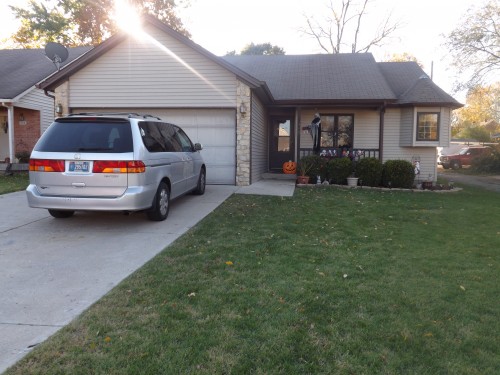
Holly’s first home, which became her first rental.
The bad
There are times when it is smooth sailing, but that is not always the case. Owning rental property can be a ton of work. It takes patience and the ability to deal with many different personality types. Each time one of our properties becomes vacant, we have to place ads to find a new tenant. Sometimes searching for a new tenant can bring a lot of shenanigans. For instance, we have had people lie on their application about their employment or credit rating. Others have been completely dishonest about having a job at all. After checking one person’s application, we found that they had multiple evictions on their record. Obviously, we didn’t rent to that person!
Even after you find a qualified tenant, sometimes problems will still occur. Some of our tenants have been habitually late paying their rent. We have a late-fee stipulation in our lease, but we have never charged anyone. We simply don’t need the added drama, although we are probably just perpetuating the problem. Still, as long as they pay within a few days I don’t get too worried about it. We just choose to pick our battles.
The good news is that the majority of people we have rented to have been absolutely pleasant. At the same time, just like with anything else in life, there are a few bad apples mixed in to give renters a bad name. Speaking of bad apples…
The ugly
Occasionally, being a landlord means living out your own landlord horror story. In 2010, one of our tenant families was nearing the end of their lease. We hadn’t been called recently and – therefore – hadn’t been at the house for many months. However, I happened to drive by one day and noticed that something about the house looked really strange. I drove by again and still couldn’t put my finger on it, but we would soon find out.
A few weeks later, the tenant called and wanted to arrange a meeting. We arrived at the house and walked toward the front door. As we approached, I realized why it looked so weird: The picture window on the front of the house had been replaced with a different window! I knew that this wasn’t a good sign. Apparently, they had broken it somehow. Instead of calling us, they found a salvaged window of the same size and installed it themselves. The old and wooden frame didn’t match the newer vinyl replacement windows, so it stuck out like a sore thumb. Unfortunately, that was the least of our problems.
Upon entering the house, we realized that the drywall in almost every room had giant holes punched in it. The carpet, which had been new when they moved in, was stained beyond recognition. All of the interior doors in the house were missing … gone. The refrigerator was missing. Someone had busted in the front door, and the entire door frame had been hastily and obviously glued back together. The house was an absolute disaster area, and the tenant had asked us for a meeting in order to resolve the issue.
After some discussion, the tenant agreed that he would pay for some of the repairs to the home in order to avoid getting sued. We spent the next month and almost $7,000 repairing all of the damage. After another friendly meeting, we reached an agreement with the tenant and he repaid approximately $3,200 toward the damage that his family had caused. He didn’t pay for all of the repairs, but we were still satisfied and ready to put it behind us.
Luckily, we reached an amicable agreement with our tenant and everything turned out fine. However, we lost more than just money. While most people were celebrating the holidays, we spent the entire month of December repairing that home. Did I mention that I was pregnant at the time? Still, I had to spend my days stressed out at work and my evenings crying and painting at the rental house. I had no choice. For close to a month, the situation consumed our whole lives. We were so glad when the home was finally fixed up and ready to be rented out again.
Conclusion
I think back to the days when we acquired our rental properties and wonder what we were thinking. Did we really think it would be easy? Were we that naive? Did we have a long-term plan at all?
Luckily, I don’t worry about it too much. I don’t regret buying our properties, and I think it was one of the best decisions we have ever made. While being a landlord can be stressful and expensive, I believe that the future rewards will be worth it. Our two rental properties will be paid off in approximately 14 years…right in time for our two small children to begin college. We could use the rental income to pay for our children’s education. We could use it to pay for their living expenses while they study. If they go to college nearby, we could even provide them with a free place to live while they pursue their schooling. Once our kids finish school, the nearly $2,000 per month in rent will be ours to save or invest. The possibilities are endless.
Owning rental property can be stressful and difficult. It can test your patience and even your faith in humanity. Yet, I think it is definitely worth my time and effort. While it certainly isn’t as passive as we imagined, I believe that our properties were a great investment and have no regrets at all. Is it worth it? I say yes.
3 tips for first-time landlords
1. Use your intuition. We have been advised by others to never rent to anyone with bad credit. We feel differently and tend to rent to people with bad credit as long as they are up front about it. I’m glad that we listened to ourselves because our best renters have all had terrible credit.
2. Keep your house nice. Saving money is a good thing, but don’t do it at the cost of your renters! If something breaks, have it repaired quickly and correctly. Between tenants, make sure that your home is clean and in repair. A nice clean home will attract renters who will work hard to keep it that way.
3. Have a large cash cushion. Owning rental properties means that you have more liabilities. You have more than one air-conditioner, furnace, refrigerator, and roof to worry about. You need to have enough cash to cover the cost of replacing all of these items. If you don’t have a large enough cash cushion, you should probably wait to buy rental property until you do.
Have you ever considered buying rental property? If you already own rental property, do you think that you made a good investment?
GRS is committed to helping our readers save and achieve your financial goals.Savings interest rates may be low, but that’s all the more reason to shop for the best rate.Find the highest savings interest rate from Ally Bank, Capital One 360, Everbank, and more.
This article is about Entrepreneurship, House and Home, Investing
Disclaimer: This content is not provided or commissioned by American Express. Opinions expressed here are author's alone, not those of American Express, and have not been reviewed, approved or otherwise endorsed by American Express. This site may be compensated through American Express Affiliate Program.
Discover is a paid advertiser of this site. Reasonable efforts are made to maintain accurate information. See the Discover online credit card application for full terms and conditions on offers and rewards.
SEARCH FOR RECENT ARTICLES


When we bought our new home three years ago, the plan had been to rent out our old, small house. It was in a popular rental area (I’d rented the house before buying it) and the mortgage was small so it seemed ideal. But in the end, we decided to sell it.
We’re both self-employed, with my partner’s business keeping him VERY busy, and so had a limited amount of energy to do the necessary cosmetic renovations on the old house (before it could really be rented), and the more major ones needed on our new house.
Also, with the economy as it was in 2009, we also felt we were taking enough risks by being self-employed — we wanted to channel our energy into the areas we were experts in, rather than being distracted by something we’d be new at (being a landlord). We could have thrown money at the problem – contractors, property management – but that would have reduced our income considerably, while not particularly lessening the risk.
We have a large number of friends who rent out property and while a couple have escape it, all of the others have some nightmare story – either the trashing-house family like Holly had or the squatters who refuse to leave, or even just the house staying empty for months on end when the mortgage was underwater/in negative equity.
So we sold – eventually in the slow market – and it was such a relief to know that we didn’t have a huge potential liability out there any more. We made a good chunk of money on the sale and used that to reduce the mortgage on our home instead.
We’re not against the idea of becoming landlords in the future but back then, it wasn’t right for us – the amount of income would not have been worth the stress and the risk.
loading....
Louisa, I agree with your analysis from 2009 when you judged you’d be better at focusing on your area of expertise rather than being distracted by a side business.
However, I don’t know why you’d consider being a landlord in the future, as your expertise in your profession is only likely to increase as years go by, making landlording an even less attractive switch. Or are you taking about a post-retirement activity? I’m curious.
loading....
Hi El Nerdo, thanks for replying.
It’s mostly a more time/energy issue. We’ve done most of the big renovation our new house and our businesses have already moved beyond the frantic first few years – they’ve reached a point where a little distraction won’t make them fall over, or even wobble them too much. (My tiny business is mostly passive-ish income; my boyfriend’s has fantastic, self-motivated staff.)
I think there will also be a difference for us choosing to do something at the right time for us rather than doing it because circumstances demanded it – three years ago was the right time for us to move house, but not the right time for us to become landlords. The last house was bought to be a home, not a business venture, and while it would have made a good rental, it’s probably not what we would have bought if we’re thinking of it purely as an investment.
loading....
I think you got out of the rental business a little too quickly. The way to wealth in real estate is in holding rental property for the long term.
I think most investors would tell you that the they had to weather a few storms in the beginning, but you get better at being an investor with each passing year, and eventually, like Helen mentioned, your rental houses are paying for your kids’ college education.
loading....
One of the folks I met at work and I’ve always admired did rentals among many other things. His points were similar to this article, always screen and check out your tenants prior to renting, keep a fair lease and stick to it, always check on the property at least monthly, and know the laws in your state, county, city because often the courts will side with the renter if you have let them slide on a lease provision and you do occasionally end up with a bad egg and have to evict. He stated that having been in the habit of doing things by the book kept him to a single visit to court, typically in his favor, on those rare occasions where it got ugly.
loading....
That is awesome that you have two rental properties. We have considered it but want to pay off my girlfriend’s student loans first to make sure we have the cash flow to handle some of the bigger expenses should they pop up. I think I’m going to be a little more strict than you have been because I feel if I put my foot down we’ll run into less problems but time will tell. Sounds like you guys have done a great job and I’m sure I’ll be asking you questions once I get to the rental real estate point in our lives.
loading....
I agree! My wife and I have considered buying rental properties too, and since I’m a blue collar fix-it man, we figured that upkeep woudl be cheaper. We’ve yet to pull the trigger on that though — I think for some reasons that this article mentions. Dealing with peopel sounds tough. Especially when they don’t respect your place.
loading....
Great story, Holly!
Many people think of rental property as a good source of passive income, but usually there’s not much that’s passive about it. It could be a lot of work!
I know people who move to the big city and decide to rent their small-town homes. Personally, I think that’s too risky as you have no way of keeping an eye on that property, not to mention the travel costs.
Another thing to consider is that letting a bad tenant into your rental home could cause you trouble with the neihgbours, too, because after all you’re the owner so you’re responsible.
I don’t know if it’s a good idea to rent a place that you’re still paying off. If the place remains vacant for too long, you’re gonna have a hard time covering the mortgage payments.
So renting a property could be a source of income, but it could also be a lot of work
loading....
Hello!
No, I wouldn’t have a problem covering the mortgages if the rentals sat empty. They both very very inexpensive payments and we have the financial cushion to pay for them pretty much indefinitely BUT you do make a good point. That is exactly why we only have two rentals instead of 5 or 10. I am financially conservative and I don’t like to spread myself too thin in money or time. We can handle the two rentals if they were to stay vacant for any amount of time and that is what lets me sleep at night.
We plan on getting more rentals in a few years when our kids are older and our house we live in is paid off.
loading....
Thanks for the info, Holly
loading....
As a future landlord this is a great article.
I’m sure a lot of new landlords don’t figure in the cost of maintenance, taxes, property taxes, insurance ect.. when they first think about becoming landlords.
They also don’t think of the pitfalls of dealing with some really bad tenants.
It’s a lot of work to be a landlord, but i’m glad that it’s working out for you.
loading....
Thanks for sharing your experiences landlording. It was interesting reading the lessons you learned along the way.
However, the conclusion, “I believe that our properties were a great investment” was unsupported. Have you done any analysis on whether these two properties actually were a good investment? With the down payment, repairs, maintenance, mortgage, taxes, insurance, and time you have put into the properties, are you sure you wouldn’t have made more money by taking a part-time job and investing in say, index funds?
loading....
It’s worth noting that you can go the property management route. We rented out our starter home in a college town (family neighborhood, so it hasn’t been undergrads). The 5% of *collected* rent + higher maintenance fees to the property management company to get repairs done is money that we’re spending but they keep it rented and handle all of the tenant contact. We’ve never met them and I just drive by occasionally to see that things look “ok” on the outside, at least. As full time workers and a full time grad student, it was a way to take the opportunity in front of us AND not go crazy in the process. Trying to get it ready to rent the summer after we moved into the new house was horrible and stressful. I have zero regrets about going with a property management company that I knew and trusted (we’d rented from them in the past, as well as friends).
loading....
Its great you have such a good manager at 5% rate.
My experience hasn’t been anywhere near that good. Finding a good property management firm is easier said than done. I’ve got horror stories on that end too (had one steal from us). Also 5% fee is on the low end from what I’ve seen. Normally rates seem to be closer to 10%.
loading....
I have one rental property. My advice is to always screen your applicants. My first tenant was a friend of mine and she completely ripped me off. I evicted her in the end and was able to recoup some funds but also needed to replace some carpet due to bleach stains she left. I also allowed her to handle yard work for cheaper rent….got screwed there too. She didn’t keep up the beds or grass. My new tenant is wonderful- pays more, pays early, and sends text when something is wrong. I also have a reasonable yard guy too. I will never trust a tenant to do yard maintenance again. I check on my property every 3 months (I change the air filter, etc). This is my way of making sure that there are no holes, pet stains, etc.
Trust your instincts with applicants and check on your rentals. If you want it done right, do it yourself.
loading....
Wow, renting to a friend? No no no.
When I was going away to college I wanted to have a friend as a roommate. But other people talked me out of it, saying it’s one thing to be friends with someone and another thing to be roommates. You never know what their habits are, esp. if you only see them at school and dance class and for a cup of coffee. So I had random people as roommates and it turned out okay.
Later in college I had a rental contract in my name while living with two other students I was friends with. (Didn’t want to but had no choice.) HORRIBLE STORY. They were sloppy in the kitchen, didn’t clean their hair out the drain in the bathroom, yuck yuck yuck! They left the lights on when they went out. They were always late for rent and utilities so I had to cover for them out of pocket.
Needless to say we’re not friends anymore, but my point
was that having a friend as a roommate is risky enough, let alone having a friend as a tenant.
loading....
I rented to this friend and used a property manager. My friend and the management company were both nightmares. Friend wouldn’t pay on time (sometimes going past the middle of the month) and manager wouldn’t call her, send notices, etc. Nothing. I ended up being the middle man and yet I was paying 7% rent collection fees. So I fired the management co. and told my friend that I was now in charge and would strictly enforce the lease. She tested me and I evicted her. Luckily, my property is located in a state that has a pretty easy eviction route. Got her out, threatened to sue, and got all of money that I was owed.
Lesson learned: One day past due on rent equals demand notice sent certifed mail. This ensures that the eviction timeline has started. It takes about a month to evict someone here. She was my first tenant. I am thankful that I went through the experience. I learned a lot and am a better landlord.
loading....
We own a rental property (a duplex) and it’s been great for us so far.
But we never go more than a couple of weeks without stopping by. Mr. PoP mows the lawn over there both to save money and to make sure that the tenants know we are available if something isn’t working.
We also like having students as tenants. College students get a bad name as tenants, but we’ve found if we pick the right ones (former RAs seeking a place to live where they’re allowed to light the occasional candle) they treat the place with respect. They also usually have parents with deeper pockets and longer credit histories that are willing to cosign with them. (We like at least 1 parent to cosign if there are a few kids living there.)
loading....
One suggestion that I rarely see when the whole landlord issue is discussed is to get a home warranty on the property. We have two rental properties, and each of them is covered by a home warranty. Sure, that’s an additional expense of $400-$500 per year, but when we get a call from a tenant that there is a problem with the heat or A/C (always in the middle of a cold snap or heat spell, of course) we place a call to the warranty company. They are able to get someone onsite quicker than we would be, because of the contracts they have with service providers. We pay the deductible – $50 on one house, $75 on the other – and the warranty company takes care of the rest. “The rest” could include the replacement of a water heater, (saved us $825 after the deductible) an irrigation system repair ($420), etc. And I just know it’ll be a new HVAC unit on one of the homes within the next few years. It’s a big chunk of peace of mind for us for a reasonable annual fee, especially since one of our rentals is in another state.
loading....
I had nothing but problems with the home warranty companies that we had. Neither one responded quickly. One wouldn’t cover any of the problems we had (sewer line, electrical, garbage disposal, hot water tank, roof, a/c, pest, broken window). That one was paid for by the seller when we bought the house though, so we didn’t have a choice in it. The contractors they used were shady and tried to charge me more fees than stipulated in the contract.
loading....
Owning rental property is a bit of a dream of mine. I still have some convincing to do with hubby but as soon as we get rid of a good chunk of debt I’d love to. I may even think about renting our current home when we move…
loading....
We bought our first rental property in 2003 but only after we were mortgage free in our own residence for about 3 years. The house cost $160K with a downpayment of $50K we started with a mortgage of $110K. Here we are 9 years later and no real problems with the house. Our first tenants were elderly and the man died within 6 months of being in the house. Our second tenants stayed 3 years and our last for the last 5 years. This house has been great. We owe 69k on it now. I’m thinking of paying it off since we recently came into an inheritance but I’m not sure it it’s worth it. The second house I purchased in 2006 for $165K. It has been more of a challenge with more tenant turnover and one that destroyed the house. The house is now worth about $225K and I also owe about 69K on it. The third house we bought was across the street from this one and we got it super cheap but it was an absolute teardown. We invested about 40K in fixing it up but I don’t know what the future is for that one right now. We actually have enough money to pay the first rental houses off in full and since I gold laid off this past summer from my job the income would definately come in handy but we will see. I’m not going to sell any of them now or in the distant future. Best of luck everybody.
loading....
I have owned two rental properties in the past. In the past, Thank God. But it was a good investment. They both paid off when I sold them in a rising housing market at the time. A piece of advice…If you ever have a rental property, be sure to talk to your insurance agent about getting an umbrella policy. Accidents or other actions can happen on your property that could wipe you out financially without covering yourself adequately with insurance.
loading....
My cousin is in the process of selling a couple of duplexes in a not so great part of town. A few weeks ago, one of the tenants became the main suspect in a drive by shooting. The police thought he was in tho rental. They filled the place with tear gas. $20,000 in damages later (almost all covered by insurance, thankfully), the buyer is not backing out, the suspect is in jail, and the place is nearly ready to rent again. Did you know that one of the first things the police said is NOT to sit on the toilet seats? The chemicals are toxic and you absorb through your skin. The carpets all had to be replaced, too… No landlording for me, thanks!
loading....
Moral of the story : Don’t own rentals in the ghetto.
loading....
Sound like you need a property management company. If my friend came to me in tears telling me how they had spent a trimester stressing/obsessing/lamenting about what amounts to a long term investment, I’d give them some chocolate, a hug, a helping hand if I could and definitely some references for help they could hire to get the work done without loosing whatever was left of their sanity. If they threw up their hands and said they couldn’t afford the help, then I’d try to kindly suggest that they might be in over their heads and it’s OK to sell and do other things to make money.
I have a rental property in a different state that I used to live in till I moved for work. When I moved I knew I wasn’t really wanting to sell my older house in a down market and I wasn’t capable of being a landlord on my own. So I pay a small company to take care of it for me. Though they are expensive, I am willing to pay that cost (or really, take a smaller percentage of the rent home each month, after their fees have been subtracted) because they handle *everything*. I’ve only been at this for 2 years, but so far, my experience has been quite positive- I’ve even rented to friends, but again, those friends had to adhere to the rules/contracts they signed through the prop management company to be able to live in the house – and I’m considering getting another property back in my home town to grow my ‘passive income’ stream. I wouldn’t dream of doing this without my Property Management company handling the day-to-day details. Sans the easier things (cleaning, yard work, painting) I KNOW I’m not true landlord material at this point in my life.
Again – you sound like a prime candidate for someone who ought to hire a prop management company, and I hope you consider it. It’s worth it for the peace of mind!
loading....
Property management companies don’t always shield you from problems. We own property in a different state and the first property management company we used cost us $8,000 in repairs because they didn’t screen the tenant properly and didn’t check on the property frequently. The losses came out of our pocket not his. The owner of the management company was personable, allowed us to make changes on the lease to suit us and we thought we could trust him. However, he didn’t enforce the lease and even though our management agreement stated he was not released from liability for willful misconduct or negligence, the lawyers we contacted said it is very difficult to prove in court. We still have several rental properties and we just have to move forward in life.
loading....
I don’t think we would go the property management route. Both of the houses are within 5 minutes of where I live and since there are only two houses months and months go by where I never hear from a tenant at all. If I did hire a property manager, I would just be paying them to collect the check. I can do that myself!
If I had a rental out of state, I would think that would be a great way to go.
And honestly, I don’t think I’ll be so traumatized next time someone destroys my house. I think this first time was especially traumatic because the house had been so pristine when they moved in and I was totally unprepared to see it in that state. I was also pregnant and crabby. That certainly didn’t help!!!
loading....
My wife and i have had a duplex for over six years now. Overall its been a good experience. Yes, there are items that need tending to on a semi regular basis.
One great thing about it is that we lived in one unit for several of the years. The best thing about that was that the tenents rent almost covered our whole mortgage so we were able to really pay down all of our existing debt.
loading....
It must depend on what part of the country you live in as to whether rentals will work out for you. The biggest problem here (small town Indiana) is that the rental I have is a modular built in 1989 the city charges me on the average $2,000 a year in taxes for it. I’ll be leaving the home I planned to retire in and moving to the rental after I fix it up some. Many people here have lost their jobs and have moved in with family so it is hard to get $500. a month for a 3 bedroom 2 bath nice modular. When I consider the cost of upkeep I just won’t buy homes to rent out in this town. So be sure there is a good market in your area before you begin your adventure.
loading....
Your story about the tenants from Hell is exactly why I don’t want to be a landlord. We’d like to move to a more family friendly neighborhood, but houses in our area are selling slowly if at all, and for a lot lower (30 to 40 percent) of what we paid, not to mention the improvements we made. However, I know I’m not cut out to deal with the stress of landlording.
loading....
Regarding the home warranty- read the fine print, they typically don’t replace appliances or other items at the end of their typical life. For example, the home warranty that came with our house repaired our dishwasher that was 5 years old, but did not cover the 15 year old heat pump when the motor gave out.
Have had excellent results in 4+years renting and have plans to turn our current home into a rental when we move in a few years. Certainly not for everyone, and I would say our luck has been in finding homes in great shape well below market value (almost 30% in each case).
loading....
The company we use must be outstanding, then. In addition to the two we carry on our rental properties, we have one on our personal home as well. We’ve had two water heaters a dryer, and a convection microwave replaced that were at the end of their life,replaced that were at the end of their life. I agree with reading the fine print, the person who listed the things they didn’t cover was right – those things aren’t covered by a typical warranty. But we have never had an issue where they didn’t replace something that was dead because it was old. They even let us pay the $40 difference on the convection microwave so we could upgrade to stainless, since the one being replaced was just black. There are different levels of coverage offered though, for different prices, and you need to make sure you are getting what you think you are getting.
loading....
Thank you for posting this! After paying off a boatload of debt ($65K) and finally looking at a savings cusion of $250K my husband and I have been thinking of purchasing a rental property and your insights are very helpful! I would love to hear more about the cashflow and if you’ve worked with a property manager at any point.
loading....
I highly recommend that anyone who is interested in real estate investing check out biggerpockets.com. Lots of great advice there.
loading....
Another big thing not mentioned when considering a rental property is the debt. If an individual takes on any debt in order to purchase a rental property, that person needs to make sure they can service the debt without a renter and not strain their finances. Holly mentions a cash cushion, I would consider a cash cushion for debt repayment as well.
loading....
I mentioned it at comment #4
loading....
Another article that doesn’t play out too well in Southern California. $8,500 down on a home? Thankfully 50 year old, 1000 square foot starter homes have dropped from $650,000 at the beginning of the recession to $350,000 today, but it is still quite difficult for many to come up with the down payment for their primary residence. Owning rental properties isn’t an option for most “middle class” families in Southern California, regardless of the fact that their wages appear to make them wealthy compared to the rest of the country.
loading....
Ah well, we all know California is its own country anyway. Most of the norm does not apply.
loading....
I have had 3 rental properties and have had everything happen to me. I bought my first property at 25 years old and I still own it, it is almost paid off. It was my retirement next egg.
1. It helps to have a property manager if you have and want to keep your full time day job. I have used mom and pops and professional agencies. I find that the professional agencies tend to keep your place occupied, stop by the property more often and generally screen candidates better, the additional cost is worth it.
2. Be careful of the screening agencies, I paid for it a few times only to find out (afterwards) that the person that I screened had just been released from jail, but his report came out clean. The ‘screening’ service only checked state criminal records, not county or federal. WTH! It was putting my other tenants and neighbors at risk. I ended up getting that one for free, but I never used them again.
3. Definitely have the cash cushion available. You NEVER know what kind of damage can be done to your house until every surface is covered with dog poop, and every wall has a hole in it and all of the appliances are dirty. You will never look at the property the same way again. Be willing to pay a professional cleaning crew.
Good Luck!
loading....
As a long-time renter, I have to say that I appreciate your keeping your house nice for your renters and making repairs promptly. My roommate and I are pretty low key, very responsible tenants, but we still end up calling our landlords every couple of months to ask for repairs (major trees down in thunderstorms, water heater broken, fire alarms on the fritz, broken toilets) – it’s an 80+ year old house, and things do tend to break every so often, but thankfully our landlord is pretty good about fixing stuff. My friends have rented in places where landlords balked at making these sort of necessary repairs…and of course they moved out as soon as their lease was up, and the landlord lost some very good tenants.
I’m very curious as to what happened in your rental house? I can’t imagine the worst accident making even 1/10th of that amount of damage – the tenant obviously cared about not being sued, so he had some interest in respectability, but still….yikes!
loading....
I am also a long time renter, and I was beginning to think I was the ONLY one around. Our house is over 100 yrs old, and our landlord is fantastic. We have a mutually respectful and gracious relationship. When the back roof (an old additon that is the enclosed back porch and an enlarging of the orig. bathroom) failed, and I had water pouring in the house, she took care of it immediately, and thanked us for being so patient with her. Same thing when the fridge needed fixing – she even gave us a credit on the rent towards buying replacement food. The only drawback is that although we absolutely LOVE her, there aren’t a lot of boundaries. For instance, Christmas eve she came into our home after we were sleeping and left a present for our son. Sweet, but disconserting. But we are good tenants (with bad credit, due to our business failing, and then losing our home) and she appreciates us loving her house.
loading....
I’ve mentioned this in previous articles on this topic, but I’ll mention it again because it bears a repeat mention. I’ve spoken to a few Realtors about renting out property, and they’ve all said that many people do not have the stomach to be landlords. If you know deep down that you can do it, then go for it. But if you have any doubts at all, then being a landlord might not be the thing for you.
loading....
I have several rental properties and what has gone unsaid here is dealing with your local Building Safety Department. There are plenty of costs and regulatory hurdles to renting out houses, in particular. I have had to replace almost new windows in bedrooms of each of two houses because they were slightly too small for egress standards (which are only really enforced on rentals). There are tons of other codes that are not enforced on homes that are owner occupied but are with rentals so be prepared for that cost and headache as well.
loading....
Good point Michael. The last rental I owned, I had to install smoke alarms in EVERY room in the house because of a city ordiance. So you have to stay informed about local laws.
loading....
Before I purchased my most recent rental I made it a point of asking my Building Safety Dept if all the windows were going to be code since the previous owner replaced them all in 2008. The dept manager told me that since they were permitted and approved in 2008 I could assume they would not be a problem. Fast forward to 2012 when I have the building inspector come to inspect for a rental certificate. He says one bedroom window is 1 5/8 inches too small for code and the bathroom window does not meet code because it is not safety glass. I respond that all these windows previous were inspected by the Chief Building Inspector himself in 2008 and approved. I have tried contacting the dept multiple times with no response yet. Those are the kinds of things that you have to be able to deal with as a landlord on top of dealing with potential tenant difficulties.
loading....
My takeaway from the article and the comments is that, just like every other business or investment, being a landlord is not without risks.
Moreover– just because the IRS calls rentals “passive income” it doesn’t mean there’s no work or expense attached to being a successful landlord.
I’m glad the myth of “magical returns without risk or effort from rentals” is being dispelled.
loading....
Another thing to consider is how much control you want/need over your rental. One of our rentals is a condo in a larger development. The current tenant is having problems with her internet connection which is provided by the condo association. None of the other units is having problems so the condo association says it’s our problem. I have to take this afternoon off to replace the Ethernet jack hoping that is the problem as I have tried just about everything else so far. In addition, the tenant’s mother is visiting her and calls about 5 times a day asking when the internet is going to be fixed. Be prepared for the tenant for whom nothing is ever good enough as well.
loading....
We’ve been fortunate to live between two large military bases with good servicemember tenants. Turnover can be higher, though, because they transfer every 2-3 years.
We’ve also advertised as “pet friendly”. Tenants are very grateful to know that you’re only going to adjust their security deposit for any pet damage. They already have it hard enough finding a place that takes their pet, so they’re good renters.
Our challenge is “exit strategy”. We’ve been landlords for over 15 years and have no compelling reason to sell. (Maybe some day our daughter will move into one of our homes or buy us out. Otherwise it’s “probate”.) Over the time that we’ve owned the property, it’s only appreciated at about the rate of inflation. It’s mainly been a good way to diversify a portfolio and have a fairly reliable stream of income.
If I was still on active duty, though, I’d do my best to be a renter and avoid ever becoming a homeowner or a landlord.
loading....
I’m not brave enough to be a landlord. I’ll have to find another way to get rich slowly.
loading....
My first little 2 bedroom rental house 20 years ago was a great education. It was quite a ways from my house, so keeping an eye on it was not easy. My first tenants were never happy but stayed quite a while. My second set of tenants ripped me off terribly – They were renting out the second bedroom to another couple and as a result the septic tank had problems and they left me with an unpaid water bill (among other things). After I sold it, I bought a local condo and had nothing but good tenants, until the last one. He was a young kid and I think his parents were paying the rent (but he wasn’t good about getting the rent to me) so I ended up having to deal with Mom and Dad (who were rich snobs). Once the Town reassessed the unit and doubled my taxes I sold it.
I thought I was out of the landlord business, but with mortgage rates and prices as low as they are now I have to jump back in. I plan on buying three condos, one in each of three adjoining counties near me. The first one is in attorney review now. It was gutted and completely renovated by the Seller and ready to rent.
One thing I’ve learned through all of this is that I have to like the unit enough to live there someday. And that’s what I keep telling myself – Let a tenant pay for the place and use it as “home” in the future.
Oh, and yes. I do have a big chunk of change saved up from the past deals to handle the inevitable repairs and maintenance. it will happen.
Thanks, Holly!
loading....
I bought a duplex over 15 years ago and lived in half while renting out the other half. When I had a roommate living with me, my housing costs were almost zero with the rental income covering mortgage, insurance and taxes. I moved out a dozen years ago and still own it.
The worst stories I have are from renting to undergrads. Some football players shot BB guns at each other so the walls were all pockmarked, and one kid used paper-towels instead of toilet paper so I got to replace the toilet and re-plumb some lines (which were old anyway).
My best tenants have been graduate students. Some have taken it upon themselves to remove the 1960′s popcorn ceiling, repaint, and plant bushes and flowers. I reimburse them for their expenses. Tenants on one side have been there for 5 years now (thank goodness for graduate students!), and the other side will be there at least three years while one of them completes in PhD.
I have experienced 4 to 6 months at a time where one unit is not rented out, and I spent almost $15,000 one year updating one side. Those were not fun. I typically clear $3-$5K a year, but that is offset by depreciation, so my tax impact is nil. Plus, I am carrying a $25K passive loss on my tax return right now from the repairs and lean years, so that will be useful at some point when it is making more money and I can offset gains.
I re-financed years ago to pay off my student loans, so it helped me there as well. I also carry a line of credit on it that I can use for big repairs, etc.
But it is a lot of work at times, and it can require a bit of money out of pocket. There are times I wish I had ten more properties, but I have not pulled the trigger on anything else.
Like other comments said, I could pay this off and use the income to pay for college for my kids, or refinance at some point, or just sell and use the equity. I remind myself of that when it’s not going well!
Starting out as an owner-occupied landlord was great for me – I learned the property, I was available for the tenants, and I knew what was going on with the neighbors. If you buy a fixer-upper, you can fix up the side you live in, then move into the other side and fix that up, then increase the rents on both sides and improve your rental income quickly, and hopefully improve your renter base as well.
loading....
A few things I’ve learned:
1. Get landlord insurance. As a landlord, your exposure to risk (of all sorts) increases tremendously.
2. Do your homework and screen tenants. Don’t cut corners. Invest the time up front. There are lots of resources out there for tenant screening that make this easy.
3. Run it like a business.
- It does take some work, but I just treat it as a part-time job.
- I treat my tenants like customers, and it makes a big difference in our relationship. I treat them very well, and in return, they pay rent on time and communicate openly with me.
- Maintain it. There will always be problems, but deal with them promptly and professionally and move on (aka good customer service).
- Track your income and expenses along the way. At tax time, there is very little extra work to do if you keep good records.
4. As an individual, the rental income is “passive”, so you are taxed on the additional income, meaning, you need to understand exactly how the income vs. expenses + additional taxes does to your bottom line. HINT: It’s not as good as it first sounds.
loading....
I am not a tax or legal expert, so check first, but in most/all states if you have multiple rentals it is probably worth looking into creating an LLC or incorporating your rental activities. That can give you a lot more flexibility on the tax side (losses are now business ones, not “passive”, so can be taken right away). Talk to your accountant or lawyer first though!
Full disclosure: my spouse & I have rental properties and also have done some owner-financed sales of what would otherwise be rental properties. We have a total of 3 LLC’s (most all activity is a single LLC – if we were organized, we would fully close the other 2).
We have even worse horror stories (let me tell you about the time a guy broke into a renovated house & rented out the units), but in the end it has worked out very well for us. We now work for ourselves and have very flexible schedules.
loading....
This article is startlingly incomplete; it barely touches on the legal issues that can arise. You either have to know landlord-and-tenant law for your jurisdiction backward and forward, or be prepared to use the services of a good attorney.
loading....
Nobody was pretending that this article was a complete assessment of everything related to being a landlord. It’s like you are reading the New York Review of books and complaining that the full book is not there.
loading....
Don’t try to hijack the subject! This was not an article focused on the legal side. There’s a legal side to everything and if we were all scared about the “legal side” no one would make big, risky, moves with potential big, future, payouts!
Get thee back to your cubicle! ASAP
loading....
I disagree. It is important to know the legal side, espcially how difficult it can be to get a tenant out of your property that isn’t paying the rent. You can eat up your profit pretty quickly once you have to get an attorney involved.
loading....
Other than a list of questions to ask, there is no way an article like that could fit here!
Every state has different tenant/landlord laws and many municipalities add on from there. I’ve lived in states where it was nearly impossible to evict a tenant — and in states where tenants could be evicted very quickly with any documentation that the terms of the lease had been breached.
It is true, of course, that you should know the laws and have a good picture of the costs, including good insurance, and the cost of getting rid of a bad tenant.
loading....
I started my rental property business much like Holly. I now own 3 rentals and want more after I retire in a few years. Every business requires cash reserves, risks, and work, but you don’t have to be there 24/7 with a rental as with other businesses. I’ve gone months without a repair call.
What I’ve learned:
Tools and home repairs is my hobby which saves me thousands on repairs. Anything worthwhile requires work so working weekends, vacation days, or holidays is partly expected when I envision the end-goal. Paying a background check/tenant scoring company is worth the $50 to avoid problem tenants. Treat your tenants with care, respect, and fast service so that they will treat you the same. Live a simple life and reinvest your cashflow into accelerated payments when possible. Have friends with your same rental property goals for support and mentoring. You will be in control of your money and not under Wall Street’s control. The business model is as easy as the game of Monopoly and your money will grow with the same snowball effect.
GREAT article and keep going Holly. My mom was a maid and made lots of money in real estate by doing the same thing you are doing.
loading....
Nice post Holly! We’ve thought about it at times, especially with the low rates today but have yet to pull the trigger. I think the biggest downfall is dealing with people, you’re story just sounds horrible.
loading....
Thanks for the stories. Property in my area is very cheap compared to rents (though that’s changing fast). If I had more money for a down payment, I would absolutely buy a condo and rent it out.
I read Investing in Real Estate by Gary Eldred and liked it. But, I don’t know much about it. I hope the commenters leave some good pointers as to where one can learn more about buying rental properties.
loading....
My current home (a two-bedroom townhome) is really a perfect investment property; it’s very close to a major university, and it’s nice enough. I’ve considered renting it out so we can move my family into a larger home, because until the real estate market vastly improves, there’s no way I can sell it without taking a $20,000+ loss, and while my family will be comfortable in the home for the next two or three years, there will be a point where 1,000 square feet is not enough. It would be nice to have that passive income stream, but I understand all the reasons why one might opt not to do it.
loading....
Wow, $7,000 worth of damage and they only paid $3,400. Thats pretty crazy. I understand why you still rent to people with less than stellar credit, as they can still be good tenants. I think my major problem being a landlord would be dealing with people who don’t take responsibility for how they treat property. Sounds like that “family” acted more like college students punching holes in the wall.
loading....
We had to move for my husband’s job a couple of years ago when the economy went bad. The market was so flooded with foreclosures, our house had lost over $75K in value from when we had bought it 4 years earlier. We did not have the option to sell, since we were so far underwater with the mortgage, so we rented it.
Being a landlord is definitely more stressful and time-consuming than we anticipated. The first tenant completely destroyed the backyard, which was behind a privacy fence and couldn’t be seen from driving by. It was the middle of winter and we couldn’t get anything out of her for the repairs other than her forfeited deposit, so we could not replace the grass and had to downgrade to landscape gravel. We had several trips (including days off work) for repairs and court.
We now conduct a walk through every 3-6 months, which is specified in the lease. It always seems that our tenants end up moving out before the holidays or in the middle of winter, which means that the house is usually open for 2 months before we can rent it. There just aren’t many people moving during the holidays and snow season.
When in the process of renting to new tenants, it is very time consuming. It is like adding in a part-time job for me. The clean-up and maintenance after the last tenant, advertising, handling the HUNDREDS of calls and e-mails, showing, screening applicants, checking credit and references, etc.
We cover the P&I with the rent, but not the taxes and insurance, so we really can’t afford a property manager. And yes, we’ve had many people lie on their applications. We even had one woman, who had just been released from jail, that had a great story (lie) about why she didn’t have a current rental history. If I wouldn’t have done a background check, I wouldn’t have realized she was using an alias and lying about her rental history.
We have had decent luck with the current tenants, but they are now divorcing and breaking the lease. You just have to realize that even the best tenants are not going to care for your rental as good as you care for your own home.
The market has turned around and headed back up in the past six months, so we’re hoping to either be able to sell it or move back in within the next couple of years.
loading....
Hey Amanda -
Spouse and I are in a similar situation – would you be willing to share a bit more about that? Let me know – I am at gpeyton@gmail.com.
We’d appreciate a bit of insight. Thanks!
loading....
Nothing sexy about the landlord business but it’s a great long term investment if you do it right. One thing I haven’t seen mentioned, when it comes to tax time and you get to depreciate the structure it makes a BIG difference, definately a seldom talked about advantage of owning rentals but one of my favorites. Rentals like most all other investments are risky but it’s one I feel more control over than any other. I own several now and will add more as time goes along
loading....
Yes, that is important if you get audited. I was unknowingly depreciating the entire value and one of my 3 properties had very valuable structure, one had a worthless structure and one was about even. My auditor was an ‘angel’ regarding this detail and now I have accurate records related to properly depreciating my assets.
Thanks for bringing that up.
loading....
I’ve been doing almost the opposite of #28–I bought a house (unfortunately during the boom) in graduate school, intending to sell it after I finished–well, selling wouldn’t work right now, so I’m renting it out, which is so far going OK. But, that’s partially because I just hired people as managers (friends of mine, which is also working out OK).
Now I’m thinking about doing the same thing again: mortgages are so much less than rents that I’m putting in an offer on a house that I can be happy with and is in an appreciating area, BUT is also in a easily rentable area so that I can rent it if I need to move for work in a few years.
I’m not sure that I’m at the point where I’d buy a house JUST to rent it, but if it goes that way for a while, I’m OK with that, too.
loading....
Another aspect of buying rental properties is that the only other real option one has to save for retirement is buying stocks in some way, shape, or form. I am doing that as part of my retirement planning but purchasing some real estate seems to me to be a reasonable way to diversify, particularly since real estate, in my opinion, went too low in some parts of the country in the past couple of years. If, in the future, inflation does pick up, then real estate should be a reasonably decent hedge against that, particularly versus the stock market.
loading....
Holly, I pretty much agree with all your points. And I agree with you that “some of our tenants have been habitually late paying their rent…late-fee stipulation in our lease, but we have never charged anyone.” I have been renting out our own properties for over 10 years and I’ve found a very good solution for this dilemma. We give a $50 discount for payments on the 1st of the month (or before). This is strictly enforced. I don’t care if its Sunday or Christmas Day. You would not believe what an incentive it is for people to pay on time! I have not had any late payments since we started doing this a couple of years ago!
loading....
Cool idea, wish I’d thought of that when I was land lording.
loading....
Great post about the pros and cons of owning investment property. I too have had some winners and losers. I’ve ditched the losers, kept the winners, and learned a lot along the way. You can read about our experiences in income property in our blog.
loading....
Landlording is worth it because it ethically makes me 15% pre-tax for each purchase. But with any business, there is a lot to learn and I used to only make 3% a year.
I’d suggest becoming a landlord if you intend to invest a significant amount. It’s great to start out small, but if you have no intention to expand then it may not be worth the time and hardship. I’m planning to enter my 3rd state soon, the research and networking demands are extensive so I’m glad I like the work!
Also, it took me two near-evictions to really get my arms around the process. Take the time to select/manage your tenants, they are really important partners!
loading....
Good point. There really is economy of scale in rental properties. Once you learn how to deal with tenants, taxes, real estate law, etc., you might as well have as many properties as you can afford both in time and money.
loading....
When we moved six years ago we decided to turn our old place into a rental property. It’s been good, but also stressful as many other landlords have mentioned. My hard-earned advice to would-be landlords:
We’ve always rented only to families with small kids. Yes, they may crayon up the walls, but there’s at least a pretty good chance there won’t be parties and drugs and holes in the drywall. So far, so good. The only time this can go wrong is if the couple splits and the one left behind can’t manage on their own.
Get your rent cheques up front and post-dated for the year! If you’re worried about the cheque bouncing, go to the issuing bank and make sure funds are there before cashing it. If they don’t want to agree to this, you don’t want to rent to them.
Unless you’re extremely lucky, your renter is not going to take care of the yard. No matter how nice they are/seem, they just aren’t. Hire someone to do it and build that price into the rent (or do it yourself) so at least it gets done. EVERY renter we’ve ever had has left with weeds three feet high in the back yard.
Harden your heart to potential renters’ sob stories re: unemployment/bad credit, lest you end up with your own sob story to tell about the time your bad renter made your life a living hell.
loading....
I would NEVER give anyone postdated checks. The bank doesn’t have to honor the date on the check, and the person holding the checks (or their deadbeat boyfriend/girlfriend/best friend etc.) can take the checks and cash them early.
I don’t keep a year’s worth of rent in reserves in the bank account I use regularly, and someone trying to cash those checks early would be a disaster for me. And I’m without any credit card debt, without a car payment etc.
I would run the other way if a landlord insisted on me giving them postdated checks, and I would be checking the local laws if it was legal for them to insist on it as well.
loading....
That’s a first for me. I would never give anyone a dozen post-dated checks, either. I have never heard of anyone asking, either, probably because I don’t know of anyone who would agree. I guess if it works for this person more power to her.
loading....
Someone already mentioned it, but I want to emphasize the need to have an adequate umbrella policy to cover liability issues related to the rentals. Or, alternatively (possibly additionally), require that your tenants carry renters insurance, which will have some liability coverage.
loading....
We have about the same renting horror story as you, except our tenants disappeared in the night and never paid for any of the repairs, but we like being landlords and have kept going after our problems. People just need to understand being a landlord is not all roses. It’s work. If that’s understood then buy a rental, you just might find it fun.
loading....
Every time I’ve looked into becoming a landlord, the numbers just don’t work. For people who bought their rental units over 10 yrs ago then the price increase has probably made it attractive. I’m thinking that anyone who bought a rental property in the last 5 years is probably having a tough time.
Most of the analysis I’ve run have you basically breaking even and you count on appreciation to get your return. If you bought in the last 5 years it is unlikely that you have seen and increase in property value. My guess is that you won’t see any for the next 5 either.
loading....
I don’t quite understand what numbers you have been running but it would be useful for the rest of us if you could share. I live in a pretty average town and put 25% down on each of the properties I have purchased. I have 15 year mortgages and so in 15 years I will have quadrupled my investment. That’s obviously simplifying by leaving out repairs, upkeep, etc. but the leverage you can get with real estate is hard to find anywhere else. Plus, at least for now you get to deduct the mortgage interest plus depreciation and other expenses. Unless your market is obscenely expensive or you are unable to charge anywhere close to a decent rent I don’t see how the numbers can be that bad. Again, it would be of interest to the rest of us what you are considering.
loading....
@Michael,
My situation may be different, but I live in Ontario and here any rental property built after 1990 is subject to rent control by the province. So we can’t simply increase rent annual to match inflation. I’m not sure if similar situation occur in areas in the US, too. So am I crazy to do this? Maybe.. But in Canada you can’t deduct mortgage interest on your primary residence (designed to keep marginal homeowners out of the market) but you CAN on investment property. And in a country with high taxes, it’s worth it.
loading....
In one of the earlier postings someone complained that the original article failed to address all the legal issues for rental. Of course, that was not the point of the article nor would it be possible to cover not just all the variations on US federal, state, county, city, township, borough, whatever, law and regulations. Impossible and that’s just US and you are in Canada! Yes, there are areas of the US with rent control. The area I hear about most frequently is New York City, but I understand other areas of the country also have rent control. There are just so many variables that you have to do your own numbers and figure out where you stand. In my city there is a multi-housing association where people who either are landlords or are interesting in becoming landlords can get together and discuss issues. I would guess you might also have one in your area.
Last and not least, I found out today that one of my tenants is declaring bankruptcy so I am trying to figure out where that leaves me and for how long. I suspect that feudal lords of the Middle Ages had fewer headaches.
loading....
Yes good ‘ol rent control (sarcasim)It has been said that the so called ‘Do-Gooders’ that enacted Rent Control in NYC during the 1970′s were the main cause of abandon buildings back then. How come Land Lords can’t get “Property Tax Control” or “Water & Heating Bill Control”. Presently in NYC if a building is a 6 family or larger the 10ants or rent stabilized (this yr a lease goes up 2%) or Rent Control (worst case scenario). Up until a few yrs ago I had a 10ant paying $220 for a 2 bed rm apt in a good neighborhood ! And if you the landlord live there w/ a low $ renter or 2, forget about profits.On my block alone reside a few 10ants on rent control & everyone of them own a house that they bought while living in the Rent Controled apt & they still live in the apt, some even sub-lease it & make more than the landlord does on the entire building.
loading....
Good article, thanks for sharing. I agree in general. Landlording can be a lot of work with a lot of risks and a lot of it isn’t fun. But it can be a great investment as well.
Your ‘ugly’ horror story isn’t so bad since the tenant actually paid about 1/2 the damages. Usually such stories end with the landlord getting shafted entirely or facing a futile task of suing a poor person.
You do have to charge the late fees for late rent. It really just makes it worse if you let that slide. It feels mean and nobody wants to be a hardnose like that but you just have to do it. Tenants will decide between paying rent or paying other bills and the other bills have consequence so a kind hearted and lenient landlord gets the shaft. You also have to post eviction notices sooner rather than later. If you let late rent slide for too long all the sudden a tenant is 2 months behind and you’re out 2 months rent.
“Still, I had to spend my days stressed out at work and my evenings crying and painting at the rental house.”
Ouch. I might quote that line next time I’m telling someone how landlording isn’t all rainbows and pots of gold.
loading....