I write a lot about saving money. Like many of you, I’ve found frugality an excellent way to widen the gap between what I earn and what I spend. Frugality helped me get out of debt, increase my monthly cash flow, and ultimately begin to build savings. Thrift is a key component to personal finance.
But to be successful, to build wealth, you must also increase your income. You might do this by changing careers, or by obtaining for a promotion, or by asking for a raise. You might invest in real estate. Or you might start your own business.
I recently interviewed Timothy Ferris, author of The 4-Hour Workweek. I’ve already shared parts of our conversation:
- Tim Ferriss on lifestyle design and the truth about the 4-hour workweek.
- Tim Ferriss explains how to use mini-retirements to get more out of life.
- Tim Ferriss describes how to take a mini-retirement.
In this final excerpt, Ferriss and I briefly discuss the power of entrepreneurship. Entrepreneurial skills are valuable whether you own your own business or you have a traditional job. At Soul Shelter, Tim Clark recently provided an overview of entrepreneurship. “I’m a firm believer that our fortunes in life are closely bound to entrepreneurship skills, whether we’re self-employed or choose to work for someone else,” Clark writes. “Studying entrepreneurship means examining the many ways one can earn a living.”
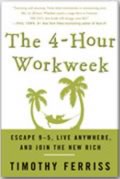
Here then is the final part of my conversation with Tim Ferris:
J.D.
My father was a serial entrepreneur. When I was a boy, he was always starting businesses. As a result, I have the entrepreneurship bug, as do both of my brothers. In many ways, Get Rich Slowly is a testament to his entrepreneurial spirit. I view it as a business. It seems to me that you are very much about entrepreneurship. Did entrepreneurship run in your family?
Tim
My father has been in various types of construction and development, and also real estate — buying, selling, investing. He’s been an entrepreneur for as long as I can remember, in that respect. He’s always owned his own business. My mother, on the other hand, has worked for Suffolk County, which is part of Long Island, in health services doing physical therapy for geriatrics for the last thirty years.
I feel like I’ve seen the best and worst of both of those worlds — the highly institutionalized employment and then self-employment. There’s certainly dangers and benefits to both, and I think I’ve had a pretty good [chance] to see both up close and personal. But entrepreneurship in the sense of starting businesses really wasn’t something that was recommended to me.
Part of what sparked my interest was Donald Trump’s The Art of the Deal. I think most of his books are a waste of time, but that book is extremely good. It’s all about the art of the deal and negotiating and so forth. There’s a lot of really good material, especially the dissection of his schedule. He basically walks through a typical day. Very, very interesting stuff.
When I was doing my undergrad and working in the library for $8 an hour — with no air conditioning and no ventilation in the middle of late spring — I really began to question just how scalable that approach was, even if it were $20, $30, $40, $50 an hour.
I was dyslexic at a young age, and developed coping mechanisms. I ended up being able to read extremely quickly, and to prepare for tests in some unique ways. I had friends saying, “Dude, when do you study?” There was a lot of classroom reading, and I did it, but very few people ever saw me spending more than a half hour on any given day, whereas a lot of students are spending three or four hours.
After a few people asked me this, I put together a seminar. I did the first seminar with guarantees and so forth. I had very low expectations for it, but I ended up walking out three hours later with $20 bills and checks spilling out of my pockets. When I ran the numbers, I realized that this was definitely a better model, but it was still not scalable because I had to be there teaching the seminars. I became very bored of it. After that, I started fantasizing about the different formats that a scalable business could take.
There’s a book by Entrepreneur Press called The Young Millionaires. It’s a really good book. Some of the business models are outdated now, but it basically has two to three page profiles of dozens of late twenty-something and thirty-something millionaires. It really inspired me to brainstorm different options.
J.D.
So how do you come up with money-making ideas — or “muses” — that can supply supplemental income and be easy to maintain and sustainable in the four-hour workweek lifestyle? It seems to me there’s no one right answer. It depends on the individual. The Young Millionaires book sounds like it might be a sort of cookbook, or an idea factory.
Tim
[I recently had the chance to ask Warren Buffet a question about investing.] If I had asked, “How should I invest my money?” I wouldn’t have received [a good answer]. I had to be very specific: “no dependents, thirtysoemthing, I can cover my expenses with other income or savings, etc.” There were a lot of qualifiers. Just like when somebody asks “How should I invest my money?”, there’s no way you can answer that in a meaningful way. The same is true with muses.
But in general, I would say studying case studies that you’ll find like mine, or The Young Millionaires would be another example, and then reading books like eBoys. I see my book as a valuable starting point so that you don’t focus on the wrong types of businesses, but it requires an analysis of your risk tolerance.
J.D.
Do you have any recommendations for people who aren’t entrepreneurial, who don’t have the ability or the interest in creating “muses”? These people might prefer to save and invest instead, but are still interested in the four-hour workweek lifestyle. They’re interested in lifestyle design.
Tim
I think one of the misconceptions with the book is that you have to use everything in the book. It’s really designed to be more of a menu of options for people to pick and choose from. I may go to a restaurant that I love, but I may hate half of their dishes. The fact of the matter is there’s no requirement to use “muses” whatsoever to apply the principles in the book. They’re principle-based and not tactical.
The rules in the book are really for increasing output and optimizing results regardless of whether you’re in someone else’s office or your own. That also applies to stocks. If you study The Intelligent Investor, you’ll find that the principles and concepts and the rational deconstruction of things that are made complex — because the croupiers and other people can make money by making it complex — it reads very similarly to The 4-Hour Workweek.
By focusing within an organization on using the proper metrics to measure your own performance, improving those metrics, doing 80-20 analysis, then you can increase your value within the company, and document it in such a way that you can then have more leverage to do things like take mini-retirements or work remotely one or two days a week or have a four-day work week (which many people have done) or simply to eliminate work on the evenings and weekends.
Then [one can] apply the same rational framework to investment. They’re completely applicable and adaptable to someone who has no interest whatsoever in starting a business. I’d say that the vast majority of the people who have used the book work within organizations.
Timothy Ferriss, nominated as one of Fast Company’s “Most Innovative Business People of 2007,” is author of the #1 New York Times, Wall Street Journal, and BusinessWeek bestseller, The 4-Hour Workweek.
GRS is committed to helping our readers save and achieve your financial goals.Savings interest rates may be low, but that’s all the more reason to shop for the best rate.Find the highest savings interest rate from Ally Bank, Capital One 360, Everbank, and more.
This article is about Books, Entrepreneurship, Gurus, Interviews
Disclaimer: This content is not provided or commissioned by American Express. Opinions expressed here are author's alone, not those of American Express, and have not been reviewed, approved or otherwise endorsed by American Express. This site may be compensated through American Express Affiliate Program.
Discover is a paid advertiser of this site. Reasonable efforts are made to maintain accurate information. See the Discover online credit card application for full terms and conditions on offers and rewards.
SEARCH FOR RECENT ARTICLES


Another famous, creative dyslexic! It’s amazing how some of our greatest out-of-the-box thinkers in history “suffered” from this condition. Kudos to Tim; and, thanks, J.D., for this great series of posts!
loading....
I have a question:
If everybody starts saving money and being frugal and starts to stick to needs(and ignores wants); what’s going to happen to all the new businesses? Who is going to buy all the things that the entrepreneurs(serial or otherwise) are willing to sell? Isn’t a large part of economic growth driven by ‘wants’ rather then ‘needs’? If everybody saves money and works hard and lives frugally, wouldn’t the demand for goods come down, thus making it more difficult to actually run a business that sells something or provides a service? If thrift catches on as the key to personal finance, then who in his right mind would want to buy anything that he absolutely does not need? There are whole networks of people who are impacted when a large group of people begin to save money and not buy vegetables from the supermarket. (The transporters, the farmers..ok the inorganic farmers, the middlemen, the warehouse people, the stock value of the company that runs the supermarket, the people who invest in the stock, the index funds… ).
Taking loans of various types enables the economy to grow and everybody benefits.
Eating food that has been grown organically may be fashionable now, but I find it hard to believe that there is a way to “Organically” feed everybody on the planet. This craziness about organic food must end. Buying only local produce does not work because it eliminates economies of scale. Grapes from Brazil(ok ok…some other fruit then) and Laptops from china make sense because someone somewhere is willing to provide a service or product for a cheaper price. Plus it makes economic and environmental sense to buy products made/produced half a world away. World trade benefits everybody. Every time someone in the US buys a product made in China or India or Vietnam, then it makes a small difference in the lifestyle of someone in those third world countries. Maybe it means that they wont starve anymore or maybe their kids will go to school. Or maybe they will make enough money to buy expensive Microsoft software. Or maybe someone in a third world country will have enough food in his belly to actually think about changing their repressive government or think more rationally about the world around them. Either way, the world will be a better place with global trade then without.
loading....
Rk-
You’re just asking the question to provoke, yes?
And I welcome it.
Why do you think that becoming more entrepenurial
would eliminate economies of scale or world trade?
Entrepenurial types move us forward finding new solutions and products. Microsoft started in a garage, Starbucks, Walmart and McDonald’s all started with a single storefront. I didn’t need any of their products initially, but I am an consumer at all of these national companies because they offer what I need on occasion. An idea grew into a product line that became a business. Economies of scale came after.
Thrifty, frugal people all have different interests and passions and have varying degrees of income to pursue those passions so I don’t think audience for new products and services is really an issue.
Personally I think frugal living and entrepenurial opportunities creates a more thoughtful examination of what we need as individuals. My mother in law in her 80′s has been extraordinarily thrifty with her resources, but equally passionate in her interests: kayaking, skiing, painting, swimming, music, baking to name a few. She simply finds people with like interests and cheaper ways to do what she loves. She’s incredibly self reliant.I think entrepenurial living and frugality multiplied her enjoyment and appreciation of what she does have.
loading....
@rk: You rock!!!! Thank you, thank you, thank you.
People in America today LOVE to gripe about mass producers – that’s very “in” right now — but very, very, very few people can afford the idealistic type of locally sourced, all-organic stuff that makes their consciences feel good.
Most people lack a basic understanding of macro- and micro-economics. That’s where a lot of the griping and whining today stems from…..
loading....
Great topic . . . it really takes a combination of good earning and good money management (frugality). I was an entrepeneur throughout the 90′s, but unlike the eBoys, did not make a lot of money because I was focusing on artistic, handmade products. I now earn a good living in a ‘normal’ job in which I still get to be highly innovative (which had been my goal all along
.
Something little discussed is how much it can COST us to EARN high amounts of money, i.e. the expensive goods and services the stress and hard work make us “owe” ourselves. Crafting a life that is affordable both for us and for the planet we’re dependent on is what I write about at http://www.diamondcutlife.org/.
loading....
I’m going to weigh in on this one…
“There are whole networks of people who are impacted when a large group of people begin to save money and not buy vegetables from the supermarket.”
True and there are large groups affected when people lose their jobs in the US because it can be done cheaper (and possibly better) elsewhere. If corporations are allowed to save money to improve their health as an organization and their balance sheets, why can’t an individual? In many ways a household functions as a corporation too. Except in the example you give of people shifting to buying from local producers vs. the grocery store – at least it’s local. The money is being spent here. And the person receiving that money is here. I’m not saying I’m against global trade – not at all. What I don’t like is exploitation to make an extra buck. And ignorance.
The goal of a corporation is to improve shareholder wealth. The consumer doesn’t really factor in to this equation. I don’t see gas prices going down, but hey, those guys are getting wealthy. I don’t see organizations who outsource lowering the price on their products. If they know that we are willing to spend X amount on something, they will continue to sell at X until something shifts. The shift that’s occuring now is in some ways a response to these corporations taking and not giving back to the consumer. (I’m generalizing as I’m sure there are corporations that are community conscious.)
The world is not perfect. We have no idea of knowing who went through what to produce the product that we are purchasing. But if paying $1 dollar more provides some transparency as to where this product came from and how it was made, etc. – I’m game.
I’m Indian, so I can tell you first hand, that when I buy a product that is Made in India, it’s not benefiting the person who sat behind the machine and made it. It’s benefiting the corporation. When I buy a product that promotes sustainable living and is from a reputable organization, THEN I know that my dollar is in fact benefiting that small time person in India.
If I choose to purchase locally grown produce (and actually it is quite affordable) I am making a choice – not an anti global trade choice because I purchase fair trade tea and coffee from South America and India – but a pro-planet choice. A humanitarian choice.
I work hard for my dollar. I want to know that it’s going to work hard for someone else too.
loading....
Wow, a post on being an entrepreneur turns into a “discussion” on global economics!
JD-Thanks for setting up the interview with Tim. It is interesting to hear things from his fresh perspective. I like how he looks at a business and it’s ability to “scale.” This is something often forgotten by entrepreneurs. They wind up building themselves a job when the goal should be to maximize your income and minimize the effort.
@RK-Just because people become more frugal doesn’t mean the economy will tank. As good as JD’s blog is I don’t see him crashing the stock market!
We are actually in a cycle where we have swung too far into spending. We now spend more than we make (I believe the last figure I saw was a -1.5% saving rate). This is not sustainable and will correct. Like everything else in the economy it is a cycle.
Also, after you learn to control your spending and eliminate debt an amazing thing happens. You suddenly have money available to do the things you want. You no longer need to be cheap, just responsible!
loading....
“But to be successful, to build wealth, you must also increase your income.”
Here’s the thing: if you earn $1,000 a week and save 15% of it, then that is $150 a week working for you.
If you double that savings rate to 30%, then that is $300 a week working for you.
But, if you then double your income and save 50% of the increase as well, that is $800 a week working for you …
… sounds like the “Frugal Entrepreneur” rulez!
loading....
The dude might have a good idea or two, but on the whole he strikes me as a somewhat skanky scam artist. It doesn’t reflect well on GRS that you chose to highlight someone with his ethical track record.
loading....
Thanks JD for reminding us (again) that a lot entrepreneurs do not sit around thinking about “the killer app” until it hits them. Rather, they solve their own problems first and then apply it to others. Tim was really developing ways to cope with his dyslexia, and he found a way to scale that solution to other people.
As for Tim’s character flaws – I think everyone of us has flaws if you look hard enough. Eat the fish and spit out the bones, I say.
loading....
Ferris is one of the least skanky of the “gurus.” He seems to legitimately try to put real information in front of you. He never hides the fact he plans on making money.
He also has never claimed to have “THE” answer, but possible answers. He demonstrates this in the post by stating that his book is more of a menu.
Comparing Ferris to Kiyosaki…Ferris is Mother Teresa.
loading....
I really loved this article. He’s a really interesting guy. I have a blog devoted to the 4HWW and the jet set lifestyle. You may find this of interest. Let me know what you think. My URL is http://www.travelhip.tv/robsblog
loading....
R K:
Your problem is you stereotype a certain group of people as all having the same beliefs.
Yes, international trade is good in meeting comparative advantages. However, in the current system, most of this good is gobbled up by the largest corporations. This is neither good nor bad, it is just the way it is, but if you spend $1,000 on a new laptop, it is unlikely that more than $5 of that, and probably less, actually goes into the pockets of poor laborers in China. Don’t be fooled. Doesn’t mean you shouldn’t buy the laptop..but if you had the option of buying an equal laptop that gave $200 to a U.S. worker (or $200 to a third world worker..hahaha!) I would certainly take it.
It gets down to free market capitalism vs. corporatism – I’m all for capitalism, where people interact to meet each others’ desires. I despise the corporatism we have now, where huge multinationals influence governments for their own benefit and squeeze small competitors out.
The United States is in the process of spending itself into oblivion. This debt based lifestyle will cause real economic contraction when the bills come due. The economic growth of Asia over the last couple decades has been based on an extremely high savings rate. We have had a negative savings rate for some time, and it can’t continue indefinitely. The best entrepreneurs meet the needs of others, not just create frivolous desires.
And finally, as for organic produce – have you ever eaten an organic apple? I mean, even a single one? Because if you have, it is hard to ever eat a conventional apple again. They taste like cardboard in comparison. Of course, “conventional” is a strange word, because all farming the world over was “organic” until 1950.
If you buy from a local farmer, you know that you are giving them near 100% of your money, supporting them doing what they love. Remember, farmers are the original entrepreneurs.
If you buy conventional, you are supporting shareholders, giving a couple pennies to a couple working stiffs and exploited immigrant labor here and there. I guess you’re helping keep the share price of ADM high, if that’s more important to you than helping to sustain the livelihood of someone you can look in the eye and smile at, then go for it.
Conventional farming only gains economies of scale in distribution and labor – studies have shown wise organic methods to be MORE productive per acre, and to produce much more nutritionally dense food as well because the soil is kept healthy. When the laborers are people who love to be out getting their hands dirty in the soil, I’m not going to cry that about this inefficiency.
I would guess from the inarticulateness of your arguments that you eat a lot of processed foods and/or pharmaceuticals and/or watch a lot of TV. Best of luck to you.
loading....
Sasha,
I eat a lot of processed food(I put it in a microwave to kill off all the goodness and then eat the ‘dead’ food devoid of any life force). And I can’t say that the pharmaceutical industry did not make a substantial profit from me. Yes I have cable TV( and a lot of channels, in living color) and internet connection to boot.
Thanks for your good wishes. I wish the same for you too. However I cannot agree to your other views. For example:
>> gets down to free market capitalism vs. corporatism – I’m all for capitalism, where people interact to meet each others’ desires. I despise the corporatism we have now, where huge multinationals influence governments for their own benefit and squeeze small competitors out<<
So lets see. The corporation make a ton of money ok so…
Where does the money go? Who owns the big corporations? If a CEO gets a huge salary and fat bonuses, does he put all that money in a mattress somewhere?
I guess he has to spend it somewhere and (work with me here) buy services and products with it and pay taxes on it . (Unless he funnels it into a banana-growing, hashish-smoking, long-green-eared, slave trader involved in interplanetary conflict 100 light years from here…)
My understanding is that Corporations(big, evil or small, hopeless) all have to pay some taxes, pay competitive wages(ummm I think the wages in china are lower because stuff is cheaper in china) and follow standard accounting practices.
And if they make a whole lot of money, they share the wealth with Shareholders.
Organic Farming: Last time I checked, the farmers in developing countries were all using pesticides and fertilizers to grow food. Now if the “Organic” method really meant more output per square mile, then why would the poor farmer(in some third world country) switch from organic farming to inorganic methods? I mean if its so good why did everybody on the planet move to in-organic?
And now if you excuse me, I will go back to my chemically induced–I mean back to watching TV.
loading....
Sasha,
oh and I am gaining weight(due to all the processed food), so much that my friends advised me to put blinkers on my trousers, so that I don’t run over people or pets. But that’s just me. I mean with all the extra weight its hard to focus on the keyboard. I break a few keyboards every month.
Its amazing you have so much insight into my life. Its almost like you live next door. Maybe we should meet sometime:-)
loading....
Seems like a lot of people are not actually responding to your article. For myself, although these comments are interesting, I will comment on the article itself. Tim Ferris has some really great ideas. I have his book and have applied some of the principles. Although I don’t have a business, the idea that all businesses and individuals can run on particular principles in order to maximize profit and minimize effort is mind boggling. I’ve been able to, following his principles, save up to 70% of my monthly income without starving and still have money enough to do the things I want to do. Interesting how those who criticize do not take any action. Instead they’d rather pretend to know what they’re talking about and call people names (that skanky Tim Ferris!).
loading....